
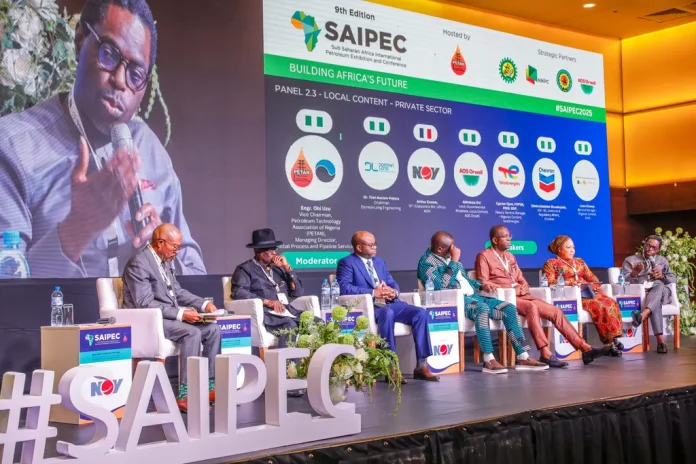
Senior energy officials, national oil company executives and regulators from across Africa will convene in Lagos next month for the 10th Sub-Saharan Africa International Petroleum Exhibition and Conference (SAIPEC), an event that has grown into one of the continent’s most influential oil and gas gatherings.
The conference takes place from February 10 to 12, 2026, at the Eko Convention Centre and will be hosted by the Petroleum Technology Association of Nigeria (PETAN) in partnership with NNPC Ltd, NUPRC, the Nigerian Content Development and Monitoring Board (NCDMB) and AOS Orwell.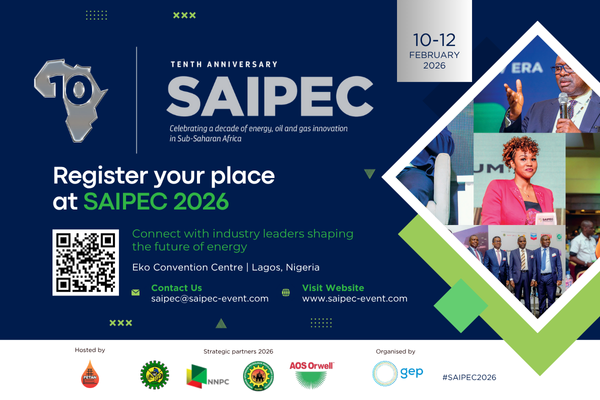 SAIPEC’s organisers released the first confirmed speaker list this week, featuring senior representatives from Ghana, Uganda, Nigeria, Côte d’Ivoire, Liberia, Sierra Leone, Niger, The Gambia and Zimbabwe. The roster includes executives and policymakers who have played central roles in developing national upstream policies, regulating new petroleum frontiers and managing expanding state-owned portfolios.
Among those confirmed are Proscovia Nabbanja, Chief Executive of the Uganda National Oil Company; Dr Emeafa Hardcastle, Acting CEO of Ghana’s Petroleum Commission; Engr Felix Ogbe Omatsola, Executive Secretary of Nigeria’s NCDMB; and Foday Mansaray, Director General of Sierra Leone’s Petroleum Directorate. Delegations will also arrive from Liberia’s National Oil Company, Côte d’Ivoire’s Directorate of Local Content and The Gambia’s national petroleum corporation.
Read also: Inside Africa’s 2026 energy outlook: New gas hubs, funding gaps and the battle for power access
The conference will open at a time of heightened activity across the region’s hydrocarbons sector. Nigeria is in the middle of a fresh licensing round, a process expected to feature prominently in SAIPEC’s technical sessions and investor discussions.
Federal regulators have been working to improve transparency in acreage awards and clarify fiscal terms under the Petroleum Industry Act, reforms designed to boost foreign participation and improve state revenues. For service providers, a licensing round typically drives new contracting opportunities in exploration and field development, making Lagos an important marketplace for deals.
Other African participants arrive with varying priorities. Uganda is finalising preparations for first oil from its Lake Albert fields, supported by major pipeline and processing infrastructure. Ghana, Côte d’Ivoire and Sierra Leone are continuing efforts to attract new exploration while shoring up local participation rules. Countries such as Liberia and The Gambia see events like SAIPEC as opportunities to position themselves within the continent’s expanding upstream map.
Since its inaugural edition, SAIPEC has grown beyond its initial mandate. Conference data shows participation rising from under 200 attendees in its early years to well over a thousand delegates drawn from government, state energy firms, private operators, financial institutions and engineering companies. Its organisers credit the expansion to a decade of steady policy engagement and the emergence of new petroleum jurisdictions across West and East Africa.
The Lagos gathering is expected to feature a parallel industry exhibition with more than 150 companies in attendance. The displays will span exploration services, drilling and engineering systems, offshore equipment, field management technologies and operational support tools used across Africa’s producing basins. The exhibition has become a fixture for national companies seeking suppliers and partners outside their home markets, particularly smaller African players.
Read also: African Energy Commission unveils continental plan to improve national energy data systems
Networking and business matchmaking have long been a defining feature of the event. PETAN has structured this year’s meeting to include private boardroom sessions, bilateral roundtables and regional country spotlights designed to bring investors into contact with regulators and national oil companies.
In previous editions, these interactions have laid the groundwork for cooperation agreements, technical collaboration and vendor certification programmes that extend beyond conference halls.
Though SAIPEC primarily focuses on oil and gas, its agenda has increasingly acknowledged shifts underway in global energy trade. Several African producers continue to depend on hydrocarbons for export earnings and fiscal support, but governments are also assessing the role of gas development, refinery expansion and efficiency-related investments. Delegates are expected to discuss operational standards, asset performance and supply chain resilience as conditions facing Atlantic, Sahelian and Indian Ocean basins evolve.
For Nigeria, hosting the anniversary edition reinforces the country’s place as a focal point for regional cooperation. Africa’s largest oil producer remains a key source of crude for international markets while working to revive output following years of production declines linked to security disruptions and infrastructure problems.
SAIPEC offers a forum for the country to update partners and investors on progress in stabilising supply systems, strengthening monitoring frameworks and expanding domestic participation in field management and contracting.
Organisers say more speaker announcements will follow in the coming weeks. Delegates can register online, with media accreditation available through the conference website. The three-day programme marks ten years since SAIPEC was launched and reflects the extent to which Africa’s petroleum sector has diversified in that time, shifting from a handful of dominant producers to a broader network of states shaping their roles in a competitive and changing industry landscape.
Engage with us on LinkedIn: Africa Sustainability Matters