


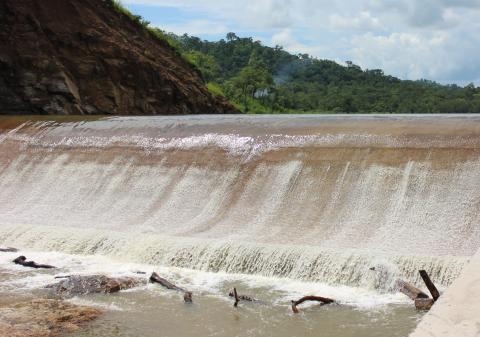
A new phase of ecosystem restoration and irrigation-backed agriculture is taking shape in Dedza District, where the Ulimi ndi Chilengedwe m’Malawi programme has reopened the Bwanje Dam and its 800-hectare irrigation scheme to broaden cropping choices, shore up water security and convert conservation gains into household incomes.
The initiative, observed on 15 November during Green Diplomacy Week by diplomats and Malawi officials, centers on a 5.6 million-cubic-meter reservoir in the Mua-Livulezi forest reserve and combines improved water storage with community-driven tree planting, beekeeping and fish farming to reduce vulnerability to climate volatility and expand commercial agriculture for smallholders.

The Bwanje facility’s storage capacity makes it possible to irrigate an area that was previously cultivated only intermittently and largely for a single crop. With reliable water supply in the dry season, farmers can diversify beyond rice into higher-value vegetables and legumes and stagger harvests to meet market demand. Local partners say the scheme now sustains year-round production on parcels amounting to 800 hectares, while community-led reforestation, nearly 98 hectares planted in parts of Traditional Authority Kachindamoto, aims to stabilize soils, improve watershed functions and reduce siltation that erodes reservoir capacity over time.
These are not abstract improvements: they translate into extra cropping cycles, more marketable outputs and a steadier cash flow for households that previously depended on rain-fed maize alone.

Malawi’s dependence on agriculture amplifies the import of these gains. Agriculture contributes substantially to the national economy, accounting for roughly a third of GDP and supplying the bulk of export earnings, and employs a large share of the workforce, figures that vary by source but consistently underline the sector’s social centrality. That dependence makes the country acutely sensitive to rainfall variability and temperature shifts that are already shortening growing seasons and harming yields.
Small-scale and rehabilitated irrigation schemes are therefore a pragmatic adaptation: evidence from Malawi and comparable southern African contexts links irrigation interventions to improved yields, stronger food security and poverty reduction when combined with secure market linkages and technical support.
The Bwanje intervention is also illustrative of a broader shift in development practice: donors and implementers are marrying infrastructure with ecosystem management and livelihoods programming rather than treating them as separate objectives.
The EU-funded component of Ulimi ndi Chilengedwe, which supports water resilience and community conservation activities, foregrounds this integration. Beyond the headline figure of the dam’s capacity, 5.6 million cubic meters, the programme emphasizes management practices that reduce water waste, improve soil health and foster local stewardship of natural resources. That approach is purposeful: healthy soils and forests improve water infiltration and retention, lower the risk of flash floods and drought, and sustain small reservoirs’ productive life spans.
There are practical caveats worth noting. Large irrigation blocks in Malawi have historically struggled with under-utilization, governance challenges and maintenance shortfalls; case studies of the Bwanje Valley show that full utilization of the scheme has fluctuated over time.
Ensuring that the current rehabilitation translates into sustained productivity requires predictable inputs; seed, fertilizer, farm equipment, reliable extension services and market access that pays farmers for diversification and quality. It equally requires active community institutions capable of managing water allocation and maintaining infrastructure, a factor that the current programme appears to prioritize through local engagement and capacity building.
From a regional perspective, the model being tested in Dedza offers lessons for water resilience strategies across southern Africa. The gains from small and medium-scale irrigation are measurable: studies in Malawi and neighbouring countries report significant upticks in yield and household income where irrigation is well managed, and lower post-harvest losses for perishable crops when storage and market systems are available. These outcomes are particularly salient given mounting concerns about water stress and competing demands for freshwater across the continent.
While regions such as North Africa and parts of the Middle East face the most acute physical water stress, southern African nations like Malawi are already contending with seasonal scarcity that undermines food security and rural livelihoods. Investments that simultaneously increase storage, reduce runoff and rehabilitate ecosystems therefore address multiple vulnerabilities in one programme.

Testimonies from Chatata village illustrate how alternative livelihoods; beekeeping, fish farming and irrigated horticulture, can turn subsistence activity into income that pays school fees and household essentials. Where women can access plots under irrigation and where youth find regular off-farm work in processing or distribution, household resilience improves and migration pressures can lessen.
However, the scale of impact will depend on replicability and integration: how many Bwanje-style schemes can be rehabilitated or developed cost-effectively, and how well can national policy and donor support knit these pockets of productivity into a national irrigation strategy that addresses transmission, markets and finance?
The Dedza visit by diplomats during Green Diplomacy Week signaled continued international support, but the programme’s long-term success will hinge on Malawi’s ability to convert pilot-scale resilience into systemic change. That requires aligning irrigation rehabilitation with rural extension, input supply chains, aggregation services and market-friendly transport. It also demands maintenance funding and transparent governance to prevent the drying of gains once project cycles end.
Follow us on LinkedIn: Africa Sustainability Matters


