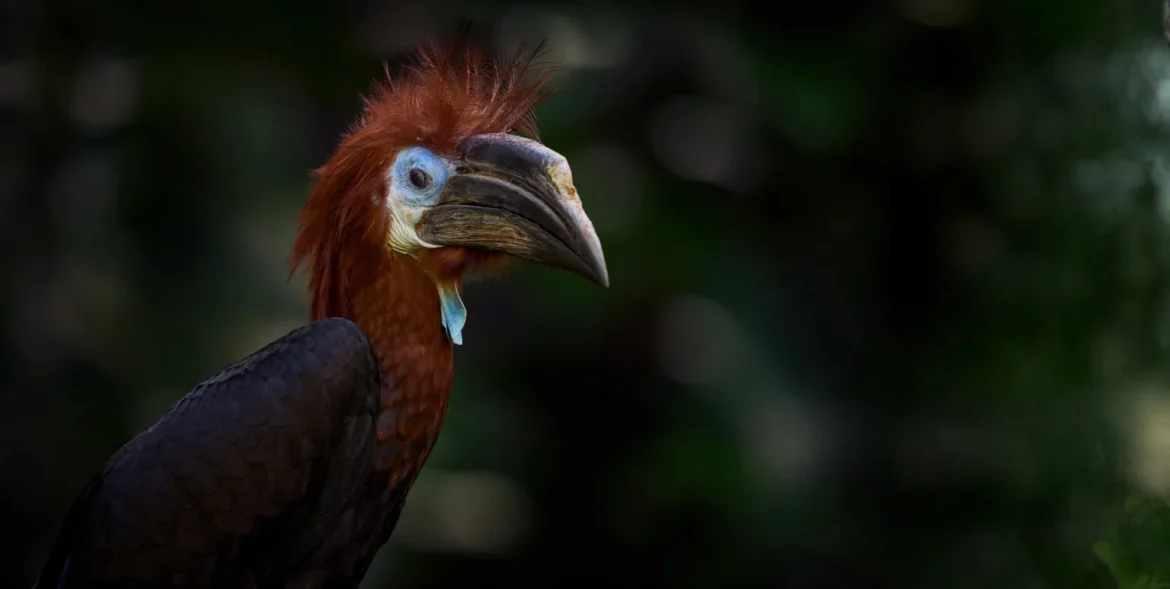
Africa’s forest hornbills, long overlooked in global wildlife protections, are finally receiving recognition for the critical role they play in sustaining the continent’s forests. On December 3, 2025, at the 20th Conference of the Parties to the Convention on International Trade in Endangered Species of Wild Fauna and Flora (CITES CoP20) in Uzbekistan, African countries successfully secured a listing for all hornbill species in the genera Ceratogymna and Bycanistes under Appendix II of the convention.
This listing does not prohibit international trade but establishes strict monitoring and reporting requirements, creating a framework to ensure that trade does not threaten the survival of these birds.
Hornbills are more than charismatic species in Africa’s tropical forests. They act as ecosystem engineers, dispersing seeds across vast distances and sustaining forest regeneration in countries ranging from Sierra Leone to the Democratic Republic of Congo.
Without their seed dispersal services, many forest trees struggle to propagate, which in turn affects carbon storage, soil health, and the livelihoods of communities dependent on forest resources. Yet, despite their ecological importance, African hornbills have historically escaped international scrutiny, even as Asian species were regulated under CITES decades ago.
The urgency for protection became evident as researchers documented a growing, largely unregulated trade in African hornbill parts. Skull and casque demand, particularly from overseas buyers, has increased, with hunters reporting that international markets now drive local hunting practices. This pressure intersects with the birds’ unusual breeding biology: females seal themselves inside tree cavities for weeks while males provide food.
The loss of a male to hunting often results in the failure of an entire brood, compounding population declines. Species such as the Black-casqued Hornbill, recently up listed from Least Concern to Near Threatened on the IUCN Red List, exemplify the impact of combined habitat loss and hunting pressures, highlighting the species’ vulnerability across West and Central Africa.

The CITES decision offers African governments new tools to address these threats, from standardizing trade reporting to enforcing sustainable harvest limits. By harmonizing protections with those already applied to Asian hornbills, the listing reduces loopholes that previously allowed African hornbill parts to enter trade channels undetected, often masquerading as legally protected Asian species. It also signals a broader commitment to integrating local communities and Indigenous knowledge into conservation strategies, recognizing that long-term protection depends on the engagement of those who live alongside these forests.
Conservation organizations are already applying lessons from Asia to Africa. BirdLife International and its partners have demonstrated that protecting nesting trees, monitoring breeding pairs, and creating community-led forest “safe havens” can stabilize populations while maintaining the livelihoods of local people. Such programs have proven effective in Asia, where hornbills benefit from both legal protection and practical conservation measures, and they offer a blueprint for African countries seeking to balance ecological integrity with human development.
The implications extend beyond biodiversity. Forest hornbills contribute to carbon sequestration by supporting the propagation of large-seeded trees, which are particularly effective at storing carbon. Protecting these birds, therefore, aligns with continental and global climate mitigation strategies. Africa’s forests are increasingly under pressure from deforestation, agricultural expansion, and extractive industries, and the loss of key species like hornbills would exacerbate ecological degradation, affecting water cycles, soil fertility, and forest resilience.

The CoP20 decision represents a turning point not only for the hornbills themselves but also for African conservation governance. It signals a recognition that species protection cannot occur in isolation and that international frameworks must reflect Africa’s unique biodiversity challenges. By adopting this measure, African nations assert leadership in global conservation dialogues, demonstrating that proactive policy, grounded in science and community engagement, can secure both ecological and socio-economic benefits.
Read also: EU parliament delays deforestation-free supply chain law to 2026, raising global trade questions
For communities living in West and Central Africa, the decision could translate into more sustainable forest management, increased eco-tourism opportunities, and strengthened cultural ties to local wildlife. For conservationists, it offers a tangible lever to address one of the continent’s most pressing wildlife trade challenges. Ultimately, the CITES Appendix II listing ensures that hornbills, symbols of Africa’s forest richness, continue to thrive, preserving their ecological role and supporting the resilience of forests that millions of people depend upon.
Engage with us on LinkedIn: Africa Sustainability Matters