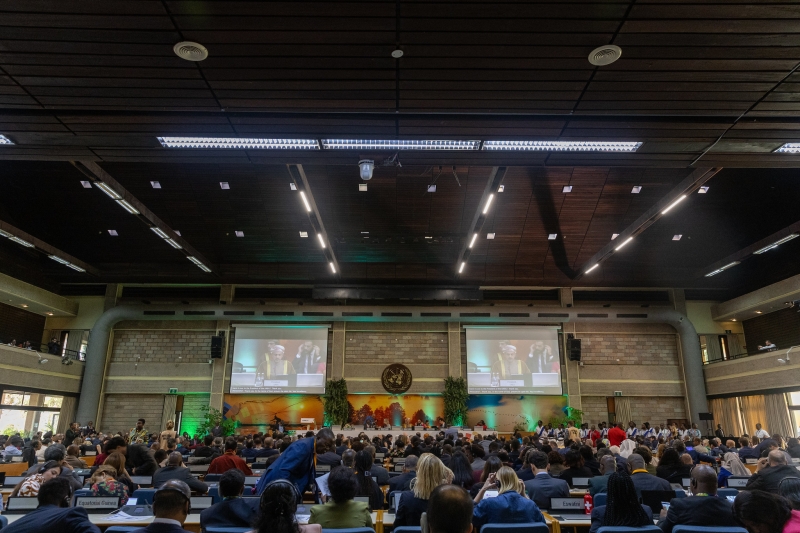
On December 12, 2025, the seventh session of the United Nations Environment Assembly (UNEA-7) wrapped up at the UNEP headquarters in Nairobi with 186 countries reaching consensus on a series of resolutions, decisions, and a Ministerial Declaration aimed at strengthening global environmental resilience.
The week-long assembly, attended by more than 6,000 participants, brought together ministers, policymakers, scientists, youth delegates, and civil society actors to confront what UNEP describes as the triple planetary crisis: climate change, biodiversity loss and land degradation, and pollution and waste.

During the closing plenary, delegates formalized 11 resolutions and three decisions addressing a spectrum of environmental challenges. Among the measures adopted were initiatives to protect coral reefs, improve the management of critical minerals and metals essential for energy transitions, and regulate chemicals and waste.
Other resolutions focused on combating wildfires, addressing sargassum seaweed blooms, protecting glaciers, and exploring sustainable solutions in sports and emerging technologies, including artificial intelligence. The assembly also underscored the environmental dimensions of antimicrobial resistance, reflecting the intersection between ecological health and human wellbeing.
The UNEA-7 Ministerial Declaration commits member states to advance equitable and inclusive participation in environmental governance while implementing obligations under multilateral environmental agreements. It emphasizes concrete action to restore ecosystems, improve air and water quality, and promote green employment opportunities.
In her closing remarks, UNEP Executive Director Inger Andersen called on governments to move swiftly from commitments on paper to measurable outcomes on the ground, noting that delayed or fragmented responses have contributed to escalating human, economic, and environmental costs worldwide.
The summit also hosted the second Multilateral Environmental Agreements (MEA) Day, highlighting the role of international treaties in setting enforceable standards and coordinating transboundary responses to global environmental risks. This focus on governance reflects growing recognition that unilateral approaches are insufficient to address shared challenges such as water scarcity, cross-border pollution, and biodiversity loss in regions like the Sahel and Central Africa.

The assembly deliberately integrated perspectives from younger generations, hosting the Youth Environment Assembly, which brought together over 1,000 delegates advocating for the inclusion and empowerment of youth in global environmental policymaking.
Complementing this was the Cities and Regions Summit, emphasizing the critical role of municipal and regional authorities in implementing integrated environmental solutions. Civil society participants exchanged insights at the 21st Global Major Groups and Stakeholders Forum, creating avenues for dialogue between grassroots actors, national governments, and international organizations.
In addition to policy resolutions, UNEA-7 recognized exemplary individuals and initiatives through the 2025 UN Champions of the Earth awards and the World Restoration Flagships. The awards celebrated efforts ranging from climate action to ecosystem restoration, providing tangible examples of how targeted interventions can generate measurable environmental and social benefits.
UNEP Goodwill Ambassadors, including Lewis Pugh and Tanzanian musician Frida Amani, reinforced the urgency of environmental stewardship. Pugh’s expedition to Mount Kenya, home to one of Africa’s last remaining glaciers, highlighted the continent’s vulnerability to climate change, while Amani’s performance spotlighted the cultural dimensions of ecological advocacy.
Read also: The Gambia targets universal electricity access by 2026 through regional power and gas links
The assembly also set in motion leadership for the next session. Matthew Samuda, Jamaica’s Minister of Water, Environment, and Climate Change, was elected President of UNEA-8, scheduled for December 6-10, 2027, again in Nairobi.
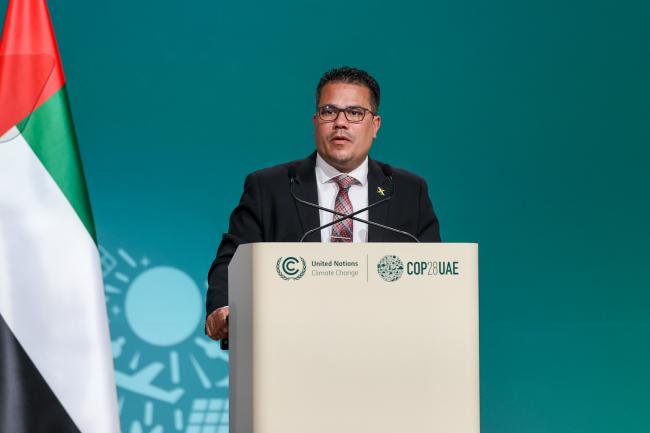
Matthew Samuda, Jamaica’s Minister of Water, Environment, and Climate Change,
Samuda emphasized the importance of inclusivity, transparency, and practical action in bridging science and policy. He stressed that achieving sustainable production and consumption, scaling financing for adaptation, and ensuring no country is left behind will require a coordinated approach across national and regional scales.
UNEA-7 concluded with approval of UNEP’s Medium-Term Strategy for the next four years and the associated two-year Program of Work. Together with the resolutions and ministerial commitments, the outcomes of the Nairobi assembly signal a renewed global push to operationalize environmental governance, improve resilience to climate and ecological shocks, and promote sustainable development across continents.
For Africa, the decisions taken in Nairobi carry implications for energy planning, land use, pollution control, and climate adaptation, providing a framework through which governments, communities, and private actors can align investment, policy, and on-the-ground interventions to safeguard ecosystems and livelihoods.
Engage with us on LinkedIn: Africa Sustainability Matters