


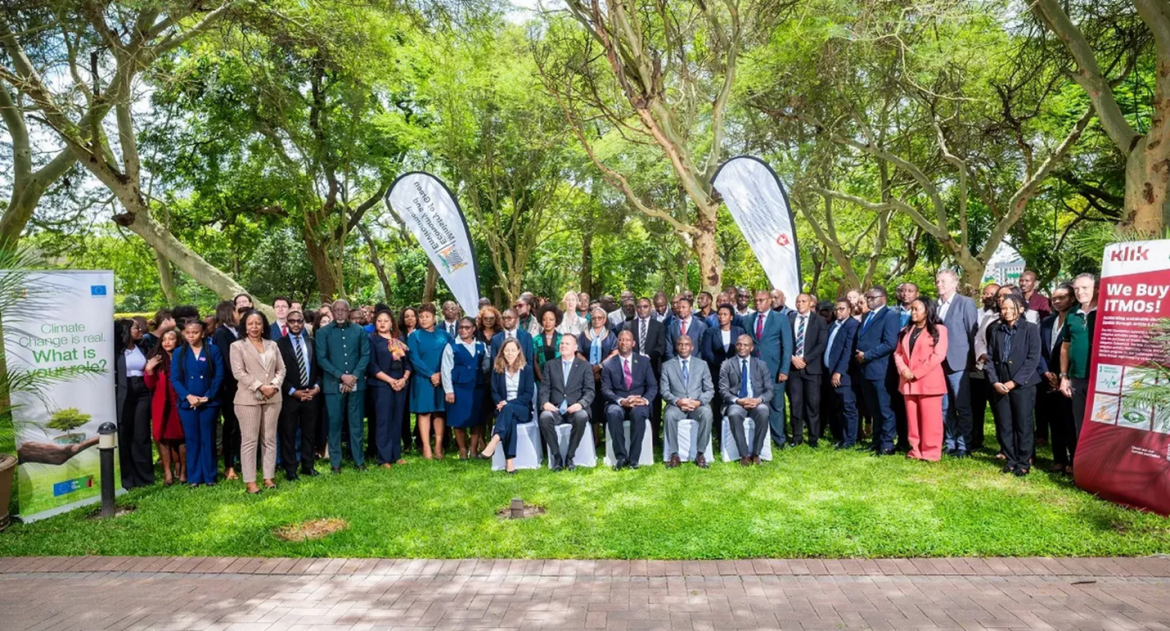
Zambia and Switzerland officially inaugurated a bilateral climate agreement on January 22, aimed at advancing greenhouse gas mitigation efforts under Article 6.2 of the Paris Agreement. The agreement, signed last November at COP30 in Belém, Brazil, lays the foundation for voluntary international cooperation in carbon markets, enabling both countries to pursue their climate objectives while channeling private finance into high-quality mitigation projects.
The inauguration was led by Zambia’s Ministry of Green Economy and Environment (MGEE) and the Embassy of Switzerland to Zimbabwe, Zambia, and Malawi, with support from the SPAR6C program funded by the German Government through its International Climate Initiative.

The agreement arrives at a pivotal moment for Zambia, which is positioning itself as a credible actor in the emerging global carbon market. It is the country’s third bilateral Article 6 agreement in the last two years, reflecting growing confidence in Zambia’s ability to implement robust mitigation projects that extend beyond its Nationally Determined Contributions (NDCs) under the United Nations Framework Convention on Climate Change (UNFCCC).
By providing a framework for the transfer of Internationally Transferred Mitigation Outcomes (ITMOs), the agreement allows Zambia to attract international investment into carbon-reducing initiatives while giving Switzerland the opportunity to offset emissions through certified, high-quality carbon credits.
Central to the operationalization of the agreement is the KliK Foundation, mandated under the Swiss CO₂ Act to identify and finance mitigation activities in Zambia that are additional to national climate targets. The Foundation purchases carbon credits generated by verified projects, providing result-based financing that makes large-scale initiatives financially viable. These activities are designed not only to reduce emissions but also to create jobs, improve local community resilience, and contribute to sustainable development, aligning with Zambia’s broader economic and social objectives.
For Zambia, a country heavily dependent on hydropower and vulnerable to climate-induced droughts, the agreement presents an opportunity to integrate climate finance into sustainable infrastructure and energy projects. According to the World Bank, Zambia’s energy sector alone faces an investment gap of over $2 billion to achieve a low-carbon transition and ensure energy security. By leveraging international carbon markets, the country can accelerate renewable energy deployment, support reforestation, and modernize agricultural practices to reduce emissions while maintaining food security.

Switzerland’s participation signals a strategic shift in development engagement. As the European country phases out traditional development cooperation, it is increasingly directing resources toward carbon credit financing that ensures tangible emission reductions.
H.E. Stéphane Rey, Ambassador of Switzerland to Zimbabwe, Zambia, and Malawi, emphasized that the framework is designed to ensure environmental integrity, respect human rights, and advance the Sustainable Development Goals, reflecting a broader trend in Europe toward market-based climate cooperation rather than conventional aid.
The SPAR6C program, implemented globally by the Global Green Growth Institute with local partners GFA Consulting Group and UNEP Copenhagen Climate Centre, provides technical support and capacity building to ensure that Zambia can meet international standards for carbon accounting and project verification. This capacity is critical as African countries increasingly look to voluntary carbon markets to unlock climate finance. Analysts estimate that Africa could capture up to $20 billion annually by 2030 through well-regulated carbon markets, if frameworks like Zambia’s are successfully implemented and scaled.
Experts note that Zambia’s approach, linking international finance to concrete, results-based mitigation projects, could serve as a blueprint for other African nations seeking to balance climate action with economic development. By demonstrating that carbon markets can fund sustainable infrastructure, protect ecosystems, and create local employment, Zambia positions itself as both a test case and a leader in the continent’s climate finance landscape.


