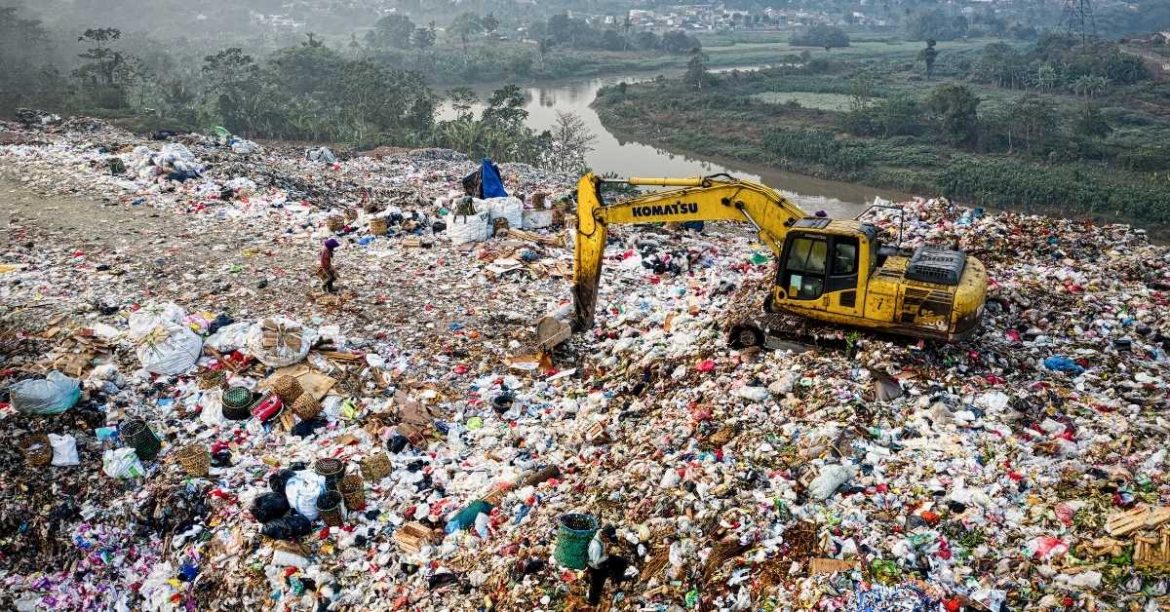
The Middle East and North Africa is heading toward a mounting waste crisis that could double the region’s environmental and economic burden by mid-century unless governments move quickly to overhaul how rubbish is generated, collected and managed, according to a new assessment by the World Bank.
In a report released on January 26, the World Bank warns that rapid urbanisation, population growth and rising consumption are pushing waste volumes in the MENA region to levels that existing systems are ill-equipped to handle. The study, which draws on data from 19 countries and 26 cities representing nearly six percent of the global population, estimates that the region currently generates about 155 million tonnes of solid waste each year, much of it handled in ways that pose serious risks to public health and the environment.

On average, each resident produces around 0.81 kilograms of waste per day, significantly higher than levels recorded in sub-Saharan Africa and South Asia. While collection rates in many MENA countries approach 80 percent, the report finds that roughly two-thirds of all waste is still poorly managed. Large volumes are dumped in open areas, burned, left uncollected or not tracked at all, a rate of mismanagement that is about twice the global average.
The consequences extend beyond visible pollution. The World Bank estimates that poor waste handling costs the region about $7.2 billion each year in environmental damage, driven by air pollution from open burning, contamination of soil and water, and the spread of disease. Tourism is also affected, particularly in coastal and urban destinations where accumulated waste undermines the appeal of beaches and public spaces.
Plastic pollution is highlighted as a growing concern. The Mediterranean Sea is already among the most plastic-polluted bodies of water in the world, and the report notes that the MENA region has the highest per-capita footprint of plastics entering marine environments. Without intervention, plastic waste is expected to rise sharply as consumption increases.
Read also: Kenya launches review of environment policy as climate risks intensify
Looking ahead, the report projects that waste generation across the region could reach nearly 294 million tonnes by 2050. This trajectory, the authors argue, makes inaction increasingly costly. Waste reduction is identified as the first and most effective line of defence. Even modest changes could deliver significant savings: a one percent reduction in waste volumes could save up to $150 million annually, particularly through measures that curb food waste and reduce reliance on single-use plastics.
However, reducing waste alone will not be enough. The World Bank estimates that annual spending on waste management will need to rise from about $7.7 billion today to $23 billion by 2050 to keep pace with growing volumes and improve environmental outcomes. Much of this investment would be directed toward modern collection systems, sanitary landfills, recycling facilities and waste-to-energy infrastructure.
Central to the proposed transformation is a shift toward circular economy practices. The report suggests that as much as 83 percent of collected waste in the region could be reused, recycled, composted or recovered for energy. While recycling rates in many MENA countries remain low, global experience shows that gains are possible even without heavy subsidies. In some contexts, informal waste pickers have helped achieve recycling rates of between five and ten percent, and in certain cases as high as 20 percent. Improving existing systems, the authors say, could push recycling rates toward 30 percent at relatively low cost.

The report also stresses that governments cannot shoulder the transition alone. Greater private sector participation will be needed, both to mobilise capital and to bring technical expertise into system design and operation. At the same time, the informal sector, which already plays a significant role in waste collection and sorting in many cities, should be recognised and integrated rather than sidelined.
Ultimately, the World Bank frames waste management as a shared responsibility. There is no single model that can be applied across the diverse economies of the MENA region, and solutions must be adapted to local conditions. What is clear, the report concludes, is that without coordinated action involving citizens, municipalities, national authorities and businesses, the region’s waste challenge will intensify, carrying rising costs for health, ecosystems and economic development well beyond 2050.