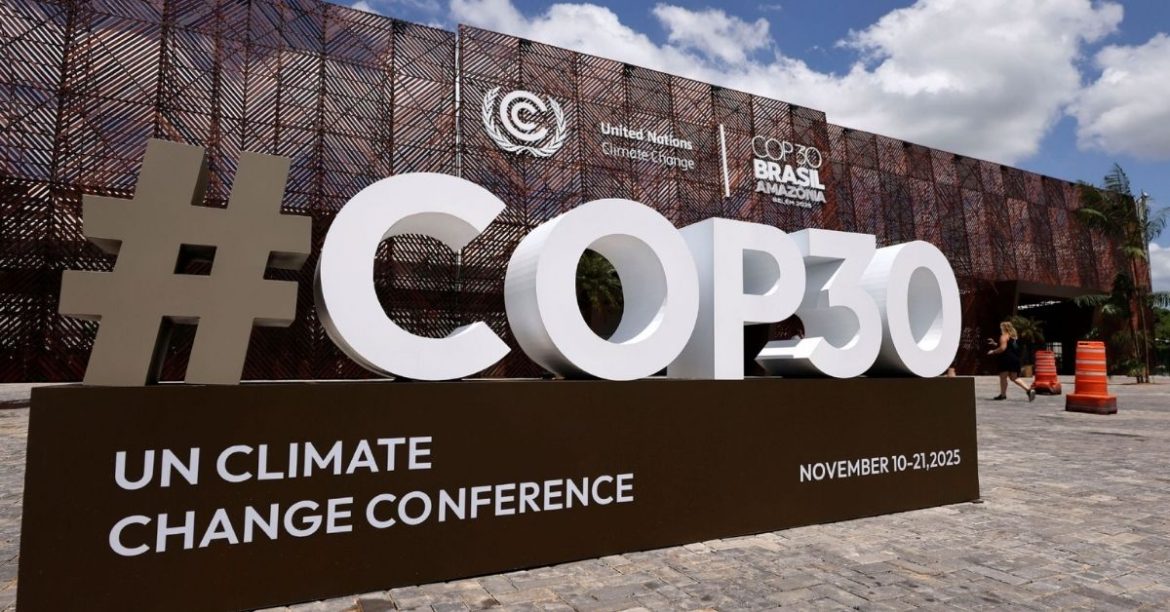
The COP30 Presidency has released its executive report following the United Nations climate summit in Belém, outlining a transition framework aimed at mobilising $1.3 trillion in annual climate finance and accelerating adaptation measures across developing economies.
Issued in early March 2026, the report establishes a technical and political roadmap for the so-called “Baku to Belém” process, designed to translate negotiated commitments into operational policies, financing structures and sector-level implementation.
The document consolidates 56 consensus decisions adopted during the summit, signalling a shift in global climate diplomacy from target-setting to delivery. Officials described the framework as an effort to align climate objectives with fiscal planning, infrastructure development and trade policy, reflecting growing pressure on governments to integrate climate risk into mainstream economic management rather than treat it as a stand-alone environmental issue.
Read also: The wins and loses for Africa at COP30 from its conclusion
For African economies, the report’s focus on the $1.3 trillion finance target, known as the New Collective Quantified Goal (NCQG), carries immediate fiscal relevance. Many countries across the continent are managing rising debt burdens while facing increasing climate-related losses from droughts, floods and extreme weather events that strain public finances and infrastructure systems.
According to the COP30 Presidency, a dedicated “Circle of Finance Ministers” will prioritise reforms to multilateral development banks and the expansion of concessional lending in order to reduce borrowing costs and improve access to long-term capital for climate and development investments.
Such reforms are intended to address a structural financing gap that has constrained infrastructure and energy transitions in many African states. Analysts note that high interest rates and currency risks have limited the ability of governments and utilities to invest in resilient power systems, irrigation networks and transport corridors.
By lowering the cost of capital and strengthening domestic regulatory frameworks, the report suggests that public finance reforms could help unlock private investment, particularly in renewable energy, water management and urban resilience projects.
The Presidency also introduced a “Global Implementation Accelerator,” a mechanism intended to bridge the gap between national climate commitments and practical delivery on the ground. The initiative emphasises the integration of climate resilience into macroeconomic planning, budgeting and development strategies, a shift that reflects increasing recognition that climate risk is shaping growth prospects, fiscal stability and long-term competitiveness.
For African governments, the approach aligns with ongoing efforts to embed climate considerations into national development plans and infrastructure investment pipelines.
Read also: COP30: 18 countries join new global coalition to standardize compliance on carbon markets
Health systems were identified as a priority area for adaptation financing. The report highlighted the launch of the Belém Health Action Plan, backed by an initial $300 million in funding and endorsed by more than 30 countries.
The initiative aims to strengthen public health infrastructure and disease surveillance in regions vulnerable to climate-driven health risks such as heat stress, vector-borne diseases and water contamination. For many African countries, where health systems already face capacity constraints, integrating climate resilience into healthcare planning is increasingly viewed as an economic necessity rather than a social policy objective.
Sector-specific outcomes outlined in the report point to significant implications for Africa’s land-use and energy systems. A new roadmap to halt and reverse deforestation by 2030 reframes forest conservation as a driver of sustainable economic development, linking ecosystem protection to revenue generation through carbon markets, biodiversity financing and sustainable agriculture.
This approach is particularly relevant for forest-rich regions such as the Congo Basin, where land-use decisions have direct consequences for rural livelihoods, export earnings and climate mitigation strategies.
At the same time, the report reaffirmed commitments to transition away from fossil fuels in what it described as a “just, orderly and equitable manner,” acknowledging that countries with hydrocarbon-dependent economies face distinct development challenges.
For African producers such as Nigeria, Angola and Mozambique, the pace and structure of energy transitions carry significant implications for fiscal revenues, employment and energy security. Policymakers are therefore seeking transition pathways that balance emissions reduction targets with economic diversification and industrial growth.

The COP30 Presidency also announced the launch of the Integrated Forum on Climate Change and Trade, a platform intended to address the growing interaction between climate policies and global trade rules. The forum will focus on transparency and coordination in climate-related trade measures, including carbon border adjustment mechanisms and sustainability standards that are increasingly shaping market access.
For African exporters, particularly in manufacturing and agriculture, the alignment of climate policy with trade regulation is becoming a critical determinant of competitiveness in international markets.
The report further highlighted the adoption of the Belém Declaration on Fighting Environmental Racism, endorsed by several African countries including Gabon, Guinea, Liberia, Morocco, Mozambique, South Africa and South Sudan. The declaration recognises that climate impacts are often concentrated in vulnerable communities with limited access to infrastructure and services, underscoring the need for equitable distribution of adaptation resources and investment.
As preparations begin for the next phase of global climate negotiations in Antalya, the COP30 Presidency emphasised the importance of maintaining coordinated action among governments, financial institutions and development partners.
The effectiveness of the Belém framework, for African economies, will ultimately depend on its ability to translate international commitments into predictable financing flows, lower-cost capital and bankable infrastructure projects capable of supporting economic resilience and long-term growth.