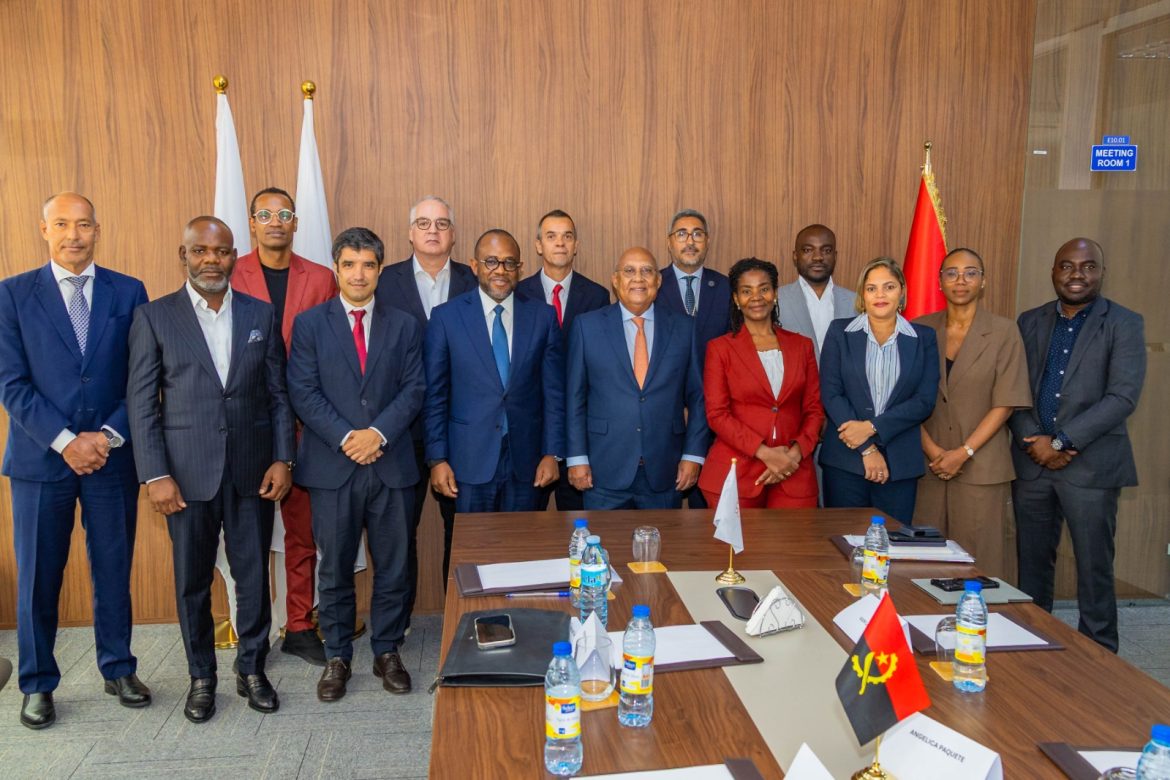
AMUFERT S.A., the fertilizer development company behind one of Angola’s largest planned industrial agriculture investments, has secured unanimous shareholder approval of its financial statements and reaffirmed investor commitment to capitalizing the project, signaling progress toward financial close and reinforcing confidence in the country’s push to strengthen domestic fertiliser production and reduce reliance on imports.
The approvals were confirmed during the company’s General Assembly held in Luanda on April 20th, attended by all registered shareholders, including the national oil company Sonangol, the Angolan Sovereign Fund, and the Opaia Group. The meeting validated the company’s annual financial accounts without reservations and ratified its updated shareholder structure, underscoring continued institutional backing for the project at a time when African governments are placing increasing emphasis on domestic input manufacturing to support food security and economic diversification.
The endorsement of the financial statements, accompanied by legal certification of accounts, is widely regarded within project finance circles as a key governance milestone. It signals that the company’s financial management systems meet regulatory and investor standards, a prerequisite for advancing complex industrial projects that depend on long-term debt financing and coordinated capital contributions from both public and private stakeholders.
According to the company, shareholders reiterated their commitment to ensuring the project is adequately capitalised and that all obligations required to reach financial close are fulfilled.
The fertiliser facility, located in the northern coastal town of Soyo, is designed to produce ammonia and urea for domestic and regional markets. The project is being positioned as a cornerstone of Angola’s industrial strategy, particularly as the country seeks to reduce dependence on imported agricultural inputs and expand value-added manufacturing beyond the hydrocarbons sector.
Fertiliser imports remain a significant cost burden for many African economies, exposing farmers to global price volatility and supply disruptions that can affect crop yields and food prices.
In Angola, the agricultural sector has long been constrained by limited access to affordable fertiliser, weak distribution networks and high logistics costs. According to regional agricultural agencies, fertiliser application rates across sub-Saharan Africa remain among the lowest globally, contributing to persistent productivity gaps in staple crops such as maize, cassava and rice. Expanding local production capacity is therefore viewed not only as an industrial objective but also as a macroeconomic and food security priority.
The AMUFERT project is being developed with support from an international financing consortium led by African Export-Import Bank, reflecting the growing role of development finance institutions in underwriting large-scale industrial infrastructure across the continent.
These institutions typically step in where commercial lenders face constraints related to project risk, long payback periods or foreign exchange exposure. Their involvement often signals to markets that a project has passed rigorous due diligence, improving investor confidence and lowering the cost of capital.
For Angola, the timing of the project is significant. The government has identified agriculture and agro-processing as priority sectors for economic diversification, particularly as global energy markets shift toward lower-carbon systems. Building domestic fertiliser capacity is expected to support national food production while reducing pressure on foreign exchange reserves, which are often strained by the need to import essential agricultural inputs.
The project also aligns with broader regional trends. Several African countries, including Nigeria, Ethiopia and Morocco, have invested heavily in fertiliser manufacturing to strengthen supply chains and improve farm productivity. These investments are increasingly linked to climate resilience strategies, as reliable access to fertiliser is critical for maintaining crop yields in the face of erratic rainfall patterns and soil degradation.
From a governance perspective, the validation of AMUFERT’s financial accounts without reservations indicates that the company has established internal controls and reporting systems consistent with international corporate standards. Analysts note that transparent financial reporting is particularly important for capital-intensive industrial projects, where delays or cost overruns can quickly escalate financing risks.
Read also: Alapala commissions 300-tonne flour mill in Mali to boost West African food security
The confirmation that the project is moving beyond the structuring phase and into active execution suggests that key technical, regulatory and financial conditions have been met.
The economic implications extend beyond the fertiliser sector. Large industrial projects typically generate employment during both construction and operations, while also stimulating demand for transport, energy and logistics services. In resource-dependent economies such as Angola, these spillover effects are central to efforts to build more resilient and diversified growth models.
At the same time, the project faces risks common to heavy industrial developments across Africa, including exposure to global commodity price cycles, infrastructure constraints and the need for stable power and transport systems. Securing reliable financing and maintaining strong governance structures will therefore remain critical as the project advances toward financial close and eventual production.
For policymakers and investors, the progress recorded at the General Assembly provides a measurable indicator that the project is moving forward within a structured governance and financing framework.
In a region where many large-scale industrial initiatives struggle to reach implementation, such milestones are closely watched as signals of execution capacity and institutional credibility.