


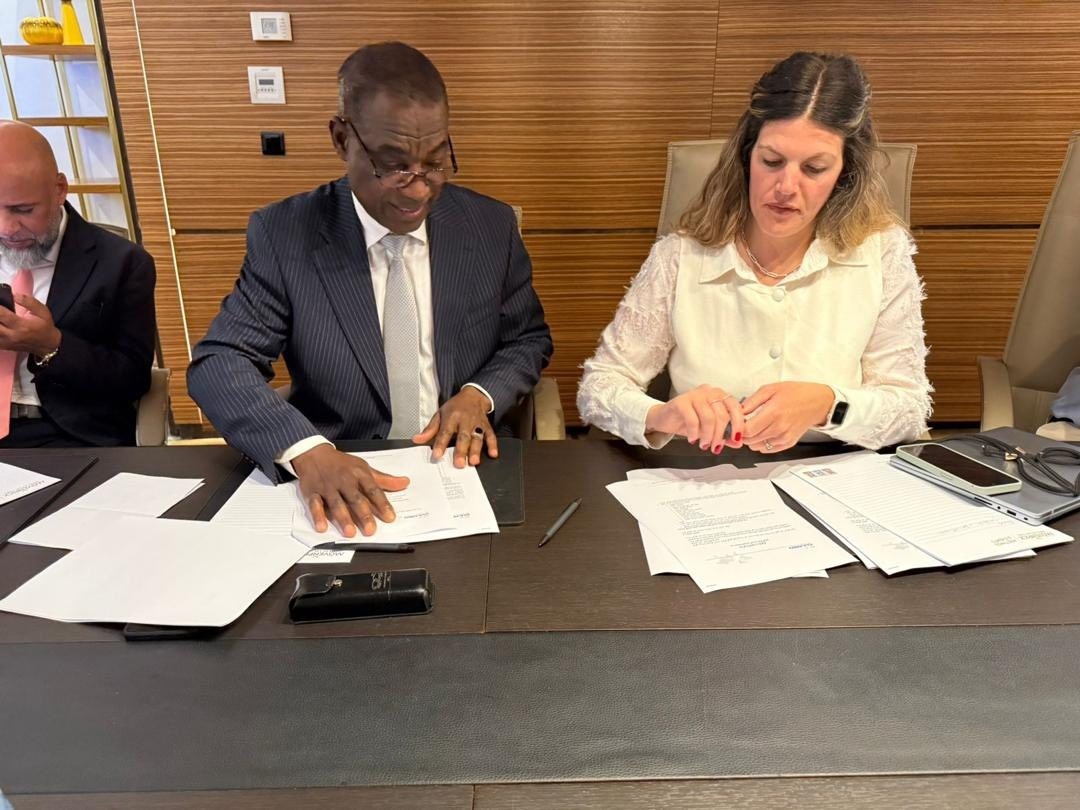
Libya’s Customs Authority has signed a cooperation agreement with United States-based security and capacity-building firm Culmen International to strengthen customs operations at key border crossings, as the North African country seeks to improve trade security, revenue collection and institutional capacity amid ongoing efforts to modernise its border management systems. The agreement, announced on 25 April 2026, will focus on training customs officers stationed at strategic crossings including Ras Ajdir and Wazen along the Tunisian border, while introducing modern equipment and operational procedures designed to enhance inspection, surveillance and enforcement capabilities.
The partnership comes at a time when border governance is assuming increasing economic significance across Africa, where governments are seeking to reduce illicit trade, improve customs efficiency and strengthen the integrity of trade corridors that underpin regional commerce. For Libya, whose geographic position places it at the intersection of North Africa, the Sahel and the Mediterranean, effective customs administration remains critical not only for national security but also for economic recovery and fiscal stability.
 According to the Customs Authority, the programme will provide specialised training aimed at improving the ability of customs personnel to detect contraband, identify irregular trade activity and apply internationally recognised customs procedures. The initiative also includes the deployment of equipment intended to support more efficient border monitoring and enforcement operations at high-traffic crossing points.
Ras Ajdir and Wazen serve as some of Libya’s most important land gateways, facilitating the movement of people and goods between Libya and Tunisia. At the same time, these corridors have long faced challenges linked to informal trade, smuggling networks and weak institutional oversight. Strengthening operational capacity at these locations is therefore viewed as an important component of broader efforts to improve border governance and support legal trade flows.
The agreement builds on Libya’s Early Border Detection Project, a wider reform initiative intended to strengthen customs oversight and improve the country’s ability to monitor cross-border activity. According to officials, the project forms part of a longer-term strategy to modernise border management institutions and enhance economic security through stronger customs controls and more efficient enforcement mechanisms.
Culmen International has been active in Libya since 2019, providing technical assistance and training support in areas including aviation and airport security. The expansion of cooperation into customs administration reflects a growing reliance on specialised international expertise as Libya continues efforts to rebuild institutional capacity following years of political fragmentation and security instability.
The implications extend beyond border security. Across Africa, customs authorities play a central role in domestic revenue mobilisation, particularly in countries where tax collection systems remain underdeveloped. According to development finance institutions, customs duties and trade-related taxes continue to represent a significant source of public revenue in many African economies. Improving customs efficiency can therefore contribute directly to strengthening public finances while reducing revenue leakage associated with illicit trade.
Enhanced customs systems also support broader economic development objectives by improving predictability for businesses engaged in cross-border commerce. More efficient border procedures can lower transaction costs, facilitate trade and strengthen investor confidence in transport and logistics corridors. These considerations are becoming increasingly important as African countries advance regional integration efforts under the African Continental Free Trade Area (AfCFTA), which seeks to expand intra-African trade and reduce barriers to market access.
The initiative also carries environmental and governance dimensions. Stronger border controls can help limit the illegal movement of protected wildlife products, hazardous materials and environmentally sensitive goods, supporting wider efforts to strengthen environmental governance and regulatory compliance. As sustainability considerations become more integrated into trade policy and supply chain management, customs authorities are increasingly expected to play a role in enforcing environmental standards and monitoring cross-border flows of regulated commodities.
For Libya, the agreement represents another step in the gradual strengthening of state institutions that are essential for long-term economic stability. While technical training alone is unlikely to resolve deeper governance challenges, improvements in customs administration can contribute to more effective public institutions, stronger revenue systems and better management of strategic trade corridors.
 The partnership also aligns with broader objectives under the African Union’s Agenda 2063, which identifies capable institutions, improved governance and enhanced regional integration as key foundations for sustainable development. As African economies seek to balance security concerns with trade facilitation and economic transformation, customs modernisation is increasingly emerging as a practical area where institutional reform can generate measurable economic and governance benefits.
Whether the programme ultimately delivers lasting improvements will depend on sustained implementation, institutional coordination and continued investment in human capital. However, the agreement reflects a growing recognition that effective border management is not only a security imperative but also an economic development priority with implications for fiscal resilience, regional trade and long-term state capacity.


