


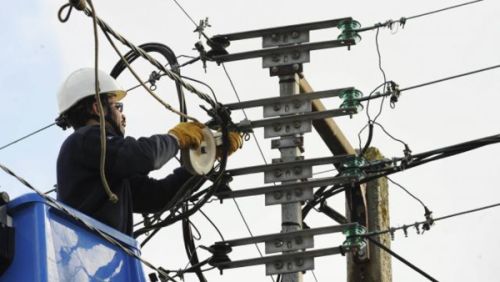
Sub-Saharan Africa now accounts for 86% of the world’s electricity access deficit, a sharp increase from 49% in 2010, underscoring the scale of the continent’s energy challenge despite decades of investment and global progress in electrification, according to a new international report released on June 24. The findings, published in the 2026 edition of Tracking SDG 7: The Energy Progress Report by the International Energy Agency (IEA), the International Renewable Energy Agency (IRENA), the World Bank, the World Health Organization (WHO), and other partners, reveal that while global access to electricity has continued to improve, gains have been unevenly distributed, leaving much of Sub-Saharan Africa behind.
According to the report, the number of people without access to electricity in Sub-Saharan Africa declined only marginally from 565 million in 2010 to 563 million in 2024. During the same period, other regions recorded far faster improvements, dramatically reducing their share of the global access gap. As a result, the continent has become increasingly central to global efforts to achieve Sustainable Development Goal 7 (SDG 7), which seeks universal access to affordable, reliable, sustainable and modern energy by 2030. The report highlights that global electricity access rates have now reached approximately 92%, meaning that most of the remaining challenge is concentrated in a relatively small number of countries, predominantly in Africa.
The concentration is particularly evident in three countries: Nigeria, the Democratic Republic of the Congo (DRC), and Ethiopia. Together, they account for nearly one-third of the global electricity access deficit. Nigeria alone has an estimated 87 million people without electricity access, the highest number globally. The DRC follows closely with approximately 85 million people lacking access, while Ethiopia accounts for around 57 million. These figures illustrate the scale of the challenge facing some of Africa’s largest and fastest-growing economies. More broadly, 18 of the 20 countries with the largest electricity access deficits worldwide are located in Sub-Saharan Africa, reflecting persistent structural barriers that continue to limit energy expansion across the region.
The findings come at a time when electricity demand is rising rapidly due to population growth, urbanization and industrialization. Africa’s population is expected to nearly double by 2050, according to United Nations projections, placing additional pressure on governments to expand energy infrastructure while maintaining affordability. While expanding generation capacity remains important, the report argues that the continent’s electrification challenge is increasingly about delivery systems, financing mechanisms and affordability rather than generation alone. One of the report’s most striking findings is that Sub-Saharan Africa remains the only region in the world where the rural electricity deficit has worsened over the past decade. The number of rural residents without access to electricity increased from 376 million in 2010 to 447 million in 2024.
This trend highlights the persistent divide between urban and rural communities. In many countries, electrification gains have been concentrated in cities and peri-urban areas where grid expansion is more economically viable. Rural communities, particularly those in remote and sparsely populated regions, continue to face high connection costs and limited infrastructure investment. Energy economists note that electricity access is increasingly recognized as a foundational development issue because it directly influences economic productivity, healthcare delivery, education outcomes and digital inclusion.
Without reliable electricity, health facilities struggle to operate essential medical equipment, schools face barriers to digital learning, and businesses encounter higher operating costs that undermine competitiveness. The lack of reliable power also constrains agricultural value chains, limiting opportunities for processing, storage and rural industrialization. The report warns that current investment levels remain well below what is needed to achieve universal access by 2030. To meet the target, countries would need to more than triple the current rate of progress, increasing annual electrification gains to approximately 1.35 percentage points per year.
Closing the financing gap remains one of the most significant obstacles. According to the World Bank and the African Development Bank, achieving universal electricity access across Africa will require tens of billions of dollars in annual investment over the coming years. Public budgets alone are unlikely to meet these requirements, particularly as many governments face mounting debt burdens, fiscal constraints and competing development priorities. As a result, policymakers are increasingly exploring blended finance structures that combine public funding, concessional finance and private-sector capital. The report identifies several factors associated with successful electrification programmes. Countries that have recorded significant progress typically combine least-cost electrification planning, dedicated rural electrification funds, targeted subsidies, Pay-As-You-Go (PayGo) financing models, social tariffs and strong regulatory frameworks.
Off-grid and mini-grid technologies are also playing a growing role. Advances in solar technology and battery storage have significantly reduced the cost of providing electricity to remote communities that are unlikely to be connected to national grids in the near term. Companies offering PayGo solar systems have expanded rapidly across countries including Kenya, Rwanda, Uganda and Tanzania, allowing households to access electricity through small, incremental payments rather than large upfront costs.
The report’s findings reinforce the importance of large-scale initiatives such as Mission 300, a joint programme led by the World Bank and the African Development Bank that aims to connect 300 million Africans to electricity by 2030. Announced as one of the continent’s most ambitious energy access programmes, Mission 300 seeks to accelerate grid expansion, strengthen utilities, support private-sector participation and scale up off-grid solutions. However, experts caution that connection figures alone will not determine success. The report emphasizes that electricity access must be reliable, affordable and sustainable. Millions of households across Africa are technically connected to power networks but continue to experience frequent outages, voltage fluctuations and service disruptions that limit the economic benefits of electrification.
https://www.aecweek-registration.com/2026/
For policymakers, the challenge is therefore no longer simply about extending power lines or building new generation plants. It is about creating energy systems capable of delivering consistent and affordable electricity to households, businesses and public institutions.As the global community enters the final years of the SDG 7 timeline, Sub-Saharan Africa has become the decisive frontier in the effort to achieve universal energy access. The region’s success or failure will largely determine whether the world meets one of its most important development targets and whether hundreds of millions of Africans gain access to the energy services needed to support economic growth, social development and climate resilience.


