


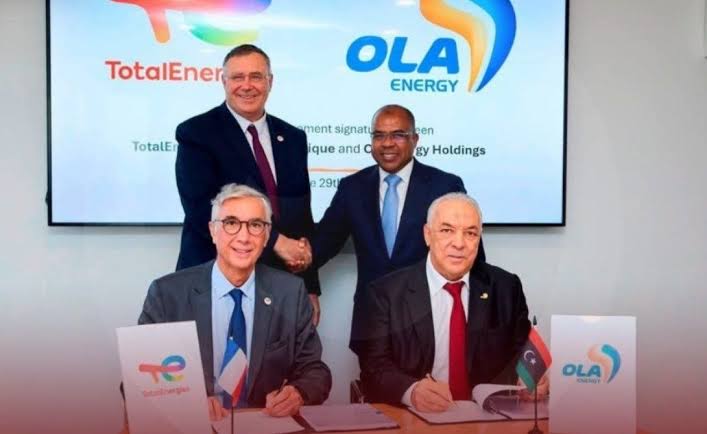
OLA Energy has signed an agreement to acquire the entire fuel retail and storage business of TotalEnergies in Ethiopia, marking one of the most significant downstream energy transactions in East Africa in recent years and underscoring the ongoing restructuring of Africa’s petroleum distribution sector.
The agreement, signed in Paris on June 30, transfers TotalEnergies’ Ethiopian fuel retail network, comprising between 120 and 143 service stations according to various industry sources, together with a 13,000-cubic-metre fuel storage terminal in Dukem, southeast of Addis Ababa. The acquisition also includes the associated commercial and operational activities supporting the business. Once completed, the transaction will make OLA Energy the largest foreign-owned fuel retailer operating in Ethiopia, while bringing to an end TotalEnergies’ 76-year presence in one of Africa’s fastest-growing economies.
The financial terms of the transaction were not disclosed, and neither company has provided details regarding employee transfers, regulatory approvals or the timetable for replacing the TotalEnergies brand with OLA Energy across Ethiopia’s retail network. The signing ceremony was attended by Khalifa Abdulsadiq, Libya’s chargé d’affaires in France Mohamed Hammouda and Patrick Pouyanné, highlighting the strategic importance of the transaction for both Libya’s investment interests and TotalEnergies’ evolving African portfolio. For TotalEnergies, the sale represents the conclusion of a business relationship with Ethiopia dating back to 1950, when the company established its first operations in the country. Over subsequent decades, the French energy company developed one of Ethiopia’s largest fuel distribution networks, becoming the country’s third-largest petroleum retailer while also operating strategic fuel and liquefied petroleum gas storage infrastructure in Dukem.

The divestment aligns with TotalEnergies’ broader strategy of optimising its downstream operations across Africa. The company has increasingly focused on concentrating investments in selected high-growth markets while divesting non-core retail assets as part of a wider portfolio rationalisation programme. Industry reports published in 2025 indicated that the company intended to exit approximately 150 service stations across Ethiopia and Eritrea. The acquisition also reflects OLA Energy’s continued expansion across Africa’s downstream petroleum sector. Formerly known as OiLibya before rebranding in 2018, the company has steadily expanded through acquisitions and organic growth to establish operations in 17 African countries, managing more than 1,350 service stations throughout the continent.
Owned by the Libya Africa Investment Portfolio, OLA Energy has pursued a long-term strategy of consolidating downstream fuel assets across Africa. Between 2004 and 2008, the company acquired numerous service station networks previously operated by Shell and ExxonMobil in several African markets, significantly strengthening its regional footprint. According to industry reports, OLA Energy recorded a net profit of €34.5 million in 2024, providing the financial capacity to support further acquisitions as competition intensifies within Africa’s evolving energy markets.
The Ethiopian acquisition comes at a time of significant transformation within the country’s petroleum sector. Ethiopia remains one of Africa’s largest fuel importers, relying almost entirely on imported refined petroleum products to meet growing demand driven by rapid urbanisation, infrastructure development and industrial expansion. Despite the country’s substantial renewable energy resources and ambitious electrification plans, liquid fuels continue to play an essential role in supporting transport, logistics, manufacturing and agricultural production. Ensuring efficient fuel distribution therefore remains a strategic priority for economic development.
The Ethiopian government has also introduced important market reforms aimed at modernising the downstream petroleum sector. In October 2025, authorities implemented a revised fuel market allocation framework classifying cities into five categories based on population size and economic activity. The reforms are intended to improve distribution efficiency, reduce logistical bottlenecks and curb cross-border fuel smuggling while creating a more competitive operating environment. These regulatory changes coincide with broader economic reforms that have gradually opened sectors of Ethiopia’s economy to greater private-sector participation and foreign investment. Improving efficiency within strategic industries such as energy distribution is viewed as an important component of the country’s efforts to strengthen economic competitiveness and attract investment.
For Africa more broadly, the transaction reflects wider shifts occurring across the continent’s downstream energy industry. International oil majors have increasingly reviewed their African retail portfolios as they rebalance global investments towards lower-carbon energy businesses while maintaining upstream production and selected strategic downstream operations. This trend has created opportunities for regional energy companies and African investors to acquire established infrastructure and expand their presence in domestic and regional fuel markets. Indigenous operators often possess deeper knowledge of local market dynamics and may pursue longer investment horizons aligned with regional growth opportunities.
The emergence of stronger African-owned downstream companies also has implications for regional energy security. Expanding domestic and regional ownership of fuel infrastructure can strengthen supply chain resilience while supporting investment decisions that respond more directly to local market conditions.However, the downstream petroleum industry also faces longer-term structural challenges as African economies gradually transition towards cleaner energy systems. While demand for petroleum products is expected to remain robust over the coming decades, increasing investments in electric mobility, renewable energy and energy efficiency will progressively reshape fuel consumption patterns across many markets.
Companies operating within the sector are therefore increasingly balancing traditional fuel distribution with investments in cleaner energy solutions, convenience retailing and digital services to diversify revenue streams and strengthen long-term competitiveness. For Ethiopia, maintaining reliable fuel distribution infrastructure remains particularly important as the country pursues industrialisation, expands manufacturing capacity and strengthens regional trade under the African Continental Free Trade Area (AfCFTA). Efficient energy logistics support economic activity while reducing transport costs and improving supply chain reliability.
https://www.aecweek-registration.com/2026/
The Dukem storage terminal included in the acquisition further enhances OLA Energy’s strategic position. Fuel storage facilities are critical components of national energy infrastructure, helping maintain supply stability, improve inventory management and reduce vulnerability to external disruptions. Beyond commercial considerations, the acquisition also highlights the growing role of African investment institutions in shaping the continent’s energy landscape. The Libya Africa Investment Portfolio’s ownership of OLA Energy demonstrates how sovereign investment vehicles are increasingly supporting regional infrastructure development and cross-border corporate expansion. Although financial details remain undisclosed, the acquisition is expected to strengthen OLA Energy’s position within one of Africa’s largest and fastest-growing fuel markets while enabling TotalEnergies to continue implementing its global portfolio optimisation strategy.
For Africa’s downstream energy sector, the transaction illustrates an evolving competitive landscape characterised by greater regional ownership, ongoing market reforms and increasing emphasis on operational efficiency. As governments pursue energy security alongside broader economic transformation, investments in fuel logistics, storage and distribution infrastructure will remain essential to supporting industrial development, trade and sustainable economic growth across the continent.


