


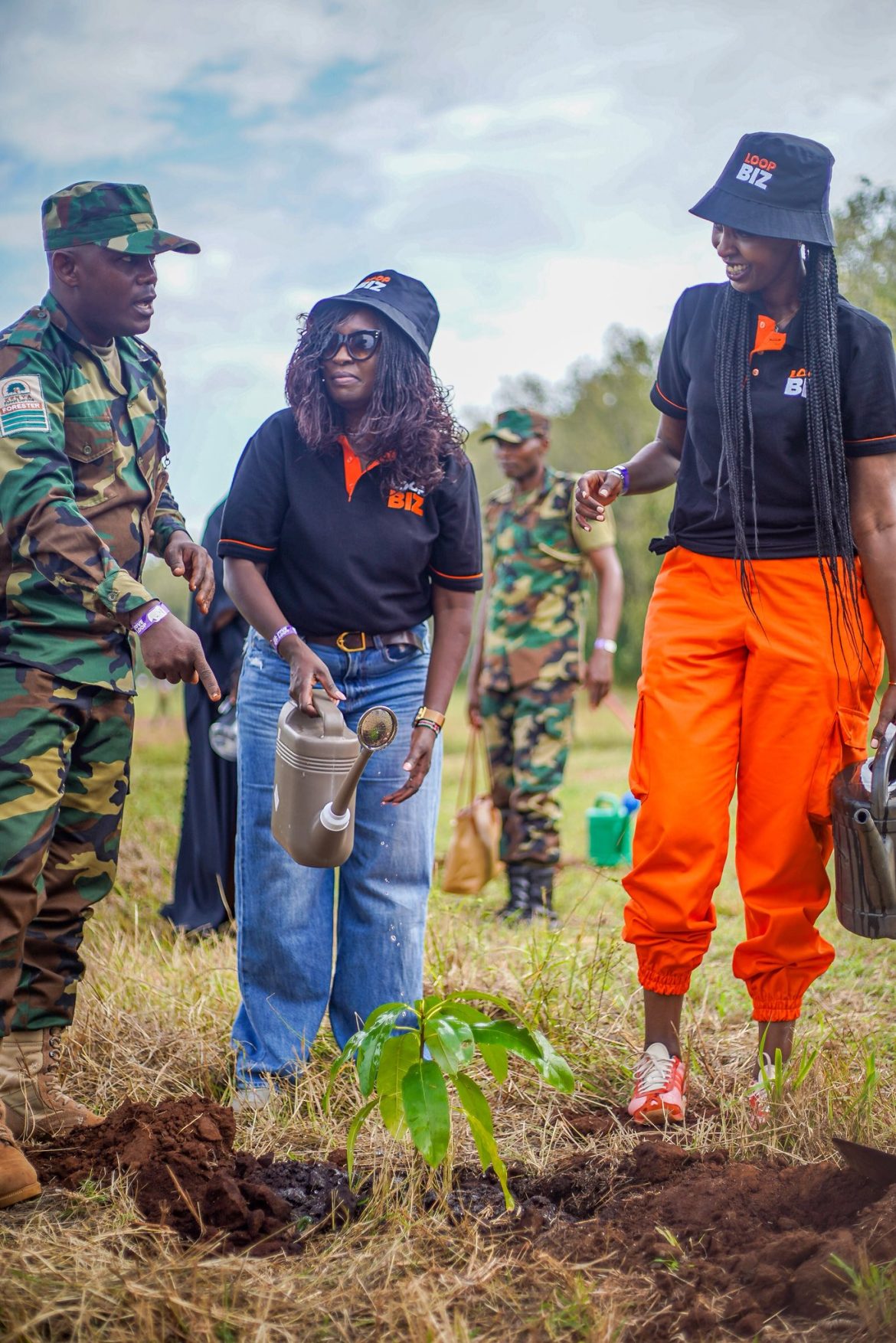
The LOOP Safari Gravel Series has planted 3,500 trees in 2026, adding 100 trees during its latest round at Vipingo on Kenya’s coast and bringing the total number planted through the cycling programme since its launch to more than 7,000. The initiative is positioning environmental restoration alongside sport and community participation as the series moves towards its final 2026 round at Mount Kenya in October.
The tree-planting programme has become an increasingly visible component of the Safari Gravel Series, with organisers integrating conservation activities into race events rather than treating environmental action as a separate corporate initiative. At Vipingo, cyclists, organisers and partners participated in planting 100 trees alongside the third round of the 2026 series.
LOOP DFS Chief Executive Officer Erick Muriuki said the initiative was intended to connect the sporting experience with the communities and environments hosting the races. The company said the 3,500 trees planted during 2026 and more than 7,000 planted across the three editions of the series reflect an effort to incorporate sustainability into the event’s wider operating model.
The approach follows a larger planting exercise held in Naivasha during the second round of the 2026 series. LOOP DFS planted 3,000 indigenous and climate-adaptive trees at Flamingo Farm, in an initiative linked to ecosystem restoration and climate resilience. The Naivasha activity involved more than 2,000 people, including cyclists, spectators, partners and local residents, according to reports on the event.
The selection of indigenous and adaptive species is relevant to the effectiveness of such programmes. Species reported to have been planted in Naivasha included Odo, olive, neem, croton, acacia, Melia azedarach and Syzygium, reflecting an emphasis on trees suited to local ecological conditions rather than a uniform planting approach. That distinction matters in Kenya, where tree planting has increasingly become part of broader national efforts to restore degraded landscapes and improve climate resilience. The country has set ambitious targets for expanding tree cover, but the environmental value of planting programmes depends not only on the number of seedlings put into the ground but also on survival rates, species selection, maintenance and long-term ecosystem outcomes.
For businesses, sports events provide a potential platform for linking environmental programmes to physical locations and communities. Unlike standalone tree-planting campaigns, activities associated with recurring events can create opportunities to return to the same landscapes, engage participants and potentially monitor restoration over time.
The Safari Gravel Series has also developed into a regional sporting platform. The 2026 calendar began at Limuru Country Club in March, moved to Naivasha in June and reached Vipingo on August 29. The official series website lists Mount Kenya as the final event on October 17. The Vipingo race attracted elite, amateur and recreational cyclists across 105km, 55km and 30km categories. Uganda’s Jordan Schleck retained the men’s 105km title in 3:31:59, while compatriot Mary Aleper defended her women’s title in 4:42:24. Kenya’s Lance Kangangi won the 55km men’s race by one second, while Jecinta Wanjiru took the women’s 55km category.
The sporting component is important because cycling itself is increasingly being positioned within Kenya’s tourism, recreation and outdoor-economy opportunities. The Safari Gravel Series website describes the races as combining competitive cycling with routes through different Kenyan landscapes, while the Vipingo round was designed around coastal trails and farmland near the Indian Ocean.

The series’ sustainability component also builds on commitments made when LOOP became title sponsor. At the launch of the 2024 series, LOOP DFS said it would support sustainability activities at race venues, including tree planting and efforts aimed at rehabilitating and conserving waterways. The environmental programme has subsequently expanded from that initial commitment into a recurring feature of the series. Its development illustrates a broader shift in corporate sustainability in which companies are increasingly expected to demonstrate practical environmental outcomes alongside broader commitments.
For Kenya’s communities, the potential value of such programmes extends beyond carbon considerations. Well-designed restoration projects can support soil protection, biodiversity, water regulation and landscape resilience, while community participation can strengthen local ownership of conservation activities. However, the longer-term impact will depend on whether planted trees survive and whether restoration is maintained after individual events conclude.
The involvement of conservation institutions is therefore significant. LOOP’s recent Vipingo planting activity involved officers from the Kenya Forest Service, according to the company’s LinkedIn communication, while earlier Naivasha activities were linked to management of Hell’s Gate National Park. The next test for the programme will be its ability to move from headline planting numbers to measurable restoration outcomes. Tracking tree survival, ecological recovery and community benefits would provide a clearer assessment of the environmental value created through the series.
The final 2026 round at Mount Kenya will provide another opportunity to extend the initiative. More broadly, the Safari Gravel Series demonstrates how sporting platforms can be used to connect recreation, tourism, community participation and environmental restoration. For corporate sustainability programmes, the significance lies increasingly not in the visibility of individual activities, but in whether repeated interventions produce measurable and durable benefits for the landscapes in which businesses operate.


