


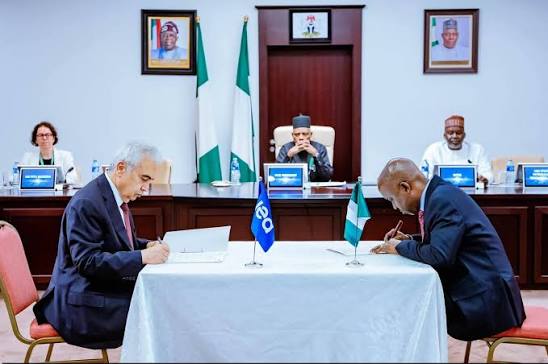
Nigeria could double the level of investment flowing into its energy sector within the next five years, according to International Energy Agency (IEA) Executive Director Fatih Birol, who said the country’s recent admission as an associate member of the Paris-based agency could strengthen investor confidence, deepen technical cooperation and elevate Nigeria’s role in global energy policy discussions. Speaking during a visit to Abuja on September 3, Birol said the ambition was to significantly increase capital flows into Africa’s largest oil-producing economy across oil, gas, electricity and renewable energy projects.
 The remarks come at a pivotal moment for Nigeria’s energy sector. Despite holding some of Africa’s largest oil and natural gas reserves, the country has struggled for years to attract sufficient investment needed to expand production, modernise infrastructure and improve power supply reliability. According to Birol, unlocking the sector’s full potential will require substantial capital deployment across both conventional and emerging energy industries, including solar power, which is increasingly viewed as critical to expanding energy access for households and businesses.
Nigeria became an associate member of the IEA in July after the agency’s governing board unanimously approved its application, extending cooperation between the world’s leading energy advisory body and Africa’s most populous nation. The move marks a significant step in integrating Nigeria more closely into global energy governance structures and is expected to provide access to technical expertise, policy support and broader international investment networks.
Birol argued that the changing geopolitical landscape is reshaping investment decisions across global energy markets. Supply disruptions linked to conflicts in Ukraine and tensions affecting key energy trade routes have heightened concerns over energy security, prompting governments and investors to place greater emphasis on reliability and long-term partnerships. In that environment, he said, trust has become an increasingly valuable strategic commodity.
The most scarce commodity is not oil, not gas, not uranium, not lithium. It is trust,” Birol said, describing Nigeria as a credible energy partner at a time when countries are reassessing supply chains and seeking dependable producers.
The comments underscore a broader shift taking place across international energy markets. While the global energy transition continues to accelerate investment in clean technologies, concerns over energy security have reinforced the importance of stable hydrocarbon producers. For African economies rich in natural resources, this creates both opportunities and pressures. Countries are increasingly expected to demonstrate policy consistency, regulatory transparency and institutional credibility if they are to capture new waves of energy investment.
Nigeria’s government is seeking to nearly double crude oil output to about three million barrels per day by 2030, a target that depends on infrastructure upgrades, improved security conditions and stronger efforts to combat oil theft, which has undermined production and discouraged investors for years. The government has also pursued reforms aimed at improving the operating environment and attracting private capital into energy infrastructure.
According to the IEA, cooperation with Nigeria will extend beyond investment promotion. Both parties are expected to implement a Joint Work Programme covering areas including natural gas development, electrification, clean cooking solutions, energy efficiency, energy security and improvements in energy data systems. Better energy data has long been a concern among investors and market participants, particularly regarding oil production, exports and domestic consumption statistics. Enhanced transparency could improve project evaluation, reduce uncertainty and strengthen market confidence.
The significance of the partnership extends well beyond Nigeria. As Africa confronts one of the world’s largest energy access gaps while simultaneously navigating climate commitments and development priorities, the ability to mobilise investment remains a central challenge. The continent accounts for a relatively small share of global energy investment despite having substantial energy resources and some of the fastest-growing populations in the world. Greater engagement between African governments and international institutions could therefore play an important role in reducing financing barriers and supporting infrastructure development.
Nigeria’s experience is particularly relevant because it illustrates the complex balance many African countries must strike. The country is seeking to expand oil and gas production to boost revenues and support economic growth while also pursuing investment in renewable energy and electricity access. Managing that dual-track agenda will require substantial financing, effective governance and stable policy frameworks capable of attracting both domestic and international capital.
Birol also pointed to the growing importance of Nigeria’s downstream energy sector, highlighting exports from the Dangote refinery, which processes around 700,000 barrels of crude oil per day. According to the IEA chief, refinery exports have helped ease fuel supply pressures in parts of Europe, demonstrating Nigeria’s increasing relevance within evolving global energy trade flows.
For investors, the key question will be whether Nigeria can convert improved international standing into tangible project execution. Membership of a global institution can enhance visibility and confidence, but investment decisions ultimately depend on project economics, regulatory certainty, infrastructure quality and political stability. The success of the new partnership is therefore likely to be measured not by membership itself, but by whether it translates into increased capital flows, stronger energy institutions and improved energy outcomes for businesses and communities.
 As global energy markets continue to adapt to geopolitical uncertainty and shifting demand patterns, Nigeria’s closer relationship with the IEA could provide a useful test case for how African economies position themselves within an increasingly competitive landscape for energy investment. If the expected increase in capital materialises, the implications could extend beyond higher production levels, influencing electricity access, industrial development, fiscal revenues and broader economic resilience across one of Africa’s most strategically important energy markets.


