


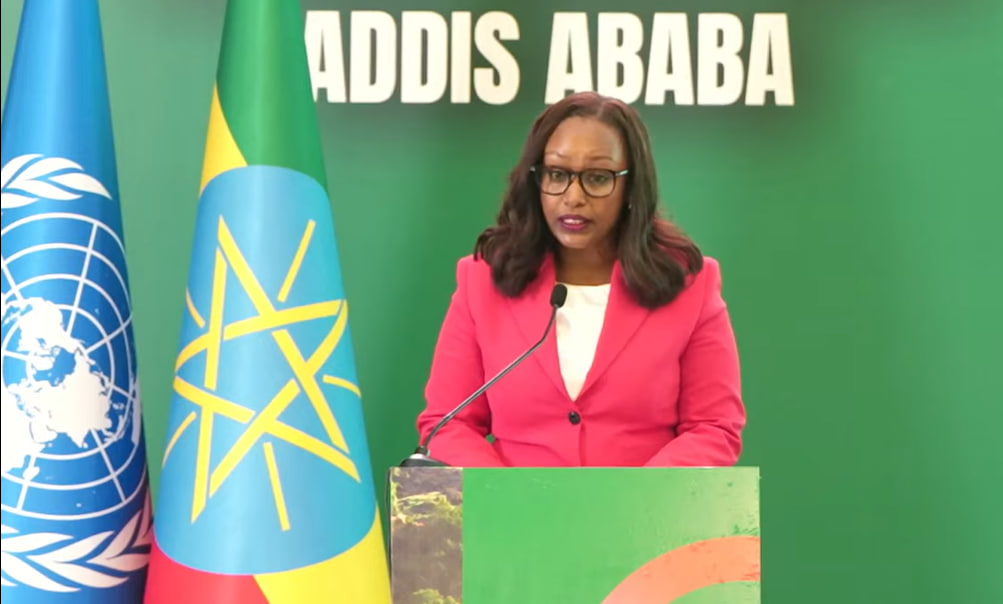
African policymakers, climate negotiators, financial institutions and development experts are meeting in Addis Ababa this week to develop a more implementation-focused continental climate agenda, as governments confront persistent gaps in climate finance, adaptation, infrastructure and economic transformation. The Fourteenth Conference on Climate Change and Development in Africa, running from September 7 to 9 under the theme “From Pledges to Implementation: The Belém–Antalya–Addis Roadmap”, is seeking to consolidate Africa’s priorities ahead of COP31 while laying the policy foundations for Ethiopia’s role as host of COP32 in 2027.
 The conference comes as African governments face a widening gap between the climate commitments made through international agreements and their ability to finance and implement projects on the ground. According to the United Nations Economic Commission for Africa, discussions at the UNFCCC’s June 2026 subsidiary-body meetings in Bonn advanced technical work on adaptation, transparency, Article 6 and the just transition, but significant challenges remain around climate finance, implementation support, loss and damage and delivery of the first Global Stocktake.
That gap has direct economic consequences for African countries. Climate change is increasingly affecting agricultural production, electricity systems, water availability, infrastructure and public health, while governments already face constrained fiscal space and high borrowing costs. The result is a policy challenge that extends beyond environmental ministries: climate resilience increasingly determines the durability of public investment, the cost of infrastructure and the ability of economies to attract private capital.
Africa contributes less than 4% of global greenhouse-gas emissions but remains among the regions most exposed to climate-related disruption, according to UNECA. Rising temperatures, droughts, floods, cyclones, biodiversity loss and climate-related health risks are already affecting livelihoods, infrastructure, natural resources and economic activity. The continent’s exposure has strengthened calls for greater access to concessional finance, technology and technical capacity, but the Addis Ababa meeting is also placing greater emphasis on what African institutions can design and implement themselves.
The distinction matters because climate diplomacy has traditionally concentrated heavily on securing stronger international commitments. CCDA-XIV is attempting to broaden that approach by asking how African countries can influence the rules, institutions and implementation systems that determine whether those commitments translate into investment and economic outcomes.
According to UNECA, the conference is intended to move beyond defending African priorities in negotiations and toward greater African agency in defining problems, developing solutions, building coalitions and shaping implementation architectures. Its agenda includes climate finance reform, adaptation, climate-risk management, energy transitions, critical minerals, trade and green industrialisation.
For governments, climate finance remains one of the most consequential issues. Access to capital is not simply a question of how much money is committed internationally, but also of the terms under which it is provided. Concessionality, debt sustainability, adaptation finance and the ability to mobilise private investment will determine whether countries can expand resilient infrastructure without adding unsustainable pressure to public balance sheets.
The financing challenge is particularly important for energy systems. African economies need to expand electricity access while managing the transition toward lower-emission technologies, a task complicated by differing levels of energy poverty, industrialisation, domestic resources and technological capacity. UNECA’s conference framework recognises these differences and calls for approaches to climate-development transitions that account for countries’ varying development needs rather than applying a uniform transition model.
Read also: https://uneca.org/eca-events/CCDA-XIV?
The same tension is emerging around Africa’s critical minerals. The global shift toward electric vehicles, batteries, renewable power and other low-carbon technologies is increasing demand for minerals found across the continent. Yet the economic benefit to African producers will depend on whether countries can move beyond exporting raw materials toward processing, manufacturing and higher-value industrial activity.
That makes climate policy increasingly inseparable from trade and industrial policy. Rules governing carbon, clean technologies, supply chains and critical minerals are becoming factors in investment decisions and market access. African governments therefore face the dual task of protecting development space while positioning domestic industries to participate in markets created by the global energy transition.
Infrastructure provides another test of whether climate commitments can become economic policy. Roads, ports, power systems, water networks and urban infrastructure are exposed to increasingly severe climate risks. Incorporating climate information and resilience into project design can raise initial investment requirements, but failing to do so can increase maintenance costs, disruption and the likelihood of premature asset losses.
This is why UNECA is placing greater emphasis on climate information, science and data. The conference identifies early-warning systems, Earth observation, research and climate information services as essential tools for managing risk, guiding investment and improving national and regional planning. For African economies, better climate intelligence can influence everything from agricultural decisions and insurance pricing to infrastructure design and disaster-response budgets.
The institutional dimension is equally important. Climate commitments are implemented through national budgets, regulatory agencies, development plans and investment programmes. Where responsibilities are fragmented or climate objectives are poorly integrated into economic planning, projects can struggle to move from policy documents to funded programmes.
CCDA-XIV is therefore seeking stronger policy coherence between climate and development priorities. The conference is expected to produce the Addis Ababa Climate Action Messages, setting out consolidated African priorities and implementation recommendations for COP31 and establishing strategic directions toward COP32.
The meeting also reflects the changing role of Ethiopia in global climate diplomacy. Ethiopia is expected to assume the COP32 presidency in 2027, giving the country a potentially influential role in shaping the international agenda after COP31. UNECA says the conference will examine options for Ethiopia to develop initiatives that could help address complex global climate-governance challenges while distinguishing that future presidency role from the broader African negotiating position.
The sequencing is significant. CCDA-XIV follows the Seventh Africa Climate Talks held in April and the June UNFCCC subsidiary-body meetings, while taking place ahead of the UN General Assembly and COP31. The conference is consequently positioned as part of a wider effort to consolidate African priorities before the next major round of international climate negotiations.
For African financial institutions, the outcome could have implications beyond diplomacy. A more coherent continental approach to climate finance could influence the design of investment pipelines, risk-sharing mechanisms and partnerships with multilateral development banks. It could also strengthen the case for financing structures that combine public and private capital, particularly for infrastructure and adaptation projects where commercial returns alone may not justify investment.
For businesses, the implications are similarly broad. Climate-related trade rules, disclosure requirements, energy costs and resource constraints are increasingly affecting competitiveness. Companies operating in agriculture, mining, manufacturing, transport and financial services are likely to face greater pressure to understand physical climate risks alongside the regulatory and market changes associated with the transition to lower-emission economies.
The challenge for African policymakers will be converting the language of implementation into institutions capable of delivering it. A unified negotiating position can strengthen Africa’s influence internationally, but its economic value will ultimately depend on whether governments can translate those priorities into bankable projects, credible regulations, stronger data systems and investment decisions that withstand climate-related risks.

CCDA-XIV is therefore testing a broader proposition about Africa’s role in global climate governance: that influence should be measured not only by the commitments secured at international conferences, but also by the continent’s capacity to shape investment rules, build institutions and implement solutions suited to its development realities. The Addis Ababa discussions will feed into Africa’s preparations for COP31 and, potentially, the foundations of an African-led COP32 agenda in 2027.


