


Table of Contents
1. NGX Is Prepping Nigeria’s Mainstream Companies for Climate Capital. But Nigeria Doesn’t Need More ‘Sustainability’ Reports

Temi Popoola, Chief Executive Officer, NGX. Photo Credit: Nairametrics
According to Nairametrics, the Nigerian Exchange Group (NGX) has started evaluating companies in its N-Zero program. Over 100 companies have received its climate baseline survey, and 17, including Access Holdings, Dangote Cement, UBA, Zenith Bank, BUA Cement, Oando, and Seplat Energy, have officially joined.
GMD/CEO of the NGX Group, Temi Popoola, while commenting on the development, said:
“The transition to a net-zero economy is increasingly becoming a factor in competitiveness, investor confidence, and access to capital”. Furthering that, “Nigerian businesses therefore need to move beyond climate ambition to demonstrate measurable and credible progress.”
Why this matters: This shows that companies at the center of Nigeria’s mainstream economy are now getting into a process that could make their climate risks, emissions, and transition plans more visible to investors and other stakeholders.
At another level, the recent reclassification of Nigeria to Frontier market status by FTSE Russell speaks to whether investors can access Nigeria’s market; N-Zero may eventually point climate-conscious capital that might be looking into Nigeria on where to bet their money.
What we are watching: Although this initiative is still in the survey and baseline phase, we are watching how the NGX will ensure it doesn’t end up as another sustainability or climate-compliance report that will sit on companies’ websites. The real test will be in the stories the assessment tells about these companies. We are also watching which of the companies will turn their findings into credible green business plans, and how the outcome can eventually change where and how money flows into our economy.
2. Nigerian Startup, Nomba, Is Turning the Country’s Generator Problem into a Credit Opportunity.
Nomba and Synafare, a renewable finance platform, have committed ₦2bn over 24 months to help about 300 Nigerian SMEs buy solar equipment over the next two years. So far, they’ve given out more than ₦500 million to 10 SMEs, and none have defaulted. In this partnership, Synafare finds and checks the SMEs, while Nomba gives out the loans.
Why this matters: GreenTelligence has noted that companies like MTN and other large corporates spend heavily on diesel, and that the size of these bills is a signal to an addressable market with the willingness and ability to pay for clean energy providers.
Nomba’s approach is also converting fuel and electricity bills SMEs already pay into solar loan repayments. Think about the millions of Nigerian shop owners running a freezer, salon, or printing press on a generator. They don’t need another article on net zero. But they are in need of solutions that can provide them with constant electricty for their business and reduce their fuel or electricity bills.
Also, as we saw with LAPO lending, Nomba shows that climate funding doesn’t always require complicated green-finance tools. Regular financial platforms can use their usual lending methods to address climate finance issues.
What we are watching: The company says more than ₦500m has been disbursed to 10 SMEs, and that there are no defaults yet. 10 SMEs are too few to tell the risk level of the market. So we are watching whether the no-default repayment will remain strong as the customer base expands from 10 to 300 SMEs.
The companies also need to share details on interest rates, loan terms, collateral, and, most importantly, whether switching to solar actually saved money for the SMEs that took the loan. This information can encourage more customers to take loans, attract other fintechs and microfinance institutions to design products for the market, and draw in green-focused investors into the sector.
3. Maskh’s $4m Deal Shows What It Takes to Finance a Mini-Grid Before Customers Start Paying.
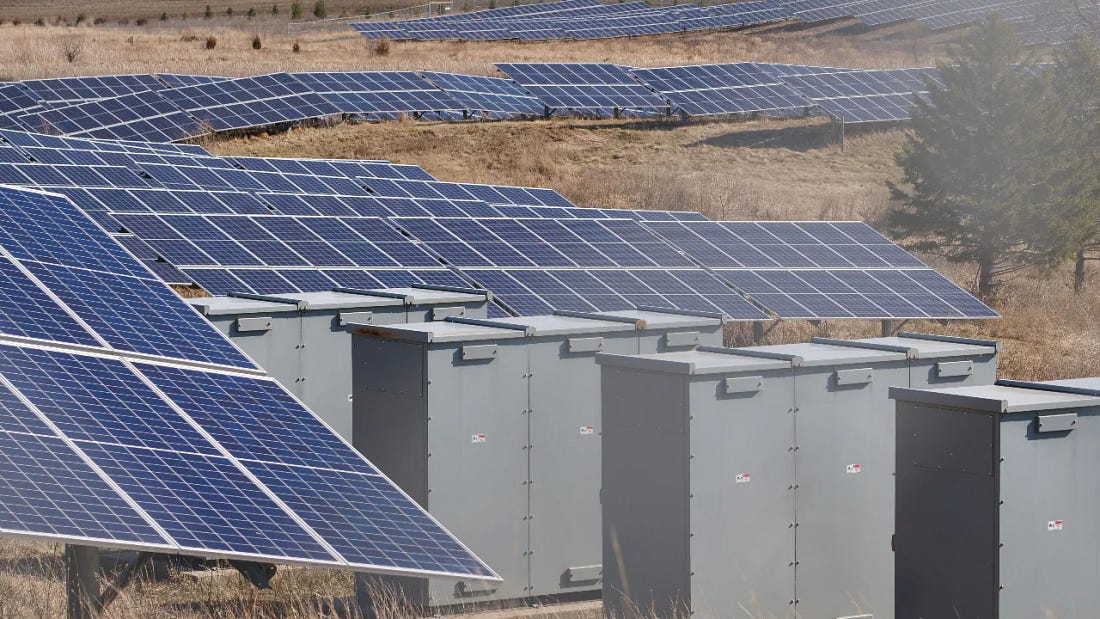
Photo Credit: All On
All On and Energise Africa have announced a $4 million financing package for Maskh, a Nigerian mini-grid company, to help expand solar mini-grids in 19 communities in Jigawa and Bauchi.
Maskh will identify the communities, build the mini-grids, and operate them. All On is providing some of the funding, while Energise Africa brings in more investors. The Rural Electrification Agency (REA) will provide additional support once certain results are achieved and confirmed. People and businesses in these communities will pay for the electricity they use from the mini-grid.
Why this matters: Unlike Nomba and LAPO, green project developers like Maskh face a different challenge. They must invest a lot in solar panels, batteries, meters, and local distribution networks before any customers start paying.
Traditional banks might see these projects as too risky. Even if there is a market, there are no guarantees that people can pay or that the developer can meter usage and collect payments. That is why this project needs different types of funding for different purposes.
What we are watching: How much of the $4 million will actually go into building the mini-grids, when the 19 projects will be finished, and whether Maskh can collect enough revenue to keep the mini-grids running and pay back investors.
One example like this does not make a market trend. Still, it shows a clear way for a Nigerian mini-grid developer to use different funding sources to support projects.
4. Nigeria’s New Plastic Rules Could Create Stronger Demand for Recycled Plastic.
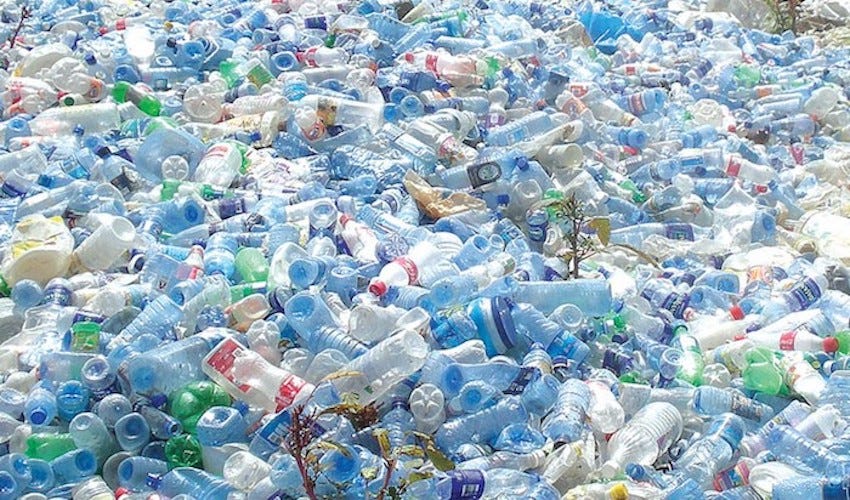
The federal government has introduced new rules to address Nigeria’s plastic waste problem. Starting in January 2028, single-use PET packaging must include at least 25% recycled PET. This requirement will rise to 50% from 2030.
Nigeria has had Extended Producer Responsibility (EPR) rules for years. The EPR policy requires companies to take responsibility for their plastic waste. In a way, this is not new. What is different about the Plastic Waste Control Regulations 2026 is that they set out more specific duties for manufacturers, importers, and brands.
Why this matters: Take bottled-drink companies as an example. Right now, when you finish your drink, the empty bottle usually becomes your responsibility or the government’s when it ends up on the streets. The new rules aim to change this by making producers responsible for collecting and recycling the packaging they sell.
This could change how Nigeria’s waste industry works because if companies must now recover more plastic and use recycled materials in their products, they will need people to collect, sort, process, and supply them with waste. This changes a plastic bottle on the roadside from being waste to a raw material needed by manufacturers.
This could open up new opportunities for waste collectors, recyclers, logistics companies, and businesses that can supply recycled plastic to manufacturers.
What we’re watching: Regulation alone won’t create this market. The real test of it will be in enforcement. We’ll be looking at how much responsibility producers actually take, what penalties they face for noncompliance, and whether the government can track how much plastic companies recover.
We’ll also see whether the 25% recycled-content rule can create steady enough demand to spur companies to invest in larger recycling plants and improved collection networks.
5. East African Equity Bank Is Betting $90 Million That Climate Adaptation Can Become Good Banking Business.
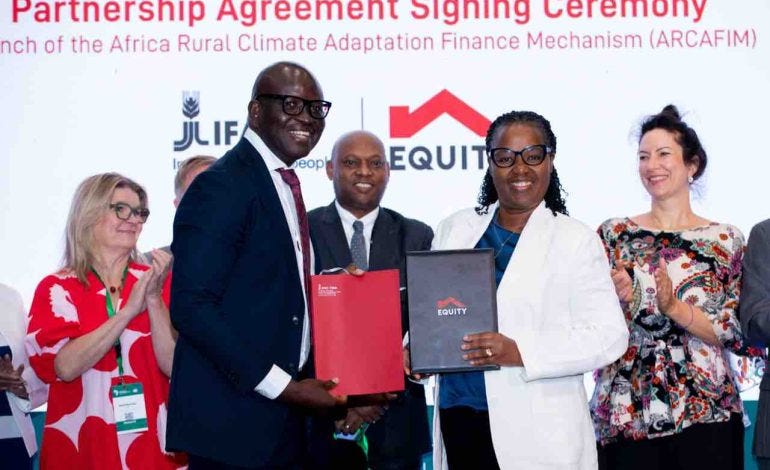
Photo Credit: Farmer Future Africa
Equity Bank and the International Fund for Agricultural Development have started a $200 million financing program to support farmers and rural businesses in Kenya, Uganda, Tanzania, and Rwanda. Equity is committing $90 million of its own money, matching the concessional loans from development partners.
The program will fund practical projects such as irrigation, water storage, post-harvest storage, and processing powered by renewable energy. The goal is to reach about 260,000 farmers and 500 rural businesses.
Why this matters: Private investors often avoid climate adaptation because the financial benefits are hard to measure. For instance, it is difficult to profit from a drought that did not ruin a harvest or a flood that did not stop a business.
Equity is also addressing climate challenges with regular banking methods. Rather than asking farmers to borrow for ‘climate adaptation,’ the bank will just fund equipment and improvements that protect crops, cut losses, and boost income. This extra income can help farmers pay back their loans.
Development partners will cover some of the first possible losses, which makes it safer for Equity to try this new market. Still, Equity is also putting its own money at risk. The bank is not just handing out donor funds; it is seeing if adaptation loans can become a lasting and profitable banking product.
What we’re watching: The real test will be whether these investments improve farmers’ production and income enough to repay their loans, even in the face of difficult weather conditions.
We will also look at how many loans are given out, their total value, how well borrowers repay, and if Equity keeps offering adaptation finance once the concessional support stops.
If it works, farmers stop looking like climate-aid beneficiaries and start looking like customers banks can profitably serve.


