


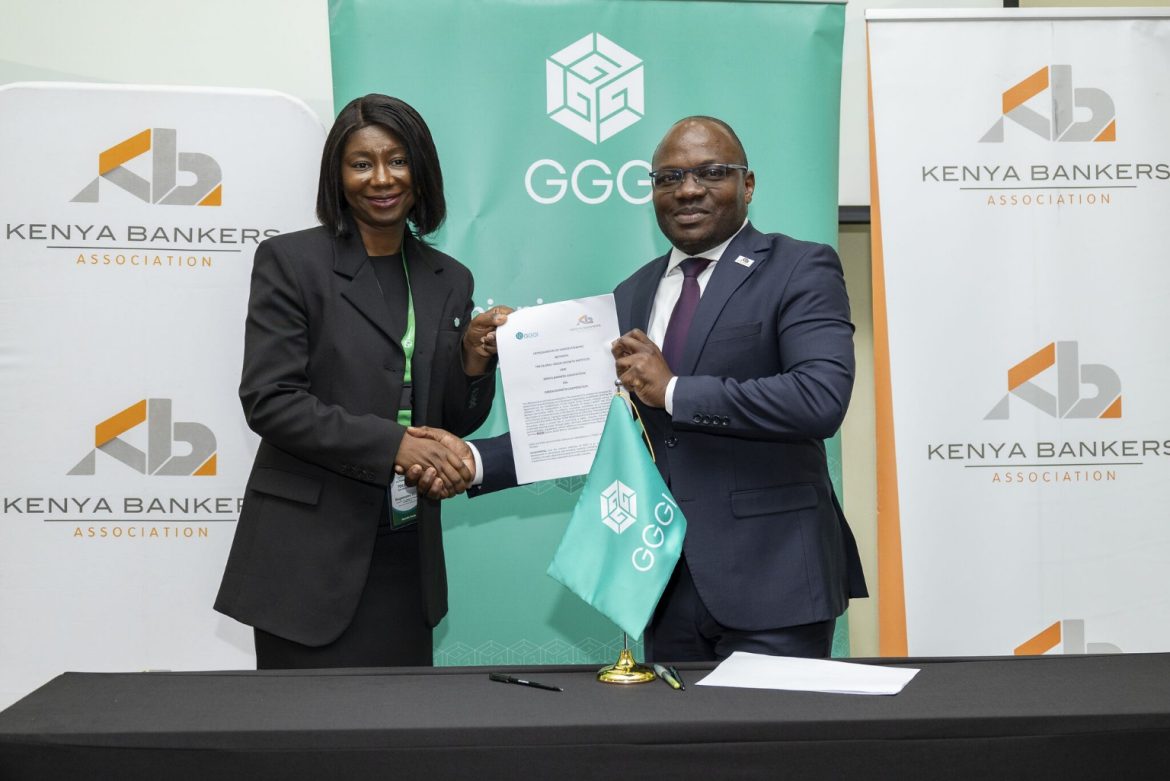
Kenya’s banking sector is set to deepen its role in financing climate, biodiversity and other sustainable investments under a five-year partnership between the Global Green Growth Institute (GGGI) and the Kenya Bankers Association (KBA), as the country seeks to close a financing gap that is too large for public resources to meet alone. The memorandum of understanding, signed in Nairobi on September 3, is designed to address one of the less visible constraints in Kenya’s green economy: the shortage of investment-ready projects capable of meeting commercial lenders’ requirements.
The agreement brings together GGGI’s work on green investment and project preparation with KBA’s position representing Kenya’s banking industry. The two institutions will collaborate on sustainable-finance policies, green investment, capacity building, technical assistance and the development of bankable investment opportunities, while exploring financing instruments such as green loans and sustainability-linked bonds.
The partnership was signed during the launch of the International Climate Initiative-funded SYMBIOTIC Project, which is intended to strengthen the integration of biodiversity considerations into Kenya’s policy, planning, finance and investment decisions. GGGI said the initiative will support public and private investment in nature-based solutions and strengthen community resilience. For Kenya, the timing reflects a broader shift in the role of finance in the country’s climate and development agenda. The challenge is no longer simply identifying renewable-energy, conservation or climate-resilience investments. Increasingly, the question is whether those opportunities can be structured in a way that allows banks and investors to assess their revenues, risks, environmental performance and repayment capacity.
That gap can be particularly difficult for small and medium-sized enterprises. A business may provide a climate-positive product or operate a nature-based enterprise but still lack audited financial information, appropriate collateral, a sufficiently long operating history or a financial model that demonstrates how an investment will generate returns. For banks, unfamiliar technologies, emerging markets and revenue streams that depend on policy or environmental conditions can make conventional credit assessment more difficult.
Nagnouma Koné, GGGI’s Manager for Africa Strategy and Partnerships and Head of the Kenya Office, described the problem as a disconnect between entrepreneurs who say banks are not lending and financial institutions that say they do not have enough bankable green projects. The distinction is important. Increasing the appetite of banks to lend to green businesses does not necessarily translate into more credit if businesses reaching the financing market are not adequately prepared. Project preparation, therefore, becomes a financial-market function rather than simply a technical exercise.
Under the new framework, GGGI and KBA will work to strengthen sustainable-finance market practices, develop bankable projects, build institutional capacity and facilitate dialogue among financial institutions, businesses, government agencies, investors and development partners. The partnership will also support joint technical assistance, training, research, knowledge sharing and investment facilitation.
The approach builds on foundations that Kenya’s banking industry has already established. KBA’s Sustainable Finance Initiative has been in place for more than a decade, with guiding principles intended to help financial institutions incorporate environmental and social considerations into lending and investment decisions. The association’s latest sustainable-finance guidance emphasises that banks should consider long-term economic resilience, environmental impacts and social equity alongside financial returns.
KBA has also developed best-practice standards covering areas such as environmental and social risk management, climate-related financial risks, governance and reporting. Its sustainability reporting shows that the association has invested in building capacity within the financial sector, including through an e-learning platform for bank employees.
The next challenge is moving from institutional capacity to transactions. That means developing financial products that reflect the characteristics of different green investments. A solar project with a long-term power purchase agreement presents a different credit proposition from an early-stage circular-economy business. A nature-restoration enterprise may generate revenues through agriculture, tourism, ecosystem services or environmental markets rather than through a single predictable cash flow.
Banks therefore need frameworks that can distinguish between different sources of risk rather than treating sustainability as a simple classification attached to an existing loan. The new GGGI-KBA partnership is expected to explore financing instruments including green loans and sustainability-linked bonds, while also looking at mechanisms to reduce the risks associated with green lending. GGGI said the collaboration will support efforts to de-risk green lending and improve understanding of nature-positive investments.
This is particularly relevant as Kenya seeks to mobilise private capital for its climate objectives. The International Energy Agency has noted that Kenya’s emissions are relatively low in global terms, but the country faces significant exposure to climate risks affecting infrastructure, water systems, energy assets and other parts of the economy. Kenya’s updated climate commitments require substantial financing and depend heavily on international sources of capital.
The financing challenge extends beyond mitigation. Adaptation investments in agriculture, water, infrastructure and rural economies often have less straightforward revenue models than renewable-energy projects. A commercial lender may therefore require additional guarantees, concessional capital, insurance or technical assistance before taking exposure to such investments.
The same issue is emerging in nature finance. Kenya’s economy is closely connected to natural systems through agriculture, tourism, water resources, forestry and rural livelihoods. Yet the financial returns from protecting or restoring ecosystems can be difficult to capture in a conventional loan model. A conservation or restoration project may create significant economic value without producing immediate cash flows that can service debt.
The SYMBIOTIC initiative provides a connection between this challenge and the new banking partnership. GGGI says the project is intended to mainstream biodiversity into economic planning while mobilising public and private investment for nature-based solutions. That could broaden the definition of what Kenya’s financial sector considers investable. Instead of treating biodiversity as an environmental issue separate from economic activity, lenders and investors may increasingly have to consider how natural assets affect agricultural productivity, tourism revenues, water security and the resilience of businesses.
There is also a market-development dimension. KBA has previously supported the development of Kenya’s green-finance ecosystem, including the Sustainable Finance Initiative and work around green bonds. The association’s sustainable-finance framework is intended to help banks balance commercial objectives with economic development and socio-environmental considerations. The new partnership could therefore help move the market towards a more sophisticated financing structure in which different sources of capital are used according to project risk. Commercial banks could provide debt once projects become sufficiently mature, while development partners and concessional investors could help absorb early-stage risks or fund project preparation.
For SMEs, this distinction could be critical. Many green businesses do not need an entirely new financial system. They need assistance to convert an environmental proposition into a conventional investment case. That can involve building financial models, documenting revenues, quantifying risks, establishing environmental and social safeguards and demonstrating measurable outcomes.
Once those elements are in place, a project becomes easier for a credit committee or investor to evaluate. For banks, the benefit could be a stronger pipeline of opportunities. Instead of receiving individual proposals at different levels of maturity, financial institutions could gain access to projects that have already undergone technical and financial preparation. That is the practical logic behind the partnership: reduce the friction between businesses seeking capital and institutions seeking investable opportunities. The financial requirement facing Kenya makes that process increasingly important. An assessment of the country’s Green Economy Strategy and Implementation Plan estimated that about Ksh2.4 trillion would be required to finance the strategy, with funding expected from government resources, loans, grants and private-sector investment.
The figure illustrates why banks and capital markets matter to Kenya’s transition. Public finance can provide policy support, infrastructure and catalytic capital, but the scale of investment required across energy, transport, agriculture, water, manufacturing and nature-related activities requires private capital to participate. For the banking sector, this creates both an opportunity and a risk-management challenge. Climate change can affect borrowers’ ability to repay through physical impacts such as droughts, floods and extreme weather, while the transition to a lower-carbon economy can create risks for businesses exposed to changing technologies, regulations and consumer preferences.
KBA’s existing sustainable-finance guidance recognises that climate-related risks can affect credit, market, liquidity, operational, legal, reputational and strategic risk. The GGGI partnership therefore comes at a point when sustainability is becoming increasingly integrated into the core economics of financial institutions rather than being treated only as a corporate-responsibility issue.
The test, however, will not be the number of training sessions, policy documents or stakeholder meetings produced during the five-year period. It will be whether the partnership results in more businesses securing financing, more green and sustainability-linked instruments reaching the market, and more climate and biodiversity projects moving from concept to construction or implementation.
There is also a question of who ultimately benefits. If green finance remains concentrated among large corporates with established balance sheets, the effect on Kenya’s wider economy will be limited. Smaller businesses, women-led enterprises and businesses operating outside traditional infrastructure sectors will need financing structures that reflect their different risk profiles and cash flows.
GGGI has specifically identified the need to improve access to finance for SMEs and strengthen their ability to meet bankability requirements. That makes project preparation a potentially important bridge between Kenya’s sustainability ambitions and its financial system. A green business does not become commercially viable simply because its product has an environmental benefit. It needs customers, revenues, governance, risk controls and a financing structure that can withstand scrutiny. For investors and banks, meanwhile, sustainable finance is becoming less about identifying whether an investment is labelled “green” and more about determining whether the underlying economic activity is resilient, measurable and financially credible.
Kenya has already developed much of the institutional language for that transition. The Sustainable Finance Initiative has provided a framework for the banking sector, while GGGI is supporting investment preparation, green-growth planning and biodiversity finance. The five-year agreement brings those strands closer together.
Its significance will ultimately be determined in the market. If more projects become bankable, more capital can move into Kenya’s low-carbon and nature-positive economy. If businesses continue to struggle to translate sustainability outcomes into credible financial propositions, the country’s green-finance pipeline could remain narrower than the investment requirement suggests.
For Kenya, therefore, the central challenge is no longer simply finding money for the green transition. It is building the institutions, products, data and project pipelines that allow that money to reach viable businesses and investments at commercial scale. That is where the GGGI-KBA partnership will face its most important test over the next five years.


