


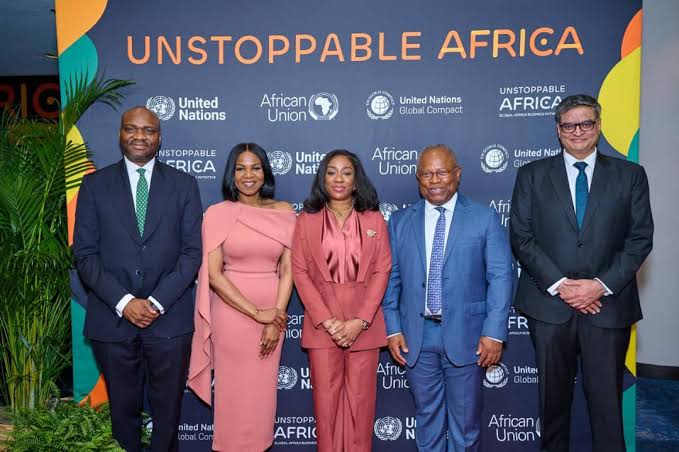
Nigeria has commercially launched a $300 million Distributed Renewable Energy Fund to move financing for off-grid and decentralised power projects from the structuring stage into deployment, as Africa’s largest economy seeks to expand electricity access while reducing the infrastructure constraints that have limited reliable power for households and businesses. The fund, jointly managed by the Nigeria Sovereign Investment Authority (NSIA) and Africa50, brings together public and private capital for distributed renewable energy investments, including mini-grids and standalone solar systems, with the wider objective of supporting Nigeria’s electricity-access ambitions and the continent-wide effort to connect 300 million people to electricity by 2030.
The commercial launch, announced on the sidelines of the United Nations General Assembly, marks a shift from building the financing vehicle to deploying capital. According to Reuters , the World Bank Group is a founding partner and has provided an initial $25 million through its International Development Association arm. Sustainable Energy for All is also part of the partnership supporting the fund.
The significance for Nigeria lies in the type of infrastructure the fund is intended to finance. Rather than relying exclusively on large power plants and extensions of the national grid, distributed renewable energy can bring generation closer to users through smaller systems designed for locations where conventional grid infrastructure is unavailable, unreliable or too expensive to extend. Mini-grids and standalone solar systems can serve communities, small enterprises and other users whose economic activity is constrained by limited access to dependable electricity.
 That distinction matters in an economy where electricity supply is closely tied to business productivity, household expenditure and industrial activity. For enterprises that depend on diesel generators when grid supply is inadequate, access to more reliable distributed power can affect operating costs as well as the ability to maintain production and services. For communities outside reliable grid coverage, electricity access can influence commercial activity and the provision of essential services.
The fund’s structure also reflects a broader challenge in African energy finance: the projects most relevant to energy access are not always the projects that attract sufficient commercial capital on their own. Distributed renewable energy companies often face challenges around project scale, currency risk, tariff structures, customer affordability and the availability of suitable long-term financing. A dedicated investment platform can therefore provide a mechanism for bringing different forms of capital into projects that may otherwise struggle to reach financial close.
Nigeria’s experience is being positioned within a wider continental financing effort. The Nigeria DRE Fund is aligned with Mission 300, an initiative aimed at connecting 300 million people across Africa to electricity by 2030. Sustainable Energy for All has described the Nigerian vehicle as the first country-focused fund under a broader distributed renewable energy platform intended to support investment across the continent.
For Africa, the financing model is significant because electricity access remains both an infrastructure and economic-development issue. Distributed generation does not remove the need for investment in transmission networks, utility-scale generation and national grids. Instead, it can provide an additional layer of infrastructure in markets where extending centralised systems to every community would require substantial capital and lengthy construction periods.
The commercial launch also shifts attention towards the quality of capital deployment. Establishing a $300 million fund does not itself create new electricity connections. The development impact will depend on which projects receive financing, how quickly investments reach construction and operation, the financial sustainability of the systems and whether the resulting electricity services are affordable and reliable for the customers they are intended to reach.
This makes project selection and financial structuring particularly important. Distributed energy projects must generate sufficient revenue to support operations and maintenance while serving customers whose ability to pay may be limited. The balance between commercial viability and electricity affordability is therefore likely to remain central to the performance of the fund.
Nigeria’s fund has evolved since the partners initially announced plans for a country-focused distributed renewable energy investment vehicle in 2025. At that stage, the partners described a structure intended to raise more than $300 million in blended capital and highlighted constraints including currency volatility, tariff structures and limited availability of local-currency financing.
Those constraints remain relevant as the fund moves into deployment. Renewable energy projects can have relatively predictable operating costs once built, but their upfront capital requirements and exposure to financing and currency conditions can affect project economics. For investors, the ability to structure projects around sustainable tariffs and appropriate financing terms will therefore be as important as the availability of capital itself.
There is also a wider infrastructure implication. Distributed renewable systems can reduce pressure on centralised electricity infrastructure by generating power closer to demand, but their expansion requires effective regulation, technical standards, payment systems and long-term maintenance arrangements. The commercial success of individual projects will consequently depend not only on financing but also on the institutional environment in which they operate.
For businesses, the potential economic value of distributed electricity extends beyond access itself. Reliable power can reduce dependence on costly backup generation and support enterprises that require predictable electricity for refrigeration, processing, communications, retail and other productive activities. At community level, the same infrastructure can support services and businesses that depend on electricity but remain difficult to connect through conventional grid expansion.
The fund also carries a potential regional significance. Africa’s energy access challenge is too large to be addressed through public budgets alone, making investment platforms that combine sovereign, development and private capital increasingly relevant to the continent’s infrastructure financing landscape. Nigeria’s approach provides one example of how a national investment institution and a pan-African infrastructure investor can structure capital around a specific development constraint.
The test now moves from financial architecture to implementation. As capital begins to flow, investors and development partners will be able to assess whether the fund can translate financing into commercially sustainable mini-grids, standalone solar systems and measurable improvements in electricity access. For Nigeria, that will determine whether distributed renewable energy becomes a meaningful complement to the national power system rather than another financing initiative whose impact remains concentrated at the project-development stage.
 For the wider continent, the experience will also provide evidence on whether dedicated financing vehicles can help close the gap between Africa’s substantial renewable-energy potential and the infrastructure needed to convert that potential into reliable electricity for households and productive economies. The commercial launch is therefore an important financing milestone, but its longer-term significance will rest on what the capital builds, who gains access to the resulting power and whether the projects remain financially and operationally sustainable once investment moves beyond the launch phase.


