


The Congo Basin is entering a new phase in the debate over forest finance, with governments, development institutions and investors increasingly focused not only on how much money can be mobilised to protect the region’s forests, but on whether projects can be structured to attract and sustain private investment. The shift was evident at a September 22 Climate Week New York discussion on financing the Congo Basin forest, where participants examined blended finance, carbon markets, biodiversity finance and other mechanisms intended to reduce investment risk and build a pipeline of commercially viable projects.
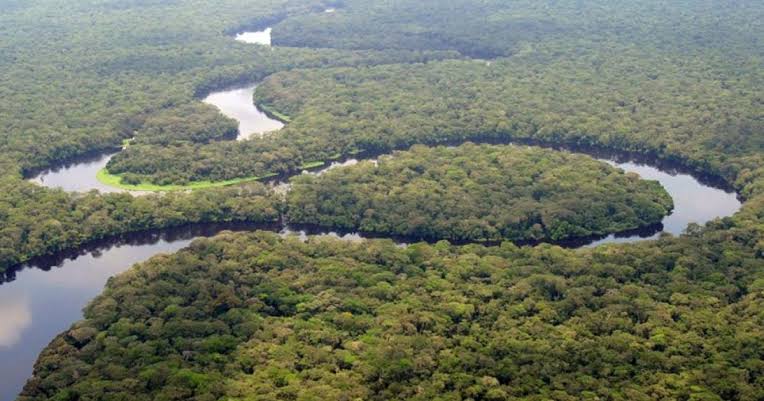
The question is becoming more important as pressure grows to connect the economic value of the Congo Basin’s forests with financing models that can operate beyond grants and donor programmes. The basin contains the world’s second-largest tropical rainforest, spanning more than 200 million hectares, and holds significant carbon and biodiversity assets. Yet the businesses operating in sustainable agriculture, forestry, renewable energy and other nature-positive sectors are often small, early-stage and considered too risky by conventional investors. According to the United Nations Capital Development Fund, the region remains severely underfinanced for sustainable land use, with a shortage of bankable transactions and weak market infrastructure limiting the flow of private capital.
 That gap is driving a growing emphasis on financial structures that can absorb some of the risks faced by investors. The Pro-Congo programme, jointly implemented by the UN Environment Programme and UNCDF with funding from the Central African Forest Initiative, is designed to mobilise private-sector investment into nature-positive enterprises across the Democratic Republic of Congo, Republic of Congo, Gabon and Cameroon. Running from 2025 to 2029, the programme combines technical assistance with concessional finance, guarantees and reimbursable grants to improve the risk-return profile of investments and help enterprises become investment-ready.
The approach reflects a broader recognition that the principal constraint is not simply a shortage of capital. Investors also need credible revenue models, reliable data, appropriate legal and regulatory frameworks, clear land and resource rights, and mechanisms for measuring environmental outcomes. Without these foundations, the environmental value of forests can remain largely separate from the financial structures through which capital is allocated.
The emerging architecture is therefore increasingly centred on pipeline development. In May, the World Institute for Conservation and Environment and the Central African Forest Commission signed an agreement to develop a Congo Basin Forest Finance Facility intended to build investable pipelines of nature-based opportunities and reduce actual and perceived investment risks. The proposed platform is expected to focus on sustainable forestry, carbon finance, biodiversity and nature-based solutions, with COMIFAC providing regional coordination and ownership.
Public finance is also being positioned as a means of opening space for private capital. In May 2026, the African Development Bank reported that more than $3 billion had been pledged around 63 low-carbon projects under the Congo Basin Blue Fund, against a broader funding target of $5.72 billion for 70 priority projects. The package included commitments from development and climate-finance institutions as well as guarantees intended to support public and private sector projects.
At the same time, the World Bank’s Sustainable Congo Basin Forest Economies Programme places economic activity and forest protection within the same financing framework. Its first phase, approved with $394.83 million in financing, covers Cameroon, the Central African Republic and the Republic of Congo and is designed to strengthen forest management, forest value chains and livelihoods while supporting more than 500 small and medium-sized enterprises. The wider programme is valued at more than $1 billion across multiple phases.
For Congo Basin governments, the investment question has implications well beyond conservation budgets. Forest economies support livelihoods, agricultural production, timber value chains, energy systems and local businesses across a region where public resources remain constrained. Developing viable forest-based enterprises could therefore expand domestic economic activity while reducing dependence on extractive models that place pressure on natural resources. The challenge is to ensure that financial returns and public policy objectives are aligned rather than treating environmental protection as a separate expenditure from economic development.
The Democratic Republic of Congo illustrates the connection between climate finance, public policy and investment conditions. Its IMF-supported Resilience and Sustainability Facility includes reforms aimed at integrating climate considerations into fiscal planning and public investment, developing green finance markets and strengthening forest protection. The World Bank has also supported work on natural-capital accounting and climate finance for the Congo Basin, including a roadmap for forest-sector carbon finance and ecosystem accounts intended to quantify the economic value of forests.
These efforts point to a broader change in how the region’s natural capital is being discussed. Carbon finance, biodiversity credits, sustainable timber, ecotourism, renewable energy and climate-resilient agriculture are increasingly being considered as potential investment sectors rather than solely as conservation activities. But turning that interest into transactions will depend on whether projects can demonstrate predictable revenues, credible environmental claims and sufficiently transparent governance.
The financing challenge is particularly relevant for local enterprises. Large international commitments can create headline figures, but smaller businesses are often the ones operating directly within forest landscapes and agricultural value chains. Pro-Congo, for example, is specifically structured around micro, small and medium-sized enterprises, using concessional finance and technical support to address barriers that prevent conventional lenders and investors from entering these markets.
For African financial institutions, the development of these markets could also create a new set of opportunities and responsibilities. Banks, insurers, pension funds and regional development-finance institutions could potentially participate in financing sustainable enterprises if appropriate risk-sharing instruments, project data and regulatory frameworks are established. At the same time, stronger measurement and verification systems will be necessary as carbon and biodiversity-linked assets become more prominent in investment decisions.
The Congo Basin therefore faces a financing test that is as much institutional as financial. The region has attracted increasing international attention and large funding commitments, but the next stage will depend on whether those commitments can be converted into investable projects that generate economic value while maintaining the ecological assets on which millions of people depend.
 The investment question is consequently becoming more specific: not simply how much finance can be committed to the Congo Basin, but how capital can be structured, governed and deployed so that sustainable forest economies become sufficiently credible for investors, sufficiently beneficial for communities and sufficiently resilient for governments to maintain over the long term.


