


Côte d’Ivoire and the African Development Bank Group have launched an additional $24.07 million investment to restore degraded forest landscapes, strengthen climate resilience and support rural communities in the Niger Basin, adding new financing to a programme that links environmental restoration with agricultural and water security. The funding, equivalent to about 13.5 billion CFA francs, will support the Ivorian component of the Integrated Programme for Development and Adaptation to Climate Change in the Niger Basin (PIDACC-BN), with activities concentrated in parts of Central and Northern Côte d’Ivoire.
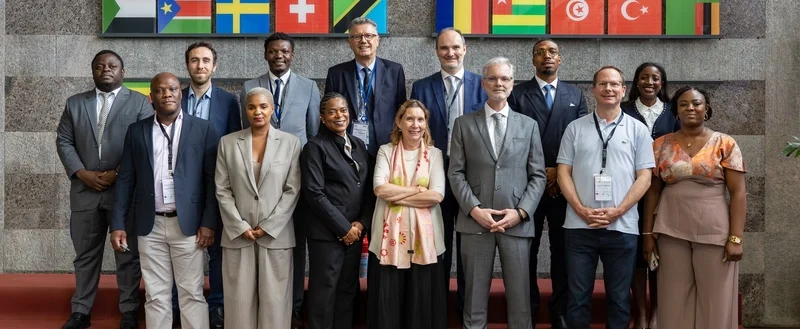
The additional financing combines concessional and climate-linked capital. According to the African Development Bank, it includes a $6.87 million loan from the African Development Fund, a $12.6 million loan and a $1.9 million grant from the Climate Investment Funds’ Forest Investment Programme, alongside a $2.7 million contribution from the Ivorian government. The financing was disclosed during a programme monitoring mission in Bouaké in September, as authorities and development partners assessed progress and prepared the next phase of investment.

The programme is aimed in particular at restoring forest cover in the former cocoa belt, improving the resilience of rural production systems and strengthening the management of natural resources. In June, the Ivorian government said it had mobilised more than 12 billion CFA francs for additional financing for the Niger Basin programme, with the initiative expected to reduce sedimentation in the river, strengthen agro-sylvo-pastoral production systems and increase forest cover in the former cocoa-growing zone. The government estimated that about 30,000 people would benefit directly, including women and young people.
The wider PIDACC-BN programme operates across nine countries in the Niger Basin and is coordinated regionally by the Niger Basin Authority. In Côte d’Ivoire, its interventions cover the country’s portion of the Niger Basin as well as parts of the Centre region and are expected to directly or indirectly benefit more than 1.8 million people, according to the AfDB. The distinction between the broader programme reach and the government’s estimate of direct beneficiaries illustrates the different scales at which climate and natural-resource investments are measured: from individual rural households and producer groups to entire watersheds and regional ecosystems.
For Côte d’Ivoire, the forestry component has particular economic significance. The country’s agricultural expansion has historically been closely linked to forest loss. Government data shows that forest area declined from about 78,508 square kilometres in 1990 to 28,367 square kilometres in 2020. The government attributes much of the historical decline to the expansion of crops including cocoa and coffee, while other pressures include demand for fuelwood, charcoal, timber and construction materials.
That history has made forest restoration more than an environmental policy issue. Cocoa remains central to Côte d’Ivoire’s rural economy and export sector, meaning the condition of soils, water systems and surrounding ecosystems has implications for agricultural productivity and household incomes. A World Bank assessment has noted that agriculture accounts for a substantial share of the country’s economy and employment, while climate change is creating additional pressure through changing rainfall, flooding, heat and other risks. The bank estimates that climate action in Côte d’Ivoire could require investment equivalent to about 2% of GDP annually.
The new funding therefore places adaptation and ecosystem restoration within a broader economic framework. Restoring degraded landscapes can help improve water retention, reduce erosion and sedimentation, support agricultural production and protect infrastructure exposed to changing rainfall patterns. In the Niger Basin, where water resources cross national boundaries, better management also has implications beyond Côte d’Ivoire. The basin is shared by nine countries, making national interventions part of a wider system in which land-use decisions can affect downstream water availability and ecosystem conditions.
The financing also illustrates the growing role of blended public and climate finance in addressing environmental risks that conventional infrastructure budgets may struggle to accommodate. The package combines loans, grants and domestic counterpart funding rather than relying on a single source of capital. That structure reflects a broader challenge across Africa, where adaptation projects often generate substantial economic and social benefits but may not produce the predictable cash flows required by conventional commercial finance.
Côte d’Ivoire has already been experimenting with mechanisms that connect environmental outcomes to financial instruments. In 2024, the World Bank paid the country $35 million for verified reductions of seven million tonnes of carbon emissions under the Forest Carbon Partnership Facility. The programme covered five administrative regions within the cocoa belt and linked payments to forest conservation, rehabilitation and agroforestry activities.
The country has also moved towards linking sustainability targets with sovereign finance. In 2025, Côte d’Ivoire launched a Sustainability-Linked Finance Framework containing targets for renewable energy and forestry, including a commitment to expand forest cover while limiting forest losses. The framework illustrates how environmental performance is increasingly becoming connected to public financial management and the terms through which governments seek to mobilise capital.
For rural communities, however, the effectiveness of the latest investment will depend on whether financing translates into productive alternatives and durable local institutions. The programme has already included practical investments in implementation capacity. During the September monitoring mission, 100 tricycles were handed over to seedling-production groups and 23 motorbikes were provided to rural extension workers. Such measures are relatively modest compared with the headline financing figure, but they point to the operational requirements of restoration programmes: seedlings must be produced and distributed, farmers supported, land-use practices monitored and results maintained over time.
The Ivorian government has also been strengthening the programme’s governance architecture. Regional technical monitoring committees have been used to coordinate interventions with prefectures, regional authorities, technical agencies and financial-control institutions, while project officials have been developing contractual and procurement instruments for the additional financing. The approach reflects an increasingly important lesson for climate finance in Africa: securing capital is only one part of the challenge; governments must also have the institutions, data, procurement systems and local implementation capacity to convert financing into measurable development outcomes.
Water data is one example of that institutional dimension. In September, PIDACC and Côte d’Ivoire’s hydrology authorities carried out measurements across rehabilitated hydrometric stations in the country’s portion of the Niger Basin to improve the reliability of river-flow information. Better hydrological data can strengthen planning for agriculture, water management and climate adaptation, particularly as rainfall variability becomes more difficult to manage.
The broader significance for Africa lies in the financing model as much as in the size of the investment. Countries across the continent face the same tension between expanding agricultural and economic activity and protecting the land, water and ecosystems on which that activity depends. Côte d’Ivoire’s experience shows how concessional finance, domestic resources, carbon-related payments and sustainability-linked financial instruments can be combined around specific landscapes and economic sectors.

The $24 million package will not resolve the country’s long-standing forest and climate pressures on its own. Its significance will ultimately depend on whether restored landscapes remain protected, rural production becomes more resilient and public institutions can sustain monitoring and enforcement after project financing ends. For Côte d’Ivoire and other African economies facing similar pressures, that transition from project financing to durable economic and environmental management remains central to whether climate finance produces lasting development value.


