


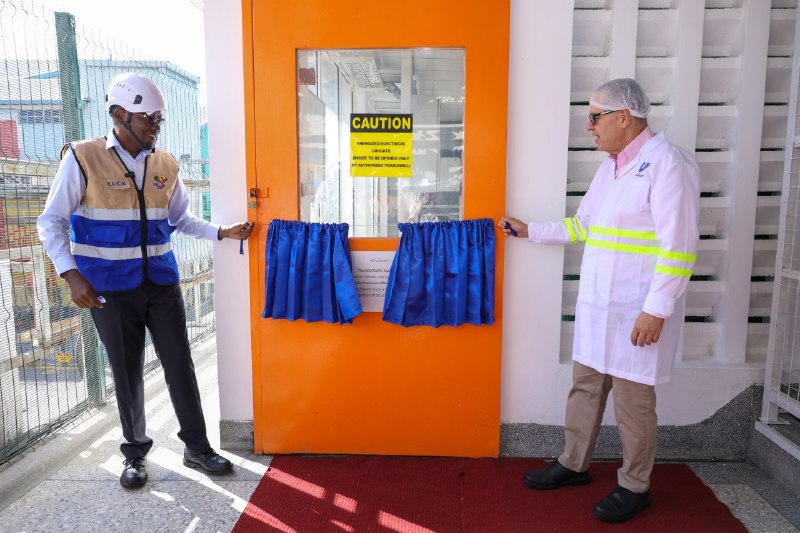
Unilever has invested KSh70 million in an 800kW solar power system at its Nairobi manufacturing plant, linking the company’s decarbonisation programme with a projected KSh30 million reduction in annual energy costs as manufacturers increasingly look to renewable power to improve cost visibility and operational resilience.
The solar installation, which became operational in June 2026, is expected to supply about 30% of the factory’s electricity requirements. Beyond reducing the facility’s reliance on conventional electricity sources, the investment gives Unilever a more predictable component of its energy costs at a time when manufacturers are managing pressure from electricity prices, fuel costs and wider operating expenses.
The project forms part of a broader transition at the Nairobi facility. Unilever estimates that emissions from the plant have declined by about 40% compared with its 2023 baseline, following the introduction of solar power and an earlier shift from heavy fuel oil to biomass for the factory’s boilers. For the company, the financial return is an important part of the investment case. The projected KSh30 million in annual energy savings represents a substantial reduction in operating costs against the KSh70 million capital investment. On a simple basis, the expected annual savings are equivalent to more than 40% of the initial investment, although the actual payback period will depend on factors including plant performance, maintenance costs, electricity prices and the operating life of the system.

João F. Ribeiro, Unilever’s 1UL Supply Chain Head, said the investment demonstrates how cleaner energy can strengthen both competitiveness and resilience in manufacturing operations. That relationship between energy transition and business performance is becoming increasingly important for industrial companies operating in Africa. Renewable energy investments are no longer being considered only through the lens of emissions reduction. For factories with significant and predictable electricity demand, onsite generation can also serve as a hedge against changes in energy costs while reducing exposure to fossil-fuel markets.
The Nairobi project illustrates this shift. By producing a portion of its electricity requirements onsite, Unilever can reduce the amount of power it needs to purchase from external sources while increasing the share of renewable energy used directly in its manufacturing operations. The company expects this to provide greater predictability in energy expenditure alongside the environmental benefits.
The investment also comes as Kenya continues to build one of the continent’s more renewable-intensive electricity systems. The country’s electricity sector has historically been supported by geothermal, hydropower and wind resources, while solar capacity has expanded through both utility-scale projects and captive installations used directly by businesses. The growth of commercial and industrial solar has created another route for companies to manage their electricity requirements while supporting wider energy-transition objectives.
For manufacturers, however, the economics of onsite renewable energy depend on more than the availability of solar resources. The business case is influenced by the timing of electricity demand, equipment utilisation, financing costs, system performance and the regulatory environment governing captive generation and grid interaction.
Unilever’s project is particularly relevant because the factory is also pursuing changes in thermal energy, an area that can be more difficult to decarbonise than electricity consumption. The company is preparing a further phase of its decarbonisation programme focused on replacing heavy fuel oil used for hot-air generation with biomass-based fuels.
That transition could further reduce the facility’s exposure to fossil fuels and extend the decarbonisation effort beyond electricity. It also reflects a broader challenge for African manufacturers: reducing emissions requires attention not only to where electricity comes from, but also to the fuels used for heat and other industrial processes.
Unilever’s global climate strategy places greater emphasis on reducing emissions from its own operations while also working across its wider value chain. The company reported that it achieved a 77% reduction in operational greenhouse-gas emissions from its 2015 baseline by the end of 2025 and consumed 88% renewable electricity globally during the year. It is targeting a 100% reduction in operational emissions by 2030.
The Nairobi investment therefore sits within a wider effort to change the energy profile of Unilever’s manufacturing network. The company has also identified renewable electricity and lower-carbon thermal energy as important components of its transition, alongside energy efficiency. For Kenya, the significance extends beyond one factory. Manufacturing remains sensitive to energy costs because electricity and thermal energy are embedded in production, processing, refrigeration, packaging and other industrial activities. Investments that reduce energy intensity or replace conventional fuels can consequently affect both a company’s emissions profile and its competitiveness.
The government has also positioned clean energy and energy security as components of Kenya’s industrial development agenda. The National Energy Policy 2025–2034 identifies affordable, reliable, secure and sustainable energy as essential to economic development and supports increased use of renewable energy and cleaner technologies.

This creates a growing convergence between corporate climate strategies and industrial energy policy. Companies are seeking lower and more predictable energy costs, while policymakers are seeking to expand renewable energy use, strengthen energy security and support industrial growth. Unilever’s Nairobi project demonstrates how those objectives can overlap at the facility level. The KSh70 million investment is expected to deliver both a reduction in emissions and approximately KSh30 million in annual energy savings, while the planned shift from heavy fuel oil to biomass could push the plant’s fossil-fuel dependence lower.
The broader question for Kenya’s industrial sector is whether similar investments can be replicated across factories where energy costs represent a significant share of operating expenditure. As renewable technologies become increasingly integrated into industrial energy planning, the business case may depend less on corporate sustainability commitments alone and more on whether clean energy can consistently deliver measurable savings, resilience and productivity.
For Unilever, the Nairobi installation suggests that decarbonisation is being treated not simply as an environmental programme but as part of the factory’s long-term operating strategy. For Kenya’s manufacturers, that distinction could become increasingly important as energy security, cost competitiveness and emissions reduction converge in investment decisions.


