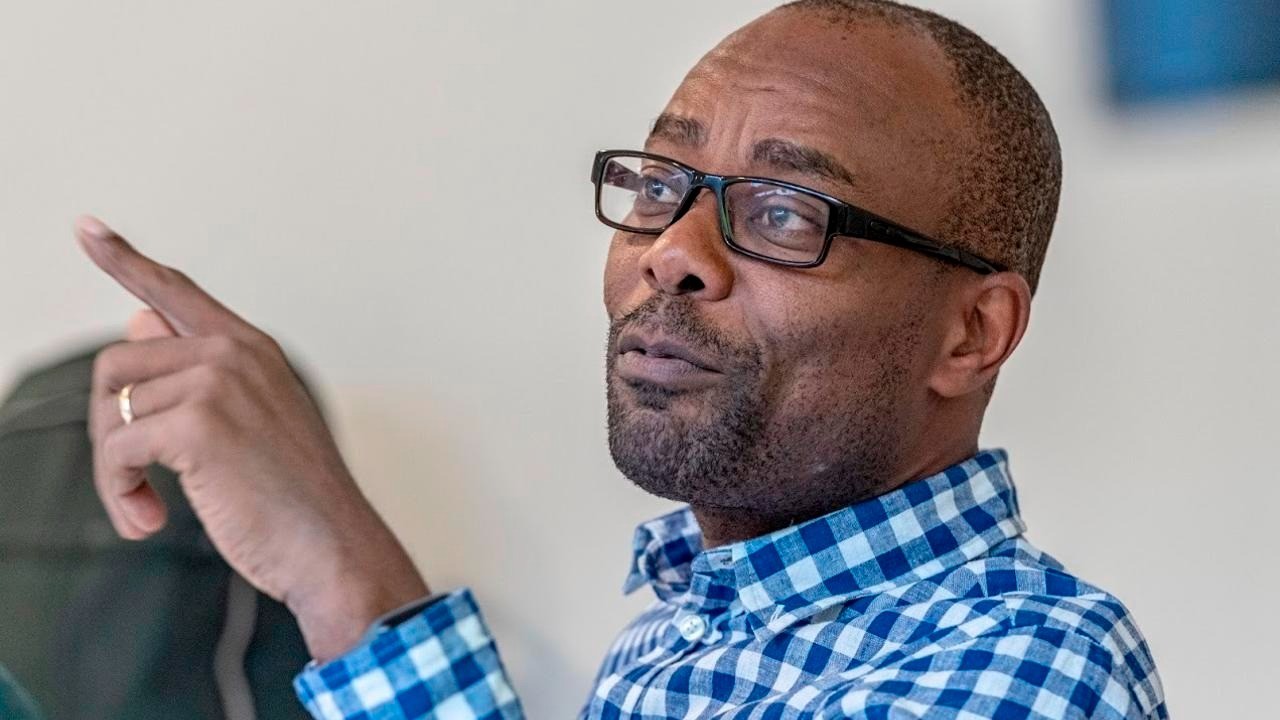

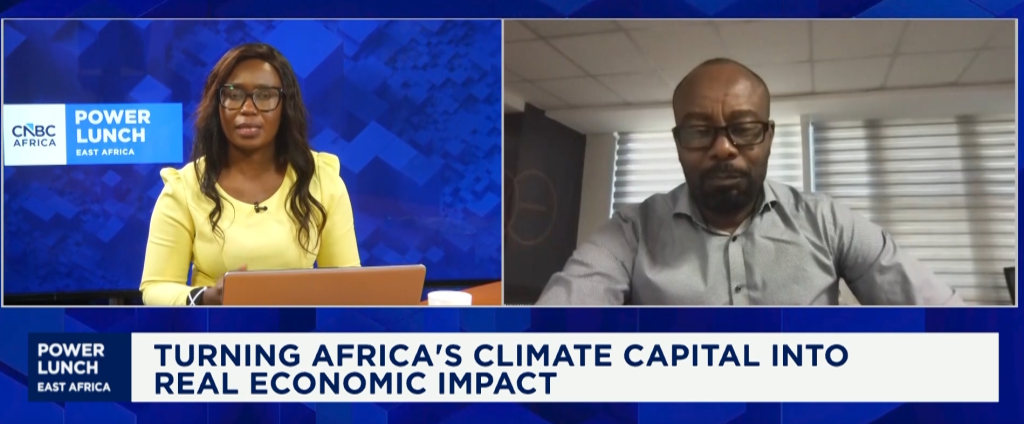
Africa will need roughly USD 25 billion each year to protect its people, economies, and infrastructure from deepening climate impacts, yet only USD 6 billion is reaching the continent annually, and most of it is flowing in the wrong direction. That was the stark warning issued by global sustainability expert and former Kenya Climate Innovation Centre CEO, Dr. Edward Mungai, during a live CNBC Africa Power Lunch interview on Monday, 13th, January 2026.
Currently he serves as the Lead Consultant and Partner at Impact Africa Consulting Limited, a sustainability advisory firm working across the continent to support governments, businesses and institutions in addressing climate risk, strengthening compliance, aligning policy, mobilising climate finance and building long-term resilience through integrated climate action and investment strategies.
Read also: 360 days to climate disclosure: Inside Kenya’s accelerated implementation
The conversation, hosted by CNBC presenter Tabitha Muthoni, cut to the heart of the continent’s climate financing dilemma: the persistent mismatch between where funding is urgently required and where it is actually being spent. Although droughts, floods, and extreme heat continue to erode livelihoods from the Horn to Southern Africa, as much as 85 percent of incoming climate finance supports mitigation projects. Only 15 to 25 percent is invested in adaptation, the priority area for a region already living the impacts of climate change.
“Africa cannot mitigate its way out of climate change,” Dr. Mungai said. “We are living the consequences today, and survival will depend on strengthening the systems that hold communities together.”
Adaptation, he explained, goes beyond abstract policy language. It requires financing drought-resilient agriculture, expanding water storage and irrigation, reinforcing health systems that can respond to heat stress and disease outbreaks, strengthening school infrastructure, and securing reliable energy sources that support communities during repeated shocks. These are the areas where climate pressures are biting first, yet they are the ones most frequently overlooked in global financing decisions.

With only USD 6 billion accessible, the continent faces an annual financing deficit of roughly USD 19 billion, a gap large enough to stall resilience-building efforts for a generation.
Mungai argues that correcting allocation requires deeper structural reform. Mobilising additional finance will depend on how African climate projects are framed and assessed and whether institutions are prepared to absorb capital quickly and transparently. Governments, he said, have the foundational role: creating predictable policies, clarifying regulatory frameworks, and developing national project pipelines that investors can trust to deliver.
But the private sector, long treated as an optional participant in climate planning, could be the catalyst that finally shifts the needle. “Capital is not lacking globally,” Dr. Mungai stressed. “It is simply not flowing into the right opportunities.” He noted that when private investors see credible returns, whether through improved yields, expanded infrastructure service delivery, or reduced climate-related losses, capital moves faster and tends to scale.
However, perception remains a consistent barrier. Investors assessing African markets frequently apply a blanket assumption of elevated risk, a position Mungai said is influenced more by legacy narratives and geographic unfamiliarity than grounded analysis. This risk mispricing, he cautioned, prevents capital from reaching viable businesses and leaves critical sectors underfunded.
Addressing the perception gap will require more than press releases or diplomatic statements. Dr. Mungai called for deeper technical support for governments, investors, and development finance institutions, tools to properly evaluate climate-linked sector risks, cost projects realistically, and structure financial instruments capable of absorbing uncertainty. Instruments such as blended finance, insurance guarantees, concessional loans, and green bonds offer viable pathways to scale, he noted, but only where capacity exists to use them effectively.
Africa’s position in the global climate narrative, Mungai suggested, is at a turning point. The continent contributes less than four percent of global emissions, yet remains the most exposed to their consequences. The mismatch cannot continue indefinitely, and relying solely on external actors risks leaving communities further behind.
In closing, he also pointed to the urgent transformation needed across Africa’s cities, noting that climate readiness will depend on how quickly urban centers shift to smarter systems. Priority areas include cleaner mobility, efficient public transport, modernized waste management, and more sustainable patterns of consumption and production. Achieving this, he said, requires governments to establish clear regulatory frameworks, set firm commitments, and create predictable environments for long-term investment. He added that any credible urban pathway must align with net-zero objectives, pushing cities to decarbonize even as they expand services and infrastructure.
Find the full interview, here.
Engage with us on LinkedIn: Africa Sustainability Matters