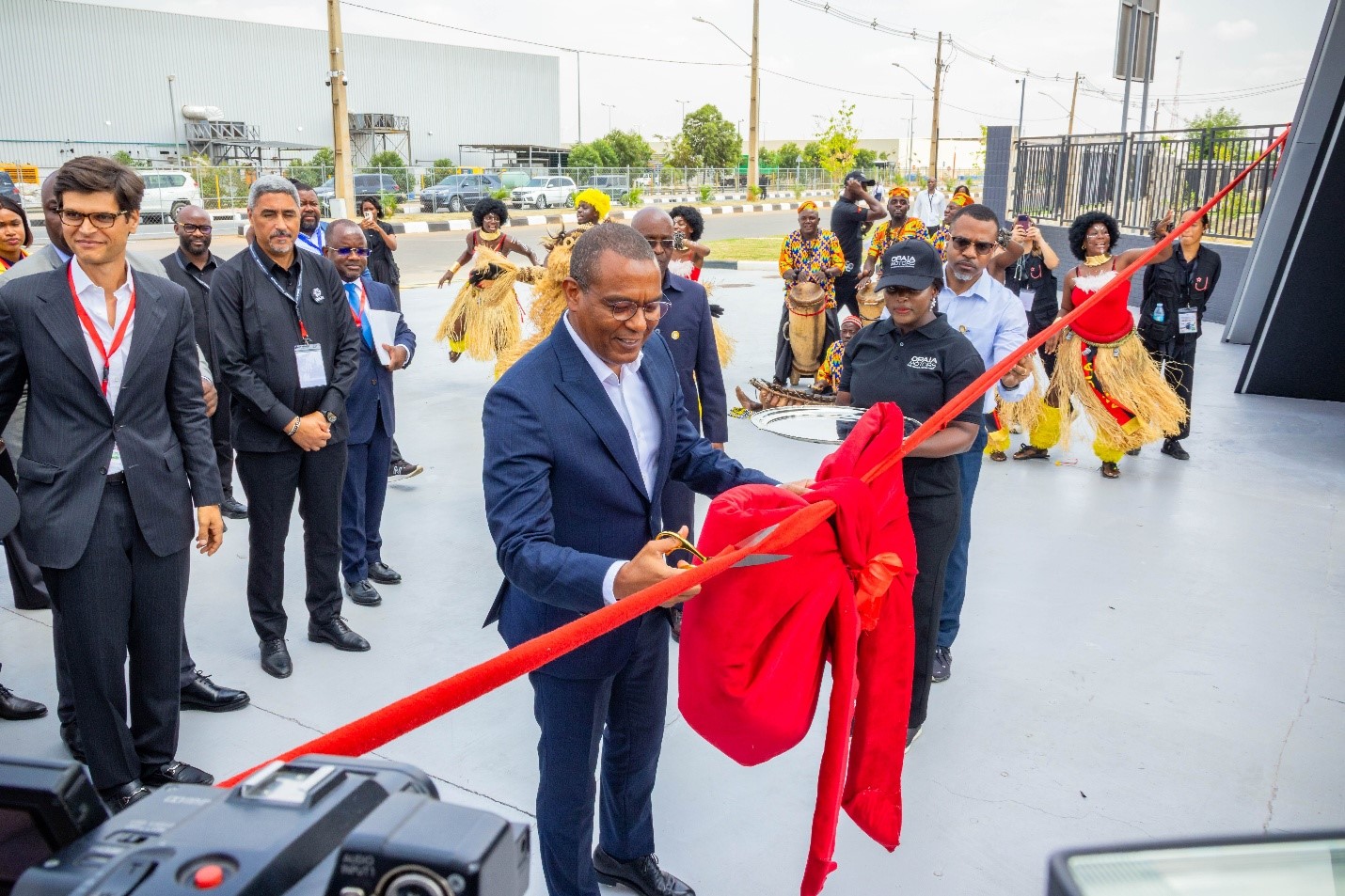

Angola marked a significant industrial milestone on January 20, 2026, with the official launch of Opaia Motors, the country’s first and only operational vehicle assembly plant, as government officials and international partners gathered at the Zona Económica Especial on the outskirts of Luanda to witness what authorities describe as a turning point for national mobility and manufacturing.
The facility, developed by the Opaia Group, is designed to assemble commercial and private vehicles and buses locally, positioning Angola to reduce its dependence on imported automobiles while building domestic industrial capacity.
The launch ceremony was attended by José de Lima Massano, Angola’s Minister of State for Economic Coordination, alongside the country’s Minister of Transport Ricardo Viegas D’Abreu and Auzílio Jacob, Governor of Icolo e Bengo Province. Members of the National Assembly, diplomats and representatives of international partners, including Volvo, Chery, DONGYANG and Afreximbank, were also present, reflecting the scale of institutional and external interest surrounding the project, according to details released by Opaia.
Located within Angola’s Special Economic Zone, the new assembly plant has an installed annual capacity of 22,000 light vehicles and 1,000 buses. According to Opaia, as cited in its launch briefing, the facility is currently the only vehicle assembly operation in the country, a distinction that underscores the extent to which Angola’s transport sector has relied on imports for decades.

Data from the National Bank of Angola show that vehicle imports have consistently ranked among the country’s largest non-oil import items, placing sustained pressure on foreign exchange reserves during periods of currency volatility.
Government officials at the launch framed the project as aligning with Angola’s broader economic diversification agenda, which has sought to reduce reliance on oil revenues since the 2014 commodity price collapse.
The Ministry of Economy has repeatedly identified manufacturing and logistics as priority sectors, and the presence of senior economic and transport officials at the event signaled state backing for the automotive venture. Opaia said the government has recognised Opaia Motors as a national priority project for industrial development, a designation that can ease access to incentives within the Special Economic Zone.
Beyond production capacity, employment has emerged as a central pillar of the project. Opaia Motors currently employs more than 1,500 Angolans, most of them young workers, and plans to expand its workforce to 3,500 direct jobs as operations scale.
According to the company, training programmes at the facility are focused on technical and vocational skills linked to automotive assembly, maintenance and quality control, areas where Angola has historically faced shortages due to limited industrial exposure. Labour market data from Angola’s National Statistics Institute indicate that youth unemployment remains above 30 percent, adding context to the government’s emphasis on job creation tied to manufacturing.
The company has also positioned the plant as a foundation for a domestic automotive supply chain. Opaia said the facility is intended to reduce reliance on imported components over time by supporting local suppliers, while enabling technology transfer from international partners to Angolan engineers and technicians.
Similar assembly initiatives in countries such as Morocco and South Africa have shown that local content development can take years, often depending on consistent policy support and market size, factors that analysts will be watching closely in Angola’s case.
Sustainability has featured prominently in official messaging around the launch, though details remain emerging. Opaia stated that vehicles assembled at the plant are designed to operate efficiently within Angola’s existing road and fuel infrastructure, with an emphasis on durability, lower maintenance requirements and reduced lifetime operating costs.

According to the company, these design choices are intended to reflect real operating conditions, particularly outside major urban centres where service networks are thinner. Opaia also confirmed plans to move into electric vehicle production in the future, targeting affordable models for both Angolan and regional markets, though no timeline has yet been disclosed.
Speaking at the launch, Agostinho Kapaia, Chairman and Chief Executive Officer of the Opaia Group, described the opening of Opaia Motors as a milestone for both the company and the country, noting its alignment with Angola’s industrial and sustainability objectives, as cited in the company’s official statement. He said the project was aimed at providing locally produced, fit-for-purpose transport solutions for businesses and households, while building a new industrial pillar alongside Opaia’s existing interests in construction, fertiliser production, mining and finance.
Engage with us on LinkedIn: Africa Sustainability Matters