A coalition of developing and climate-vulnerable countries has called for negotiations on a binding global treaty to phase out fossil fuels, following a three-day ministerial meeting in santa marta, colombia, aimed at closing governance gaps in the global energy transition and accelerating a shift away from coal, oil and gas.
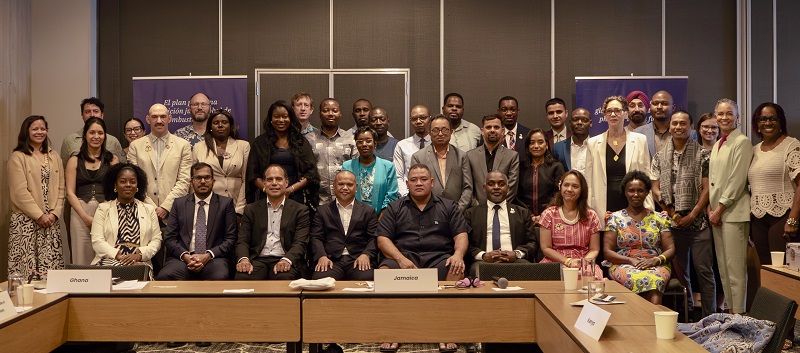
The meeting, held ahead of the first international conference on transitioning away from fossil fuels, brought together ministers and senior officials from africa, asia, the caribbean, latin america and the pacific, including participants in the fossil fuel treaty initiative and a growing group of observer states such as ghana, kenya and malawi. Delegates called for formal recognition of the need to negotiate a new international instrument that would establish binding supply-side obligations and create financing and legal mechanisms to support a just transition.
Chaired by colombia’s environment minister irene vélez torres, the discussions reflected mounting concern that existing multilateral frameworks, including those under the united nations framework convention on climate change, have not delivered the pace or scale of emissions reductions required to meet global temperature goals. Participants argued that current systems focus largely on demand-side measures, leaving fossil fuel production insufficiently governed at the international level.
The proposal for a fossil fuel treaty seeks to address this gap by introducing coordinated measures such as moratoriums on new exploration, structured phase-out timelines and mechanisms to manage economic transition risks. Ministers also discussed the creation of financial instruments including a global just transition fund, an importers-exporters coordination platform and a debt resolution facility aimed at easing fiscal constraints for countries dependent on fossil fuel revenues or imports.
For african economies, the implications are complex. Several countries are simultaneously pursuing energy access, industrialisation and export revenues linked to fossil fuels, while also facing increasing climate-related shocks. The absence of predictable transition finance and the persistence of debt pressures have, in many cases, limited the ability to pivot towards low-carbon systems without compromising economic stability.
Delegates from countries including malawi and ghana highlighted the need for financial and policy frameworks that provide fiscal space for investment in clean energy and resilient infrastructure. Without such support, policymakers warned that pressures linked to energy security, debt servicing and development needs could continue to drive fossil fuel expansion, even as global climate targets tighten.
The discussions were also shaped by the 2025 advisory opinion of the international court of justice, which found that fossil fuel-related activities, including production and subsidies, may constitute internationally wrongful acts under certain conditions. Participants said this legal development strengthens the case for a dedicated governance framework that aligns fossil fuel supply with international climate obligations.
Small island states and least developed countries played a prominent role in advancing the treaty concept, framing it as both a legal and economic necessity. Tuvalu confirmed it will host the next conference in the pacific, signalling continuity in a process designed to build consensus outside traditional consensus-based negotiations, where progress on fossil fuels has often stalled.
African representatives pointed to the continent’s uneven transition pathways. Kenya, for example, highlighted progress in renewable electricity generation while noting continued reliance on fossil fuels in transport and industry. Officials emphasised that without coordinated international rules, gains in clean energy deployment risk being offset by broader global expansion of fossil fuel supply.

The coalition also raised concerns over mechanisms such as investor-state dispute settlement provisions, which can expose governments to legal risks when altering energy policies. Addressing these constraints is seen as critical to enabling countries to implement transition measures without triggering costly arbitration cases that could strain public finances.
While the proposal remains at an early stage, the santa marta meeting signals a shift towards more targeted, coalition-driven approaches to climate governance. Similar models have historically been used to advance agreements in areas where universal consensus has proven difficult, suggesting a parallel track that could complement existing global processes.
For africa, the outcome of such negotiations will have direct implications for fiscal planning, energy security and long-term development trajectories. A binding framework could provide clearer signals to investors and support the reallocation of capital towards low-carbon infrastructure, but it also raises questions about transition costs, revenue replacement and the sequencing of policy reforms.
As discussions move towards a potential negotiation phase, the central issue for many african governments will be whether proposed financial and legal mechanisms can adequately balance climate objectives with development priorities. The santa marta process, while still evolving, reflects a growing push from the global south to shape the terms of the energy transition rather than respond to them.