


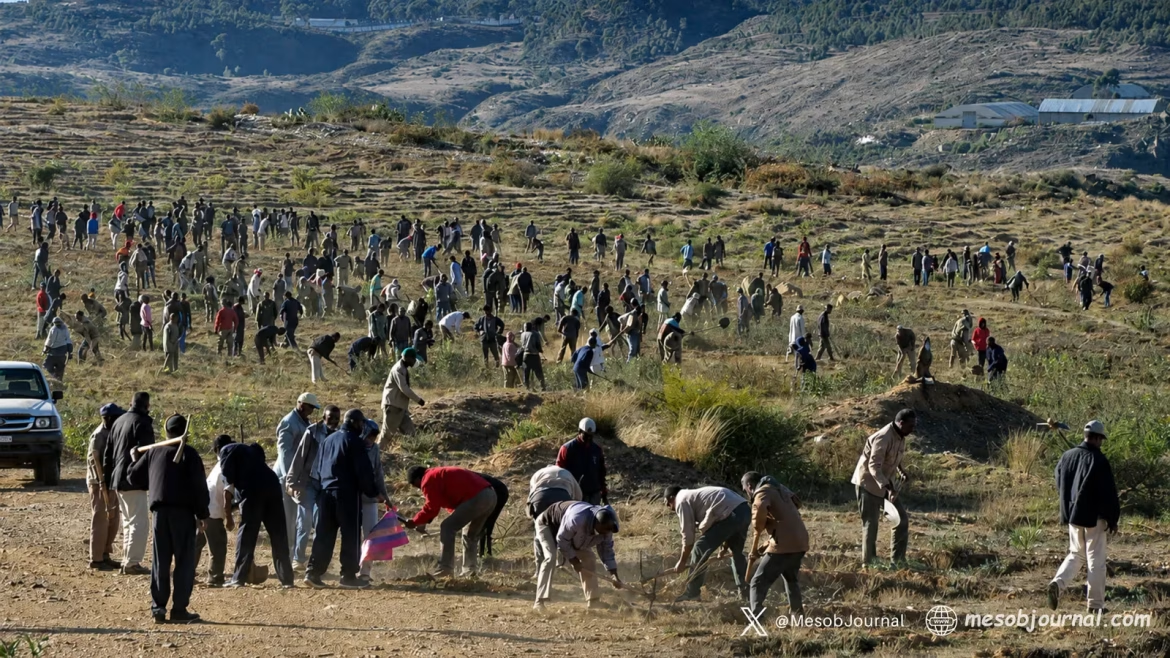
Eritrea has secured US$8.4 million in financing from the Global Environment Facility (GEF) to implement a five-year programme aimed at restoring degraded landscapes, strengthening climate resilience and improving the livelihoods of rural communities, as African countries increasingly invest in nature-based solutions to address the intertwined challenges of land degradation, food insecurity and climate change.
The programme, titled Promoting Sustainable Land Management to Achieve Land Degradation Neutrality, Enhance Livelihoods, and Strengthen Farming Communities, will be implemented by Eritrea’s Ministry of Land, Water and Environment with technical support from the United Nations Development Programme (UNDP). The initiative combines ecosystem restoration, sustainable agriculture, biodiversity conservation and institutional capacity building in a coordinated effort to improve environmental sustainability while supporting rural economic development. The investment comes at a time when land degradation continues to undermine agricultural productivity across much of Africa. Declining soil fertility, erratic rainfall, desertification and biodiversity loss are placing increasing pressure on food systems and rural livelihoods, making sustainable land management an increasingly important component of national climate adaptation strategies.
According to the project framework, the programme adopts an integrated landscape approach that addresses environmental degradation while strengthening the resilience of farming communities. Rather than focusing solely on ecosystem restoration, the initiative seeks to improve agricultural productivity, diversify rural livelihoods and strengthen governance systems responsible for managing land and natural resources. Pa Lamin Beyai, Resident Representative of the United Nations Development Programme in Eritrea, described the initiative as a strategic investment in both the country’s natural capital and its rural communities.
According to Beyai, restoring ecosystems while promoting sustainable livelihoods will contribute to improved food security, greater resilience to climate change and long-term environmental sustainability, reinforcing Eritrea’s broader development objectives. Institutional strengthening forms a central pillar of the programme. The project will support the preparation of integrated land-use plans, establish gender-responsive community land management committees and strengthen the technical capacity of government agencies, agricultural extension services and local institutions responsible for natural resource management.
The emphasis on governance reflects growing recognition that successful land restoration depends not only on technical interventions but also on stronger institutions capable of sustaining environmental management beyond the lifespan of externally funded projects. Field interventions are expected to generate substantial environmental benefits. The programme aims to restore approximately 6,294 hectares of degraded land while promoting sustainable land management practices across an additional 11,851 hectares covering agricultural land, forests and grazing areas.
According to the programme design, these activities will improve soil and water conservation, enhance agricultural productivity and increase carbon sequestration, while strengthening the capacity of ecosystems to withstand droughts and other climate-related shocks that increasingly affect the Horn of Africa. Community development also features prominently within the initiative. More than 25,000 people, nearly half of them women, are expected to benefit from improved ecosystem services, diversified livelihoods and expanded economic opportunities across agriculture, livestock production and beekeeping.
The programme will introduce climate-smart agricultural practices alongside alternative income-generating activities designed to reduce pressure on degraded natural resources while strengthening household resilience and improving food security. Beyond on-the-ground implementation, the project will strengthen Eritrea’s national environmental information systems through improved monitoring, reporting and knowledge management covering land degradation, biodiversity conservation and climate resilience.
These systems are intended to support evidence-based policymaking, enable government institutions to monitor environmental performance more effectively and facilitate the replication of successful restoration approaches across other regions of the country. The initiative also supports Eritrea’s international environmental commitments, including obligations under the United Nations Convention to Combat Desertification (UNCCD) and the Kunming-Montreal Global Biodiversity Framework, while contributing to national climate adaptation priorities.
Significantly, the GEF grant has mobilised more than US$30 million in additional co-financing from the Government of Eritrea, local communities and development partners. The blended financing model illustrates how international climate finance can leverage domestic investment and broader stakeholder participation in support of long-term environmental restoration.
For Africa, investments in sustainable land management are becoming increasingly important as governments seek cost-effective solutions that simultaneously address climate adaptation, biodiversity conservation and rural economic development. Healthy ecosystems underpin agricultural production, improve water security, support carbon storage and strengthen resilience against increasingly frequent climate shocks.
As countries across the continent pursue land restoration under initiatives such as the African Forest Landscape Restoration Initiative (AFR100) and the African Union’s Agenda 2063, programmes that integrate ecosystem restoration with livelihood improvement are emerging as practical models for delivering both environmental and socio-economic benefits.
Eritrea’s latest investment reflects this broader continental shift towards landscape-based development approaches, demonstrating how climate finance can support environmental recovery while creating more resilient and productive rural economies capable of withstanding future climate challenges.


