
Global economists and policy leaders are gathering at the United Nations in Geneva this week to advance a major overhaul in the way economic progress is measured, amid rising acknowledgement that Gross Domestic Product (GDP) alone can no longer capture the realities shaping societies, economies, and the environment.
The session marks the second in-person meeting of the UN High-Level Expert Group (HLEG) on Beyond GDP, established in May 2025 at the request of Member States following the signing of the Pact for the Future; an agreement committing governments to pursue development in ways that balance economic, social, and environmental considerations. The group is now working toward final recommendations to guide governments globally in moving past GDP as the singular benchmark of national progress.

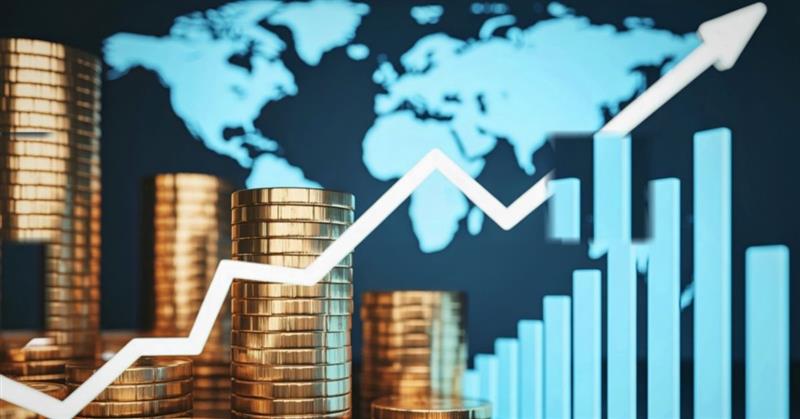
GDP, long used as the primary indicator of economic strength, measures the market value of goods and services produced in a country. But critics argue it leaves out what matters most to people’s lives: health, environmental integrity, access to essential services, inequality, and the condition of the natural systems economies depend on.
“We witness every day the consequences of our failure to balance economic, social, and environmental dimensions of development,” UN Secretary-General António Guterres warned as the group’s work progressed. “Moving beyond GDP is fundamental to building an economic system that gives value to what counts, human wellbeing, now and in the future.”
Read also: S&P latest global analysis shows growing gap between climate reality and policy action in 2026
The Beyond GDP effort responds to a widening global consensus that traditional growth metrics have grown increasingly detached from lived reality. Countries across Africa and the Global South have been particularly vocal, arguing that GDP risks masking structural weaknesses: precarious food systems, climate vulnerability, biodiversity loss, and youth unemployment, all of which undermine true development progress even during periods of economic expansion.
According to the HLEG’s interim progress report, released in November, national accounts need to integrate indicators such as environmental quality, ecosystem resilience, social cohesion, health outcomes, and cultural capital, dimensions that determine whether economies can withstand shocks and deliver long-term wellbeing. The expert group’s work now turns to building a universal dashboard of indicators designed to sit alongside GDP in national planning and to guide countries toward meeting the Sustainable Development Goals (SDGs).
The initiative arrives at a moment when climate pressures and global instability are exposing the limits of traditional growth models. Extreme weather events, from floods in East Africa to droughts across the Sahel, continue to destroy infrastructure, disrupt supply chains, and erode livelihoods, often wiping out years of economic gains overnight.
Economists note that conventional growth metrics tend to count reconstruction spending as positive output, even when it follows disaster loss; a paradox that highlights the need for frameworks that differentiate between restorative and productive growth.
The group includes more than a dozen leading global thinkers, among them Nobel laureate Joseph Stiglitz, former World Bank chief economist Kaushik Basu, and economist Nora Lustig, whose research has shaped global debates on inequality. Their task is not only technical but political: Member States will use the final report to launch an intergovernmental process aimed at embedding new metrics into national policy systems.
For Africa, where economic growth often coexists with mounting poverty, unemployment, and climate vulnerability, a Beyond GDP framework could provide the first globally recognized mechanism to validate investments in resilience, adaptation, social safety nets, and natural capital protection. Economists argue that such recognition could shift financial flows and development priorities, giving countries a clearer case for concessional climate finance and sustainable development investment.
The HLEG is supported jointly by UNCTAD, the UN Department of Economic and Social Affairs, UNDP, and the UN Secretary-General’s office. Its final report is expected to shape global development architecture for years to come, potentially influencing everything from national budgets to international aid strategies and corporate sustainability reporting.
As the world searches for more meaningful ways to understand progress beyond raw output, the meeting in Geneva marks a turning point: a collective acknowledgment that growth must be judged not only by what is produced, but by what is protected and how lives are transformed.
Engage with us on LinkedIn: Africa Sustainability Matters