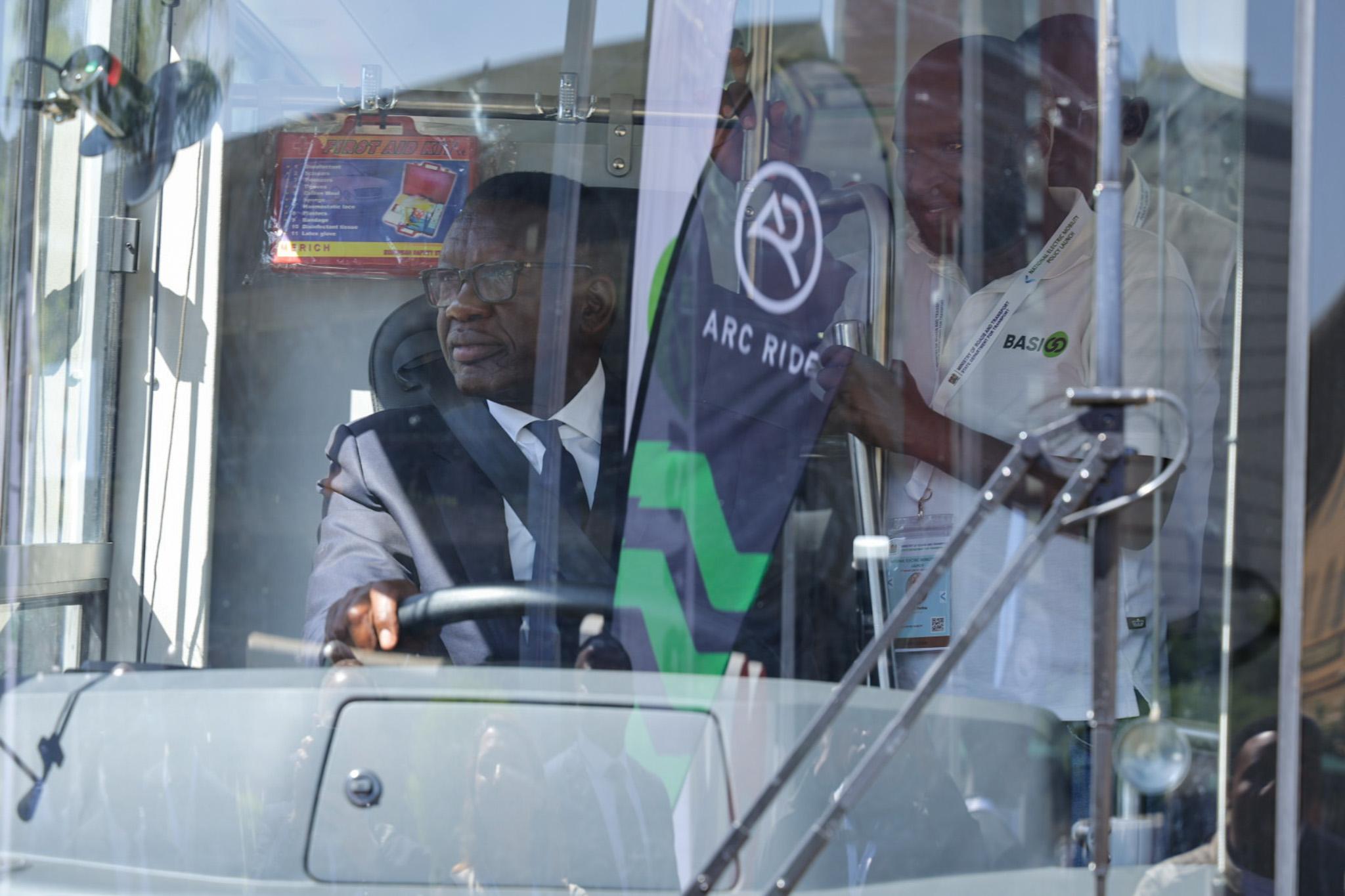

Kenya has formally set its course toward an electric transport future, launching a National Electric Mobility Policy that government officials say is as much about economic resilience as it is about climate action. The policy was unveiled on Tuesday in Nairobi, with senior government leaders, diplomats and industry players framing electric mobility as a strategic response to rising fuel import costs, urban air pollution and the country’s long-term development priorities.

The launch, held at the Kenyatta International Convention Centre, was presided over by country’s Cabinet Secretary for Roads and Transport Davis Chirchir, who described the shift to electric vehicles as a necessary correction to Kenya’s heavy dependence on imported petroleum. Transport alone accounts for a large share of the country’s fuel demand, exposing the economy to volatile global oil prices and persistent pressure on foreign exchange reserves.
Read also: Kenya launches review of environment policy as climate risks intensify
Kenya’s petroleum import bill currently stands at an estimated US$5 billion annually, a figure that continues to weigh on macroeconomic stability. Data from the Kenya National Bureau of Statistics show that fuel was the country’s largest single import category in 2023, with spending on petroleum products rising to KSh628.4 billion, almost double the level recorded two years earlier. For policymakers, electric mobility has become a tool not only for reducing emissions, but for reshaping the structure of Kenya’s import-dependent economy.
Against that backdrop, the new policy positions electric vehicles as central to a cleaner and more efficient transport system, while also signalling a shift in how infrastructure and industrial policy are expected to interact. Kenya’s electricity grid is already dominated by renewable energy, largely geothermal, hydro and wind, creating a rare alignment between power generation and transport decarbonisation that many developing economies lack.

Market signals suggest the transition is already under way. By the end of 2025, Kenya had cumulatively registered more than 39,000 electric vehicles, up from fewer than 1,400 in 2022. Much of that growth has been driven by electric motorcycles, particularly in the boda boda segment that underpins last-mile mobility and urban livelihoods. The rapid uptake has been supported by new financing models, including asset-backed lending products tailored to electric two- and three-wheelers, which have lowered entry barriers for small operators.
To reinforce this momentum, the government has embedded fiscal incentives within the policy framework. Measures introduced through the Finance Bill 2025 include zero-rating value-added tax on electric buses, motorcycles, bicycles and lithium-ion batteries, alongside the elimination of excise duty on key components. Officials argue these incentives are intended to crowd in private capital, reduce upfront costs and accelerate the build-out of a domestic electric mobility ecosystem.
Beyond vehicle adoption, the policy places emphasis on industrial development. The State Department for Industrialisation has highlighted a growing gap between demand for electric vehicles and local supply, pointing to opportunities for expanded assembly and, over time, domestic manufacturing. Short-term financing constraints remain a challenge, particularly for firms seeking to scale operations, while charging infrastructure is still heavily concentrated in Nairobi, limiting uptake in secondary cities and along key transport corridors.
Read also: Why Africa is securing only a quarter of the climate finance it needs
International partners have signalled strong backing for Kenya’s approach. Germany and the European Union have both described electric mobility as integral to sustainable development and regional competitiveness, noting Kenya’s potential to emerge as an East African hub for clean transport solutions. Development partners, including the UK, the International Finance Corporation and academic institutions, provided technical and financial support during the policy’s formulation.
Taken together, the National Electric Mobility Policy reflects a broader recalibration of Kenya’s transport strategy, one that links climate commitments with fiscal prudence, industrial ambition and everyday mobility needs. Its success will ultimately hinge on execution: extending charging infrastructure beyond the capital, sustaining investor confidence and ensuring that electric mobility delivers tangible benefits for households, workers and the wider economy.
Engage with us on LinkedIn: Africa Sustainability Matters