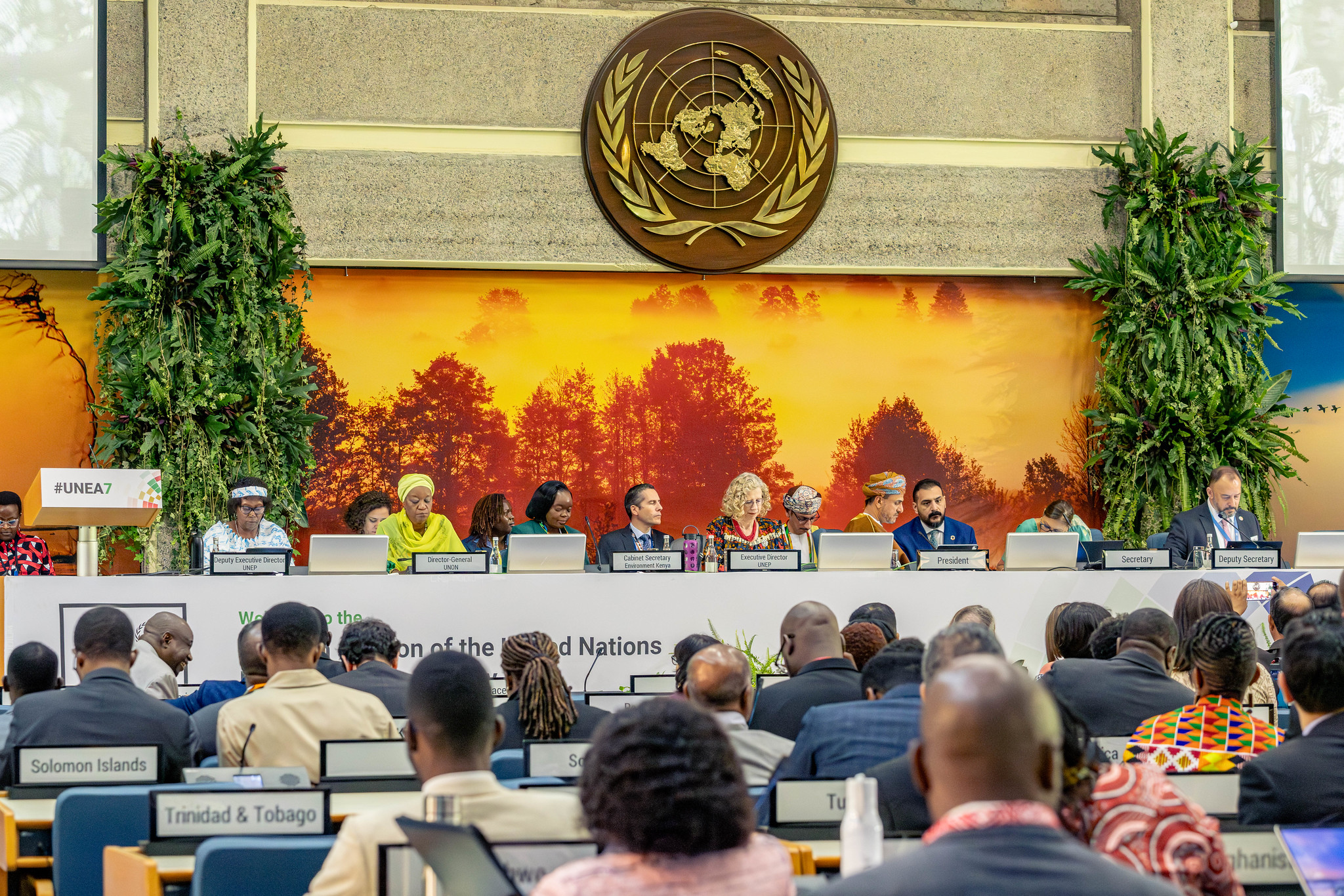

Representatives from more than 170 countries have gathered at the United Nations Office in Nairobi for the opening of the seventh UN Environment Assembly, where governments, scientists, financiers and civil-society leaders will unveil the seventh Global Environment Outlook and announce the 2025 Champions of the Earth.
This year the center of gravity is the launch of the Global Environment Outlook, a flagship assessment often referred to as the UN’s most detailed diagnosis of the planet’s health. GEO-7 is the most comprehensive scientific assessment of the global environment to this day. It brings together the voices of 287 experts from 82 countries, with contributions from over 800 reviewers worldwide.
GEO-7 provides is the evidence that drives decision-making in boardrooms and ministries: which regions are facing the highest losses, which interventions offer the best return on public and private capital, and where investments in nature and resilience can slow mounting economic damage.

For African ministries working to unlock concessional loans, grants and blended finance packages, the document is not abstract. A watershed restoration project in northern Kenya or a climate-smart agriculture programme in Malawi stands a far better chance of being funded if GEO-7 identifies the underlying risks as urgent and the proposed solutions as measurable and cost-effective.
Negotiators at the convening are working through 15 draft resolutions that touch on issues ranging from melting glaciers to the environmental footprint of artificial intelligence. On paper these themes appear distant from the daily realities of African households, yet they have concrete effects on how markets operate on the continent.
A resolution on sustainable minerals, for example, has direct implications for producers of cobalt, manganese and rare-earth elements in the Democratic Republic of Congo, Zambia, Tanzania and Madagascar. Once adopted, the language in that resolution often becomes the basis for procurement standards used by buyers in Europe and Asia. This influences contract terms, environmental safeguards, and future eligibility for long-term supply agreements.
In the same way, resolutions on AI may shape the standards that apply to data centers being built in Kenya, South Africa and Nigeria, particularly around water use and renewable-energy sourcing.
More than 6,000 participants are registered for the session, including environment ministers, vice-ministers, intergovernmental organizations, youth delegates and private-sector leaders. Their job is not only to debate resolutions but to decide how global environmental goals can be turned into national strategies in a period marked by declining donor funding, heightened geopolitical tension and widening inequality.
The pressure is significant: UNEP’s Executive Director Inger Andersen warned that the rise in global temperatures is on track to exceed 1.5°C within a decade, with severe consequences for ecosystems and human health. Dust storms, heatwaves, biodiversity loss and land degradation are growing challenges, especially in regions where local governments lack adequate monitoring systems or enforcement capacity.
These gaps are not just academic concerns, only a limited number of African countries have accredited laboratories to test soil, air or water quality. Satellite-based monitoring remains uneven, and many regulatory agencies are overstretched. Without robust data and enforcement systems, countries face higher transaction costs when exporting agricultural goods, fish, timber or minerals.
Meeting certification requirements becomes harder, and in competitive markets the penalty for lapses can be exclusion from supply chains altogether. GEO-7 will likely underscore these weaknesses, which in turn may influence funding decisions by development banks and private investors.
The unveiling of the 2025 Champions of the Earth adds a human element to the week’s proceedings. The award; the UN’s highest environmental honor, has a track record of changing the fortunes of local innovators. Past African laureates have parlayed the recognition into national partnerships, regional expansion and access to financing that would otherwise have remained out of reach.
For small community organizations working on drought-resilient seeds, water purification or community forestry, the award often marks the moment when their work scales beyond pilot size. The visibility it provides matters at a time when global attention swings quickly between crises and when long-term environmental projects struggle to secure stable funding.
 This year’s assembly is unfolding against a backdrop of economic pressure, conflict and political uncertainty, but participants have been clear that these challenges must not stall progress. Delegates from African states are expected to press for fairer access to climate and environmental finance, arguing that countries contributing least to global emissions are bearing the highest costs. The expectation is that GEO-7, combined with high-level political commitments and the moral authority of the Champions of the Earth awards, will help strengthen the case for investment across Africa’s most vulnerable regions.
As the week progresses, the question is how quickly countries can translate global science and political declarations into workplans that change conditions on the ground. Restoring river basins, rehabilitating degraded forests, regulating mining operations, upgrading wastewater treatment, and building resilient food systems will require technical capacity, strong institutions and steady funding.
GEO-7 lays out the evidence; UNEA-7 sets the direction. What remains is whether the momentum generated in Nairobi will endure long after the delegations return home, shaping a decade that could still bend toward environmental recovery rather than deeper decline.
Engage with us on LinkedIn: Africa Sustainability Matters