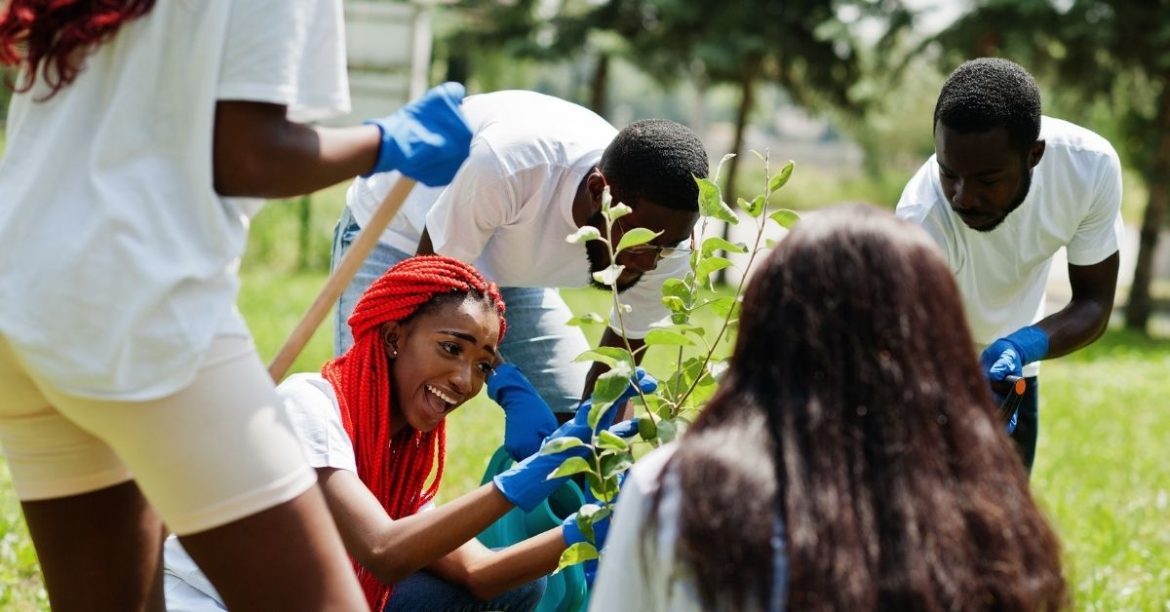
Young environmental innovators in Kenya have been handed a new platform to advance their work as Climate Care Africa opens applications for the 2025 Kenya Youth Environmental Stewards Awards. The initiative seeks to identify and support youth between the ages of 18 and 35 who are leading environmental conservation projects, offering funding, mentorship and a national spotlight at a moment when the continent is grappling with mounting climate pressures and increasingly depends on local solutions to fill structural gaps left by policy and financing shortfalls.

The awards come at a time when Kenya, like much of Africa, is confronting the realities of rising temperatures, shrinking water resources and rapid biodiversity loss. Across sub-Saharan Africa, over 70 percent of climate action initiatives rely on community-driven projects because mainstream financing either arrives too slowly or never reaches the neighborhoods where the need is most acute.
Youth groups have stepped into this vacuum, often working with minimal resources yet managing to reshape local ecosystems through innovations in recycling, mangrove restoration, clean energy advocacy and regenerative agriculture.
These realities make the award’s promise of seed funding, from KES 50,000 upwards, more than symbolic. For many youth-led groups, even modest capital dramatically changes operational capacity. A waste collection startup in Kisumu, for instance, operating with four volunteers and a single handcart, can double its waste retrieval volume with the equivalent of KES 60,000 through basic equipment upgrades. Similar interventions across Africa tell the same story.
In Ghana’s coastal communities, youth-run plastic recovery hubs have shown that a one-time injection as low as USD 400 can triple collection rates within a year; in northern Uganda, youth cooperatives supported with micro-grants have restored over 250 hectares of degraded farmland using simple agroforestry techniques. Scaling such examples in Kenya mirrors a continental trend where the most meaningful climate results are often produced by small teams whose work rarely features in national conversations.
Beyond the financial dimension, the mentorship component merges the technical knowledge gap that many youth organizations face. A large share of youth-led environmental initiatives in East Africa struggle with long-term project design, monitoring metrics, and access to institutional partners. This challenge is not unique to Kenya.
A 2023 assessment by the African Development Bank noted that nearly 60 percent of youth climate groups on the continent operate without formalized structures, which limits their eligibility for large-scale funding and partnership opportunities. The awards programme attempts to bridge this gap by pairing finalists with experts and networks capable of turning their ideas into sustainable, long-term operations.

The timing aligns with a broader continental push to localise environmental stewardship. Africa’s combined climate financing needs currently stand at over USD 277 billion annually, but the continent receives less than 12 percent of that amount. Community-led and youth-driven initiatives have therefore become essential players in advancing climate resilience.
Kenya has seen a rise in youth participation in areas such as solar energy advocacy, watershed protection and circular economy solutions, where young innovators are experimenting with low-cost technologies that respond directly to the lived realities of communities. These young leaders typically understand the local context better than externally designed interventions, which gives their projects a higher chance of lasting impact.
The awards also recognise a deeper social dimension. Many youth entering environmental work do so out of necessity rather than institutional encouragement. Farmers in Embu and Machakos are witnessing crop yields fall by up to 30 percent due to prolonged dry seasons, pressuring younger generations to rethink land use. In coastal counties, sea-level rise is already threatening fishing livelihoods, forcing youth to explore alternative conservation-based income streams. The awards highlight these efforts, not as charity cases, but as demonstrations of how youth innovation is increasingly tied to economic survival and resilience.
Read also: AfDB and Shanghai Ocean University launch 2026 Scholarship to boost Africa’s Blue Economy skills
The 2025 edition will culminate in an awards gala scheduled for January 30, 2026, where finalists will present their work to partners, industry leaders and potential investors. The application window remains open until December 31, 2025, giving young Kenyans ample time to submit their initiatives through the online portal. For many applicants, the opportunity represents not just recognition but a potential turning point in the long path toward environmental impact.
Engage with us on LinkedIn: Africa Sustainability Matters