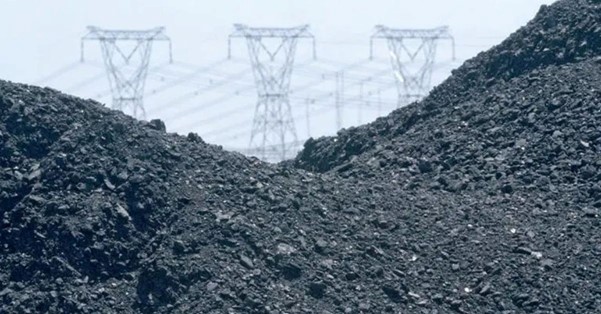
Germany has entered advanced negotiations with South Africa to provide an additional €720 million in low-interest climate loans, marking a significant expansion of the multibillion-dollar “Just Energy Transition Partnership” aimed at decoupling Africa’s most industrialized economy from its heavy reliance on coal.

Announced in Pretoria this January (2026) by German special envoy Rainer Baake, the new financing package brings Berlin’s total commitment to €2.68 billion, nearly tripling its original pledge made during the 2021 Glasgow climate summit. The move comes at a critical juncture for South Africa, where the government is attempting to balance a desperate need for a stable power grid with international pressure to shutter aging coal plants that currently generate 80% of the nation’s electricity.
For the average South African, the implications of these billions are felt most acutely in the frequent rolling blackouts known locally as load shedding, that have stifled economic growth for over a decade. However, the transition is not as simple as flipping a switch from coal to solar. In provinces like Mpumalanga, the coal industry is the heartbeat of the local economy, supporting roughly 90,000 direct jobs and thousands of small businesses.
The “just” in the Just Energy Transition Partnership refers to the promise that these workers will not be abandoned. The German funding is specifically designed to support “working labs” for reskilling, the expansion of transmission lines to bring wind and solar power from remote regions to industrial hubs, and the repurposing of old mine lands for new industries.
Despite the scale of the offer, the deal has sparked a necessary and raw conversation about the cost of climate justice. South African officials have recently voiced concerns over the “strings attached” to international climate finance, pointing out that the vast majority of the support comes in the form of loans rather than grants.
Critics argue that even “concessional” loans add to a national debt burden that already limits the government’s ability to fund education and healthcare. In response, German officials have been quick to highlight the math: the interest rate on these policy loans sits at approximately 2.8%, a stark contrast to the nearly 9% market rates South Africa would face on the open bond market. For a country needing an estimated $250 billion over the next thirty years to reach its green goals, these subsidized rates represent a pragmatic, if imperfect, lifeline.
The ripple effects of this deal extend far beyond South Africa’s borders. As the first country to sign a JETP agreement, South Africa is the global guinea pig for a model now being exported to Indonesia, Vietnam, and Senegal.

If the transition in Mpumalanga fails to protect livelihoods, it could sour the appetite for similar climate pacts across the continent. This is why the launch of new monitoring tools and specialized media, such as the newly announced GreenShift Magazine, is becoming vital. These platforms are designed to track whether the money actually reaches the community level or gets swallowed by the immense technical costs of overhauling a national grid.
Practicality is now replacing the high-flown rhetoric of past climate summits. The current focus is on the 14,000 kilometers of new transmission lines that South Africa must build by 2032 to accommodate renewable energy. Without this infrastructure, the sun in the Northern Cape and the wind in the Eastern Cape remain stranded assets. Germany’s latest €720 million is intended to be the “catalytic” capital that makes these projects bankable for private investors. By reducing the risk for commercial banks to step in, the partnership hopes to turn a state-led energy crisis into a private-sector-led industrial revolution.