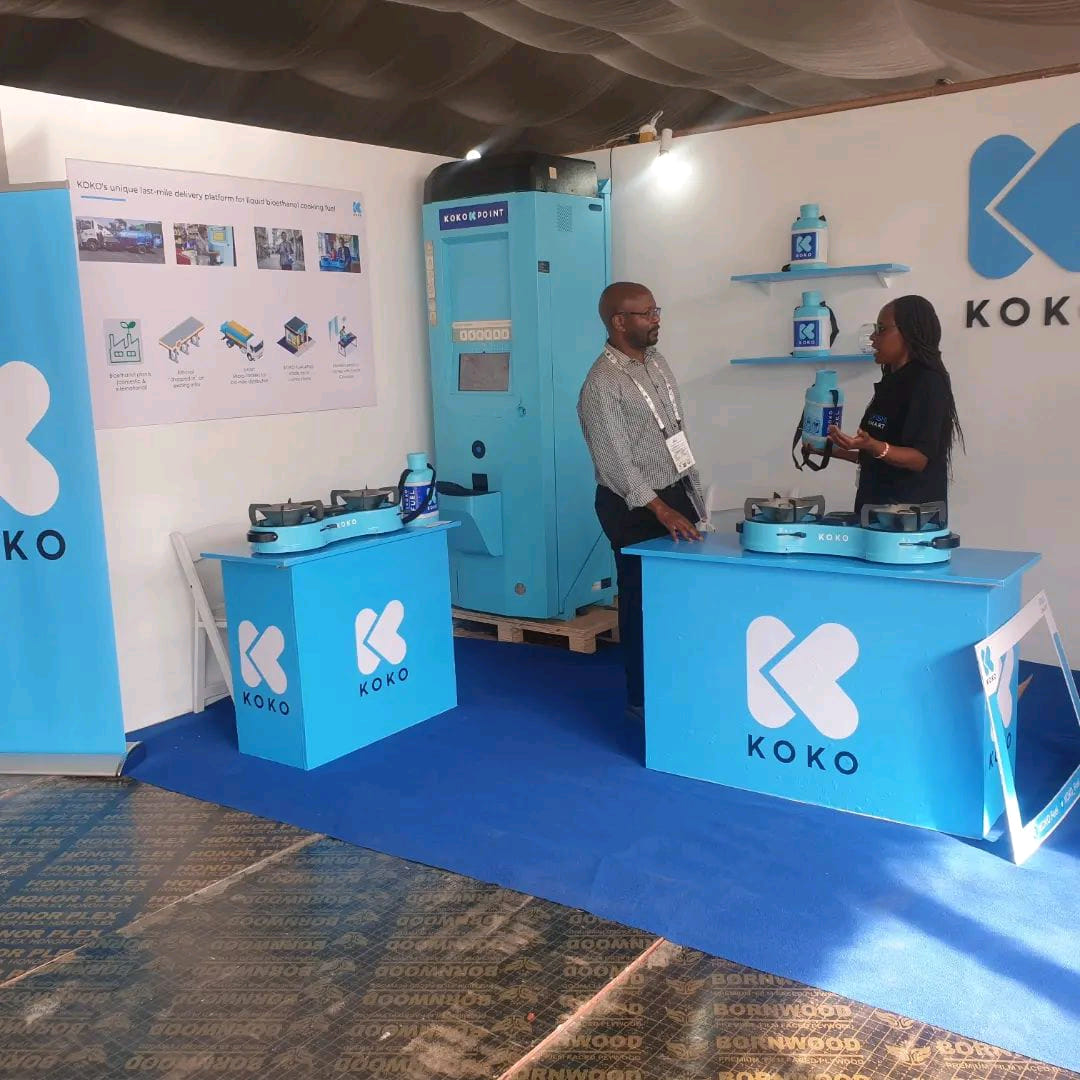
KOKO Networks, one of Kenya’s most visible clean-cooking startups, has shut down its operations and laid off its entire workforce following a dispute with the Kenyan government over carbon credit approvals, bringing a sudden halt to a business model that had become central to the country’s clean energy transition for low-income households.
According to trusted sources, the decision, taken after days of internal deliberations at the company’s Nairobi offices, followed the government’s refusal to issue a Letter of Authorisation required for the sale of carbon credits generated by KOKO’s operations. Without that approval, the company’s executives concluded that the business could no longer remain solvent. Staff were informed of the closure on Friday and instructed not to report to work, according to people familiar with the discussions.

Founded in 2013, KOKO Networks built its model around supplying bioethanol fuel and compatible cookstoves to low-income households at heavily subsidised prices. Those subsidies were made possible through revenues earned from selling carbon credits internationally, based on the emissions avoided when households switch from charcoal or kerosene to cleaner-burning fuels. The government’s decision to block the authorisation effectively severed the financial backbone of the company.
The shutdown affects more than 700 direct employees and thousands of agents who operated KOKO’s distribution network, which included over 3,000 automated fuel dispensing machines across urban and peri-urban areas. More critically for sustainability and public health, the closure risks reversing clean cooking gains for an estimated 1.5 million households that had adopted bioethanol as an alternative to charcoal and kerosene.
Read also: MENA waste set to double by 2050 as World Bank warns of rising environmental costs
KOKO’s pricing structure illustrates how dependent the model was on carbon finance. The company sold bioethanol at about half the prevailing market price, while its proprietary cookstoves were offered at a fraction of their commercial cost. These subsidies were not marginal incentives but core to affordability for low-income consumers. With carbon credit revenues frozen, insiders said the company could no longer carry the cost of keeping prices low while maintaining operations.
The timing of the shutdown has raised deeper questions about policy coherence in Kenya’s climate and energy landscape. Barely a year ago, KOKO secured a $179.6 million guarantee from the World Bank through its political risk insurance arm, Multilateral Investment Guarantee Agency. The guarantee was designed to support KOKO’s expansion and protect against risks such as contract breaches and government actions that could undermine operations. At the time, the company had outlined plans to reach an additional three million customers by the end of 2027, aligning closely with Kenya’s clean cooking ambitions.
That expansion was also positioned as a climate and environmental intervention. KOKO was established to address deforestation driven by charcoal consumption, a major contributor to forest loss in Kenya and across East Africa. By scaling bioethanol use, the company aimed to cut household emissions, reduce pressure on forests, and improve indoor air quality in densely populated urban settlements.

Over its lifetime, KOKO raised more than $100 million in debt and equity from international investors, including Verod-Kepple, Rand Merchant Bank, Mirova, and the Microsoft Climate Innovation Fund. That level of backing reflected growing confidence in clean cooking as both a development and climate solution, and in carbon markets as a way to bridge affordability gaps in emerging economies.
The collapse of KOKO now exposes the fragility of carbon-dependent business models in Africa, particularly where regulatory clarity and government alignment are uncertain. For households, the immediate concern is practical rather than theoretical: many are likely to revert to charcoal or kerosene, fuels that are not only more polluting but often more expensive in the long run. For policymakers, the episode raises uncomfortable questions about how climate finance mechanisms are governed, and whether current frameworks are robust enough to support private-sector innovation at scale.
KOKO did not issue an immediate public response following the shutdown. As Kenya continues to position itself as a regional climate leader, the company’s abrupt exit stands as a cautionary moment, highlighting the delicate balance between regulation, climate finance, and the lived realities of sustainability transitions on the ground.