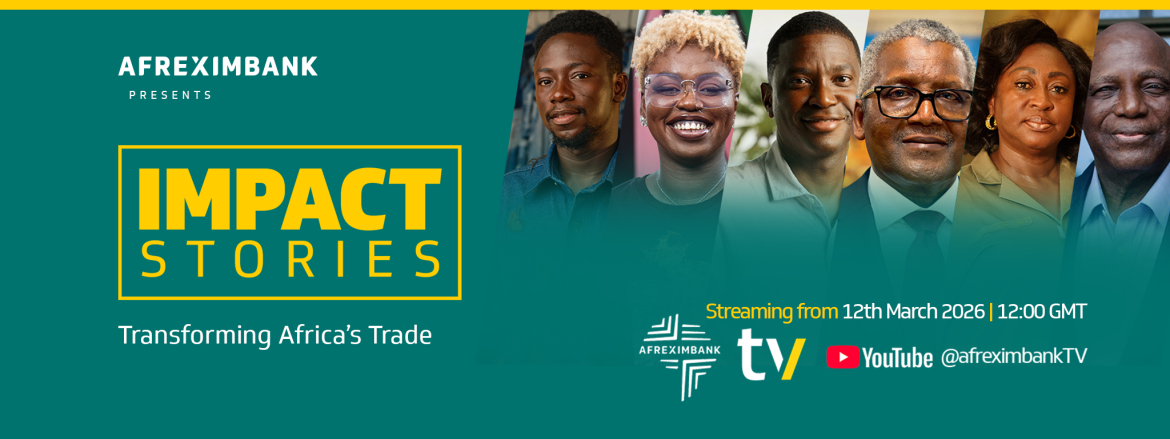
The African Export-Import Bank (Afreximbank) has launched the second season of its “Impact Stories” documentary series, a strategic communications initiative designed to track the tangible economic outcomes of its diversifying multi-billion-dollar credit portfolio across Africa and the Caribbean.
Released in Cairo on March 12, the six-part series, produced in collaboration with CNN International Commercial’s Create studio, shifts the narrative focus from high-level financial disbursements to the granular industrial and infrastructure transformations currently anchoring the “Global Africa” trade agenda.
This shift comes as African multilateral lenders face increasing pressure to demonstrate the developmental efficacy of South-South cooperation amid a tightening global credit environment and shifting capital flows.
The documentary highlights a transition in the bank’s deployment of capital, moving beyond traditional trade finance into complex industrial value chains and cross-border investment. In Nigeria, the series examines the $19 billion Dangote Refinery and the Geometric Power project in Aba, two privately-led initiatives that address the structural bottlenecks of energy insecurity and refined product imports.
According to regional trade economists, the stabilization of the Aba industrial hub through reliable captive power serves as a critical case study for the African Continental Free Trade Area (AfCFTA), illustrating how localized infrastructure can reduce the cost of doing business and enhance the competitiveness of African manufactured goods in regional markets.
The geographic expansion of the series into the Caribbean, specifically through the Silversands Resort project in Grenada, reflects a broader geopolitical and economic pivot toward “Global Africa.”
This strategy seeks to institutionalize trade links between the African continent and its diaspora, treating the Caribbean as a potential 55th member state of the African Union for trade purposes.
By documenting these interventions, the bank is attempting to de-risk the perception of inter-regional projects, signaling to institutional investors that the legal and logistical frameworks for Africa-Caribbean trade are becoming increasingly functional.
Further analysis of the series reveals a focus on the “Creative Africa Nexus” (CANEX) and agricultural value addition, two sectors identified by the African Union as essential for youth employment and foreign exchange stability.
In Ghana, the narrative follows the processing of cocoa via Plot Enterprise, a move away from the export of raw beans which has historically left West African economies vulnerable to global commodity price volatility.
Similarly, the inclusion of the Ghanaian fashion brand Boyedoe suggests that the bank is positioning the creative economy not as a cultural luxury, but as a viable export sector capable of high-margin growth.
According to Mrs. Anne Ezeh, Director of Communications at Afreximbank, the films serve as portraits of partnership that validate the feasibility of economic independence through integrated trade.
For African policymakers and finance ministers, these “impact stories” provide a blueprint for how multilateral support can be leveraged to fix domestic supply chains and reduce the fiscal burden of external debt by boosting local production capacity.
The renovation of the Félix Houphouët-Boigny Stadium in Abidjan, also featured in the series, underscores the role of national infrastructure in stimulating local economies and urban renewal.
As Africa navigates a period of significant fiscal consolidation, the bank’s emphasis on “real-world impact” serves a dual purpose: it builds a track record for future capital raises and provides a counter-narrative to the “Africa risk” premiums often applied by international rating agencies.
By humanizing the results of its balance sheet, Afreximbank is making a calculated argument for the resilience of intra-African trade as a buffer against global economic shocks.