
Ghana is increasingly turning to its own local food systems to address persistent gaps in child nutrition, as policymakers and researchers push to reimagine school meals not just as a welfare intervention, but as a strategic lever for strengthening agriculture, health outcomes and rural livelihoods.
A recent multi-stakeholder webinar on school meals and food systems, alongside the launch of the Ghana Community of Policy & Practice (CoPP), brought together experts from nutrition, agriculture, education and development sectors to explore how locally available foods can be better integrated into the country’s national school feeding programme.
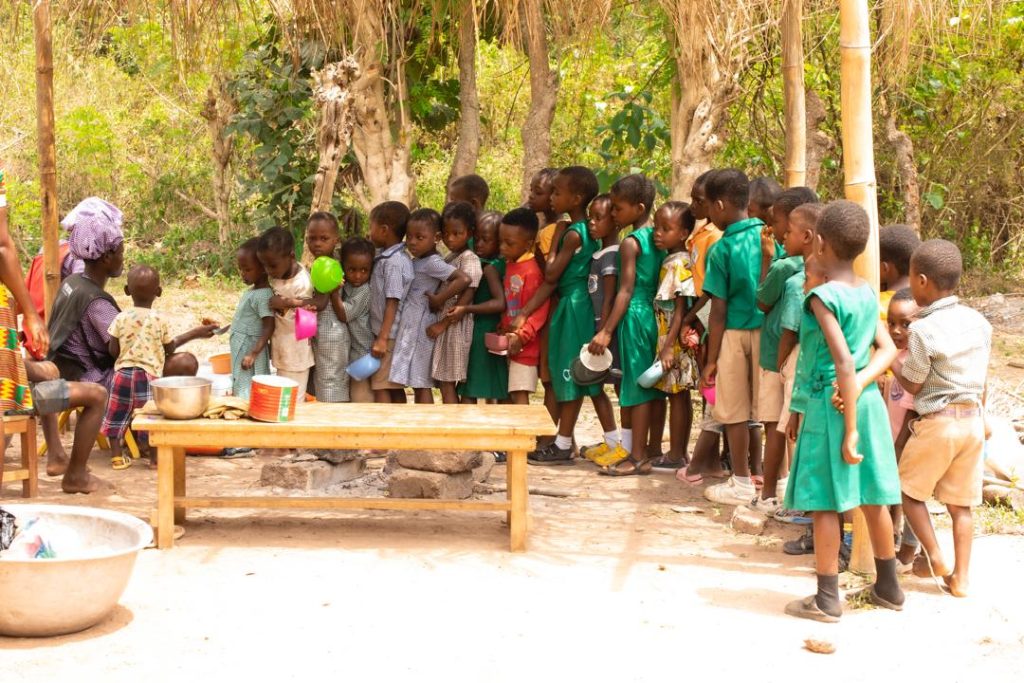
The programme, which currently reaches about 4.5 million pupils, has played a significant role in improving school attendance and reducing short-term hunger. However, experts say its nutritional impact remains uneven, with many meals still lacking sufficient protein diversity, micronutrients and dietary balance to address broader malnutrition challenges among school-age children.
Opening the discussions, Professor Francis Bruno Zotor of the University of Health and Allied Sciences (UHAS) said school meals should be understood as part of a wider development system rather than a standalone intervention.
“School meals are about much more than feeding children – they are linked to nutrition, education, local agriculture, livelihoods, and the strength of our food systems,” he said.
At the centre of the conversation was a growing recognition that Ghana already produces many of the foods needed to improve dietary quality in schools, but system-level barriers continue to limit their use. The challenge, participants noted, is not simply food availability, but how supply chains, procurement systems, payment structures and culinary practices interact to shape what ultimately ends up on children’s plates.
Read also: Ghana launches first marine protected area to restore fisheries and protect Coastal livelihoods
One of the most immediate examples highlighted was the introduction of soy into school meals as an affordable, locally available protein source. Officials from the Ghana School Feeding Programme Secretariat said efforts are underway to train caterers in preparing soy-based dishes, while strengthening procurement links with local farmers producing soybeans.
The aim is to reduce reliance on imported or highly processed ingredients while improving the protein content of school meals.
Similar innovation is emerging in the use of aquatic foods. Research led by the Council for Scientific and Industrial Research–Food Research Institute has explored ways of incorporating fish more consistently into school diets, despite Ghana’s strong domestic fish production sector. Proposals include fish-based powders for soups and stews, as well as processed products such as fish sausages designed to fit existing school meal preparation methods.
“When these foods are included, we see impact,” said researcher Jolene Mateko Nyako. “But it depends on how stakeholders are engaged and how systems work in practice.”
Her comments reflect a broader systems challenge: even when nutritious foods exist locally, they are often excluded due to logistical constraints, limited processing capacity or lack of familiarity among caterers and suppliers.
Financing structures within the school feeding system also shape outcomes. Caterers frequently experience delayed payments, sometimes several months after delivering meals, creating cash flow pressures that limit their ability to source more diverse or higher-quality ingredients. Stakeholders are now exploring more flexible supplier arrangements to better align with these realities and improve consistency in food delivery.

Beyond supply chains and financing, behavioural and cultural factors are also influencing school meal composition. Experts from the Fortified Whole Grain Alliance noted that nutritious foods such as whole grains are often underutilised due to perceptions about taste, preparation difficulty or lack of familiarity among cooks and children.
“It’s not about dishing out information – it’s about making these foods easy to understand, prepare, and enjoy,” said Joy Murasi, emphasising the need for practical engagement such as cooking demonstrations and hands-on training in schools and communities.
Community participation emerged as another critical gap and opportunity. Researchers at UHAS highlighted that many local communities are willing to contribute land, labour and food produce to support school feeding initiatives, but are often excluded from formal planning and decision-making processes. Strengthening these linkages, they argued, could significantly improve both supply stability and nutritional diversity.
In some regions, community-led school farms are already demonstrating this potential in practice. These initiatives are producing nutrient-rich crops such as orange-fleshed sweet potatoes while also serving as learning platforms for agricultural skills and food preparation techniques, linking education directly with food systems transformation.
The launch of the Ghana CoPP is intended to bring these fragmented efforts into a more coordinated framework. By connecting government agencies, researchers, development partners and community actors, the platform aims to facilitate knowledge sharing and align policy with implementation realities on the ground.
Read also: Emirates Foundation raises AED 8.8 million to support children in Kenya, South Africa and Zimbabwe
As Professor Phyllis Addo of UHAS noted during the webinar, strengthening school feeding requires collective responsibility across the entire system. “We all have a role to play in making sure school feeding works, and is done right,” she said.
Taken together, the discussions point to a broader shift in thinking: school meals are no longer being viewed solely as a social protection tool, but as a strategic entry point for transforming national food systems. With Ghana already producing many of the foods needed to improve nutrition outcomes, the challenge now lies in aligning production, procurement and consumption systems so that local foods move more efficiently from farms and waters into school kitchens.