


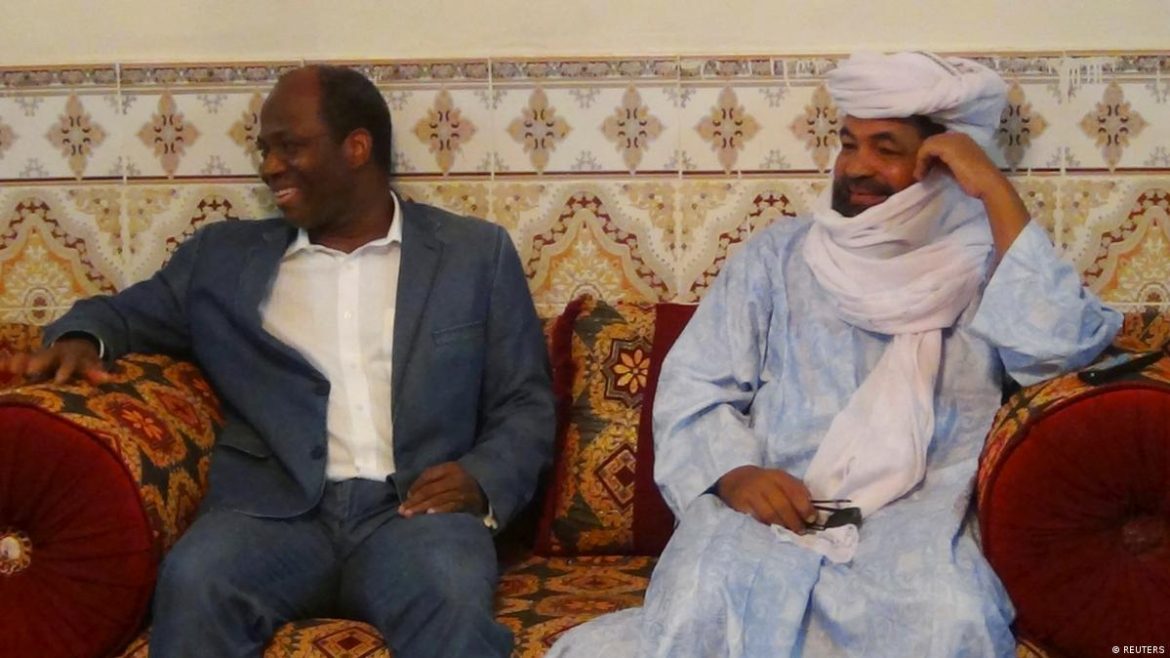
Mali’s military government has announced a reward of two billion CFA francs (approximately $3.5 million) for information leading to the capture or killing of jihadist leader Iyad Ag Ghaly, escalating efforts to counter one of the most influential militant figures operating across the Sahel. The announcement, made by authorities in Bamako, also includes rewards for information on Ghaly’s deputy, Amadou Kouffa, and two Tuareg rebel leaders accused of orchestrating attacks against civilians, security forces and infrastructure throughout the country.
The move comes as Mali continues to grapple with a complex security landscape marked by overlapping insurgencies involving Al-Qaeda-linked militants, Islamic State affiliates and armed criminal networks. According to Malian authorities, the targeted individuals are believed to be responsible for planning and executing attacks that have destabilised large parts of the country and contributed to a broader regional security crisis affecting neighbouring Burkina Faso and Niger.
Iyad Ag Ghaly, a former Tuareg rebel commander and diplomat, leads the Group for the Support of Islam and Muslims (JNIM), an alliance of militant organisations affiliated with Al-Qaeda. Since its formation in 2017, JNIM has emerged as one of the most active insurgent groups in West Africa, extending its operations across Mali and into neighbouring states. The group has claimed responsibility for numerous attacks on military installations, government facilities and civilian communities, contributing to widespread displacement and humanitarian pressures across the region.
The reward announcement reflects growing pressure on Mali’s military leadership to demonstrate progress against insurgent groups after years of deteriorating security conditions. Since seizing power in a 2020 coup, the military government has prioritised counterterrorism operations while reshaping security partnerships and reducing dependence on traditional Western allies. However, despite intensified military campaigns and regional cooperation initiatives, violence continues to affect significant portions of the country.
According to regional security assessments, militant activity in the Sahel has evolved beyond a conventional insurgency into a multidimensional challenge linked to governance gaps, economic marginalisation, illicit trade networks and climate-related resource pressures. Communities across affected areas frequently face disruptions to agriculture, trade routes, education services and healthcare delivery, deepening vulnerabilities in already fragile regions.
The security crisis carries substantial economic implications. Persistent attacks have increased public spending on defence and security while constraining investments in infrastructure, productive sectors and social services. Governments across the Sahel have been forced to allocate growing portions of national budgets toward military operations, creating additional pressure on public finances at a time when many countries are already managing debt, inflation and development financing challenges.
For Mali, prolonged instability has implications extending beyond immediate security concerns. Mining operations, transport corridors and cross-border commerce remain critical sources of economic activity, and insecurity can increase operational costs, discourage foreign investment and disrupt regional integration efforts. According to development economists, uncertainty linked to conflict can also weaken investor confidence in sectors ranging from renewable energy and infrastructure to agriculture and logistics.
The announcement of a substantial financial reward highlights the extent to which authorities view the leadership of armed groups as central to the conflict. However, analysts note that the long-term effectiveness of counterinsurgency strategies depends not only on military measures but also on strengthening institutions, expanding economic opportunities and improving state presence in underserved regions.
The broader regional dimension remains significant. Mali, Burkina Faso and Niger have increasingly coordinated security efforts through the Alliance of Sahel States, a framework established following their withdrawal from the Economic Community of West African States (ECOWAS). The three countries face similar security threats, with militant groups operating across porous borders and exploiting local grievances to expand their influence.
The pursuit of high-profile militant leaders may generate intelligence-sharing opportunities and strengthen security cooperation among Sahel governments. Yet experts caution that durable stability will require addressing the structural conditions that allow extremist organisations to recruit members and maintain influence in remote communities.
For Africa, the latest developments underscore the close relationship between security, governance and economic resilience. Persistent instability in the Sahel affects trade networks, investment flows, food security and infrastructure development far beyond national borders. As governments seek to contain armed groups and restore state authority, the outcome will have implications not only for regional security but also for long-term development prospects across one of the continent’s most strategically important regions.


