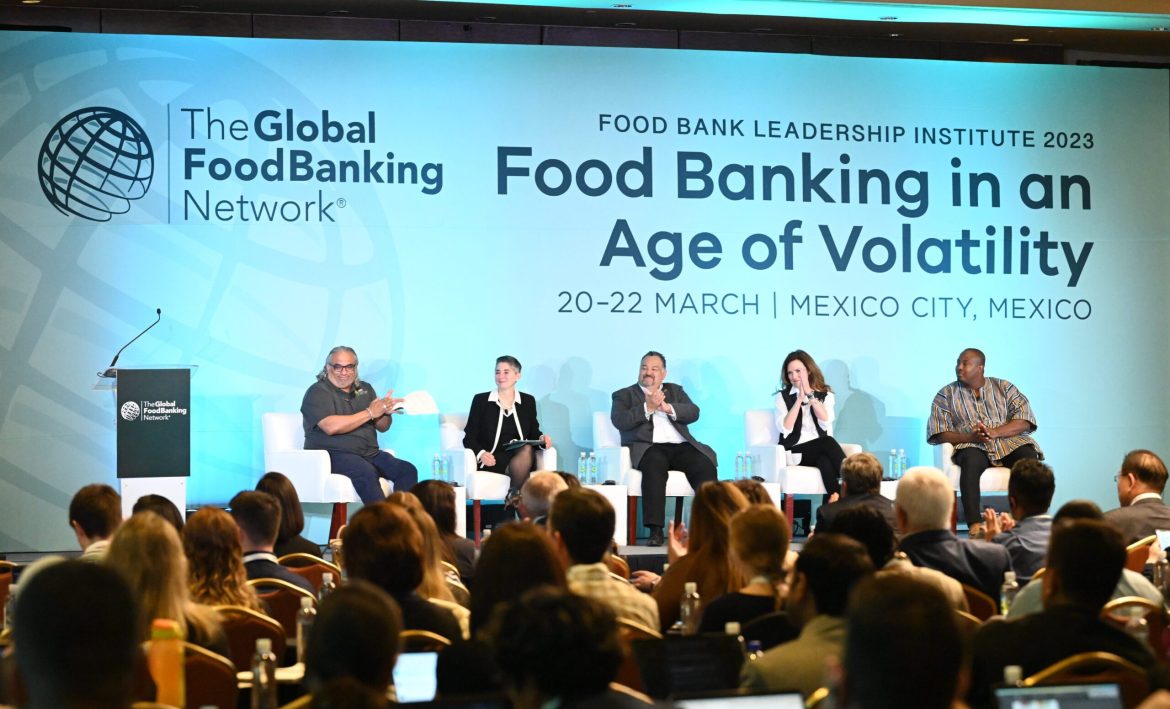
Global food banks provided approximately two billion meals to 40.5 million people across 47 countries in 2025, according to new data released by The Global FoodBanking Network (GFN), underscoring the increasingly important role food recovery systems are playing as humanitarian funding declines, food insecurity intensifies and climate-related disruptions place growing pressure on global food systems. The figures, published on 28 July 2026, show that food banks served 2.5 million more people than in 2024, reflecting rising demand amid reductions in official development assistance, conflict, economic instability and extreme weather events that continue to disrupt agricultural production and food supply chains.
The findings highlight a broader shift in global food security, where local food banks are becoming integral components of national resilience strategies rather than simply emergency charities. By recovering surplus food that would otherwise be wasted and redirecting it to vulnerable households, food banks are increasingly addressing three interconnected global challenges: hunger, food loss and climate change.
According to The Global FoodBanking Network, member organisations prevented approximately 534 million kilograms of food from being discarded in 2025. That recovery effort avoided an estimated two million metric tonnes of carbon dioxide equivalent (CO₂e) emissions, an environmental benefit comparable to removing approximately 473,000 vehicles from the road for one year. The figures demonstrate how food recovery is becoming an increasingly recognised climate mitigation strategy while simultaneously strengthening food security.
The report comes at a time when humanitarian organisations are facing one of the most challenging funding environments in decades. Several donor governments have reduced overseas development assistance amid mounting fiscal pressures, geopolitical tensions and competing domestic priorities. According to the United Nations Office for the Coordination of Humanitarian Affairs (OCHA), global humanitarian needs continue to outpace available funding, leaving millions of vulnerable people exposed to worsening food insecurity.
“Last year, dramatic and sudden reductions in official development assistance set off the most significant upheaval of humanitarian funding in decades,” said Lisa Moon, President and Chief Executive Officer of The Global FoodBanking Network. She noted that food banks continued to serve as responsive local safety nets by connecting communities with nutritious food despite increasingly constrained financial resources.
One of the strongest drivers behind the network’s expansion has been agricultural recovery. This model enables food banks to work directly with farmers, agricultural cooperatives and packing facilities to rescue surplus produce that remains safe for consumption but cannot be sold because of cosmetic imperfections, market oversupply or logistical constraints. Rather than allowing this food to decompose in fields or landfills, it is redirected to households experiencing food insecurity.
According to the report, food banks sourced 55% more food from agricultural producers in 2025 compared with the previous year. The initiative enabled the recovery of approximately 228 million kilograms of nutritious food, much of which consisted of fresh fruits and vegetables that otherwise would have gone to waste. Fresh produce accounted for nearly half of all food distributed across the network, making it the single largest category of recovered food.
Agricultural recovery is attracting growing international attention because food loss remains one of the most significant inefficiencies within global food systems. According to the Food and Agriculture Organization of the United Nations (FAO), roughly one-third of all food produced globally is either lost or wasted before it reaches consumers. Beyond representing a major economic loss, wasted food also consumes land, water, fertilisers and energy while generating substantial greenhouse gas emissions during decomposition.
For Africa, the implications are particularly significant. Although the continent continues to experience some of the world’s highest levels of food insecurity, considerable volumes of agricultural produce are lost between farms and markets because of inadequate storage facilities, limited cold-chain infrastructure, poor transport networks and fragmented value chains. According to the African Development Bank (AfDB), post-harvest losses cost African economies billions of dollars annually while reducing farmer incomes and undermining national food security.
Strengthening food recovery systems could therefore offer multiple development benefits by improving food availability, supporting vulnerable households, reducing environmental impacts and increasing returns for agricultural producers. Several African countries, including Kenya, South Africa, Nigeria and Ghana, have expanded partnerships between food banks, supermarkets, food processors and farmers to recover edible food that would otherwise enter the waste stream.
The latest GFN data also illustrates how food banks are evolving operationally in response to funding constraints. Rather than relying exclusively on large warehouses and centralised distribution centres, many organisations are increasingly adopting digital and decentralised models designed to improve efficiency while reducing operating costs.
One of the fastest-growing innovations is virtual food banking, sometimes referred to as direct collection. Under this approach, technology platforms connect food donors directly with community organisations capable of distributing surplus food locally. Instead of routing donations through traditional storage facilities, food moves directly from farms, manufacturers, retailers or restaurants to local charities and community groups, significantly reducing transportation costs, storage requirements and distribution delays.
According to The Global FoodBanking Network, 27 member food banks operated virtual food banking programmes during 2025. These technology-enabled systems have become particularly valuable in regions where financial resources remain limited but digital connectivity continues to improve.
The expansion of digital food recovery reflects broader trends in supply-chain innovation. Governments, humanitarian organisations and private-sector partners are increasingly exploring digital platforms, geospatial mapping and artificial intelligence to improve food distribution, reduce waste and strengthen emergency response systems. Such technologies can improve transparency, enable real-time matching of supply and demand and maximise the impact of limited humanitarian resources.

Climate change further reinforces the importance of resilient food recovery systems. Increasingly frequent droughts, floods, heatwaves and storms continue to disrupt agricultural production across many regions, contributing to food price volatility and supply shortages. According to the Intergovernmental Panel on Climate Change (IPCC), strengthening food system resilience will require integrated approaches that reduce food loss, improve distribution networks and build adaptive local institutions capable of responding quickly to emerging shocks.
The Global FoodBanking Network’s latest figures therefore demonstrate that food banking is evolving beyond emergency food assistance into an increasingly strategic component of sustainable food systems. By simultaneously reducing food waste, lowering greenhouse gas emissions and improving access to nutritious food, food banks are contributing to several United Nations Sustainable Development Goals, including Zero Hunger (SDG 2), Responsible Consumption and Production (SDG 12) and Climate Action (SDG 13).
For African countries confronting rapid population growth, urbanisation and increasing climate risks, the findings offer important lessons on the value of strengthening food recovery ecosystems alongside broader agricultural and social protection policies. As development financing becomes more constrained and climate pressures intensify, scalable partnerships between governments, farmers, retailers, technology providers and civil society organisations may become increasingly important in building resilient food systems capable of protecting both livelihoods and environmental resources.
The continued growth of food banking suggests that food recovery is no longer solely a humanitarian intervention. It is emerging as a practical economic, environmental and governance tool that can help countries reduce waste, strengthen community resilience and support more sustainable agricultural development in an increasingly uncertain global landscape.