


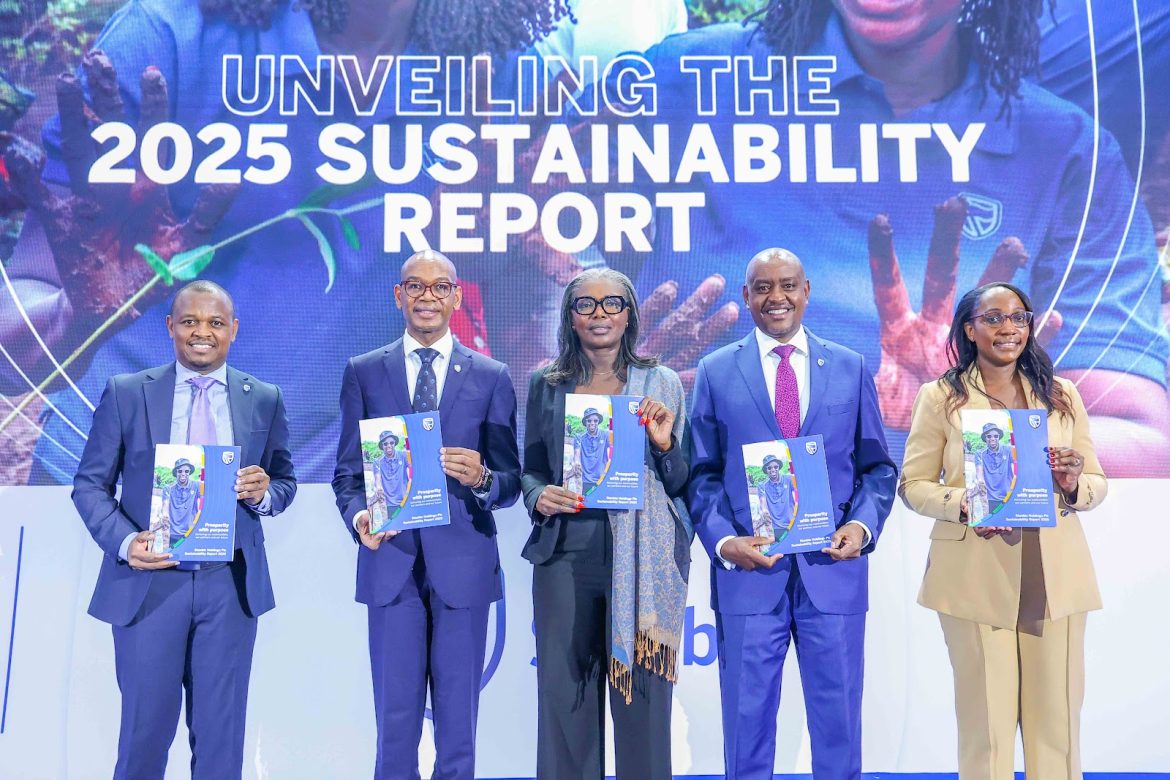
Stanbic Holdings Plc facilitated KES133 billion (approximately US$1 billion) in trade financing in 2025, significantly exceeding its annual target of KES90 billion and reinforcing its position as a key financial intermediary supporting regional commerce, sustainable development and economic resilience across Kenya and South Sudan. The performance, disclosed in the bank’s 2025 Sustainability Report, highlights the increasingly important role financial institutions are playing in mobilising capital for trade, climate adaptation, sustainable infrastructure and inclusive economic growth at a time when African economies are seeking to strengthen regional integration and build resilience against global economic uncertainties.
Trade finance remains one of the most critical yet underfunded components of economic development across Africa. According to the African Development Bank and the African Export-Import Bank (Afreximbank), the continent faces a trade finance gap estimated at more than US$80 billion annually, limiting the ability of businesses, particularly small and medium-sized enterprises (SMEs), to participate fully in regional and international markets. Against this backdrop, Stanbic’s facilitation of KES133 billion in trade finance represents more than a balance sheet achievement. It reflects growing demand for financing solutions that enable businesses to access working capital, manage cross-border transactions and navigate increasingly complex regional supply chains.
The bank’s strong trade finance performance comes as implementation of the African Continental Free Trade Area (AfCFTA) continues to gather momentum. The agreement, which aims to create the world’s largest free trade area by number of participating countries, is expected to increase intra-African trade, create new market opportunities and reduce reliance on external markets. Financial institutions are expected to play a crucial role in supporting businesses seeking to capitalise on these opportunities.
Stanbic’s sustainability report also illustrates a broader shift in banking priorities toward financing activities that contribute to environmental sustainability and long-term economic resilience. During the year, the bank advanced KES4.5 billion in green building financing and disbursed KES273 million in solar energy loans as demand for sustainable investments continued to rise. Green financing is increasingly becoming a strategic growth area for African financial institutions. According to the International Finance Corporation (IFC), climate-related investment opportunities in Africa could exceed US$3 trillion by 2030, spanning renewable energy, sustainable infrastructure, green buildings, transport and climate-smart agriculture. Banks are therefore positioning themselves to capture emerging opportunities while supporting national climate commitments and sustainability goals.
Speaking in the report, Stanbic Holdings Chief Executive Officer Dr Joshua Oigara said the bank had deliberately redirected capital toward sectors that support long-term national resilience, including green finance and sustainable development initiatives. His remarks reflect a broader transformation occurring across Africa’s banking sector, where environmental, social and governance (ESG) considerations are increasingly being integrated into lending decisions, risk management frameworks and corporate strategy.
Agriculture remained another major focus area for Stanbic in 2025. The bank disbursed KES2.5 billion to climate-smart agriculture initiatives, increasing the sector’s share of its overall loan portfolio to 9.9 percent. The financing comes at a critical time for Kenya’s agricultural sector, which contributes approximately one-third of the country’s gross domestic product and supports millions of livelihoods directly and indirectly. Climate change continues to present significant risks through erratic rainfall, prolonged droughts and shifting weather patterns, making investments in climate-resilient agricultural practices increasingly important for food security and rural incomes.
The bank also expanded support for affordable housing, providing KES1.8 billion in housing finance during the year. Kenya continues to face a significant housing deficit, estimated at more than two million units, with rapid urbanisation increasing pressure on existing housing stock. Financial institutions have become important partners in government efforts to improve housing access and support urban development. Beyond lending, Stanbic continued to strengthen its climate risk management framework as regulators and investors place increasing emphasis on climate-related financial disclosures. Chief Risk Officer Edwin Mucai noted that all loans exceeding US$1 million are subjected to environmental and social risk screening before approval through the bank’s Environmental and Social Risk Management framework.
This approach aligns with emerging global best practices that recognise climate risks as financial risks. Extreme weather events, resource scarcity and environmental degradation can affect the performance of financed projects, making environmental due diligence increasingly important for long-term portfolio stability. The bank also made significant progress in aligning its sustainability reporting with International Financial Reporting Standards IFRS S1 and IFRS S2, which provide a globally recognised framework for sustainability and climate-related disclosures. Adoption of these standards is expected to improve transparency, comparability and investor confidence across African capital markets.
Diversity and inclusion remained central to the bank’s governance agenda. Women accounted for 43 percent of Stanbic’s board membership in 2025, while 15.53 percent of procurement spending was directed toward women-owned businesses. The institution further strengthened its commitment to gender inclusion through the signing of the UN Women’s Empowerment Principles. The move builds on the bank’s D.A.D.A platform, which has become one of Kenya’s most prominent initiatives supporting women entrepreneurs. Since its inception, the programme has disbursed KES49.5 billion to women-owned enterprises and onboarded more than 112,000 women.
Support for micro, small and medium-sized enterprises also remained a strategic priority. Through Stanbic Foundation initiatives, the bank channelled KES105.73 million in grants and catalytic funding to SMEs while supporting entrepreneurship development and business resilience programmes. Youth empowerment featured prominently in the institution’s social impact strategy. During the year, 100,000 young people across eight counties received digital skills training designed to improve employability and participation in Kenya’s rapidly growing digital economy. Environmental conservation initiatives also expanded significantly. The bank planted more than 204,000 trees and restored over 107 hectares of degraded ecosystems, including indigenous forest restoration in the Mt Kenya ecosystem and mangrove rehabilitation projects at the Sabaki Estuary.
https://www.aecweek-registration.com/2026/
Such investments reflect growing recognition within the financial sector that environmental sustainability underpins economic stability. Healthy ecosystems support agriculture, water security, tourism, biodiversity conservation and climate resilience, all of which have direct implications for economic growth and financial performance. Looking ahead, Stanbic’s launch of a Sustainability Academy signals a further evolution in how financial institutions support the transition to more sustainable economies. The platform aims to equip businesses with practical knowledge on renewable energy adoption, climate-smart agriculture, carbon markets, water management and ESG implementation.
For Kenya and the wider East African region, the bank’s 2025 sustainability performance illustrates how financial institutions are increasingly moving beyond traditional lending roles to become active participants in economic transformation. As governments seek to mobilise capital for climate adaptation, infrastructure development, trade expansion and inclusive growth, banks will remain critical partners in directing investment toward sectors capable of delivering both financial returns and long-term development outcomes.
Stanbic’s results demonstrate that sustainability is increasingly becoming embedded within mainstream banking operations rather than being treated as a standalone corporate responsibility initiative. In an era defined by climate risks, demographic change and economic transition, the ability of financial institutions to align capital allocation with national development priorities will play a significant role in shaping Africa’s future growth trajectory.


