


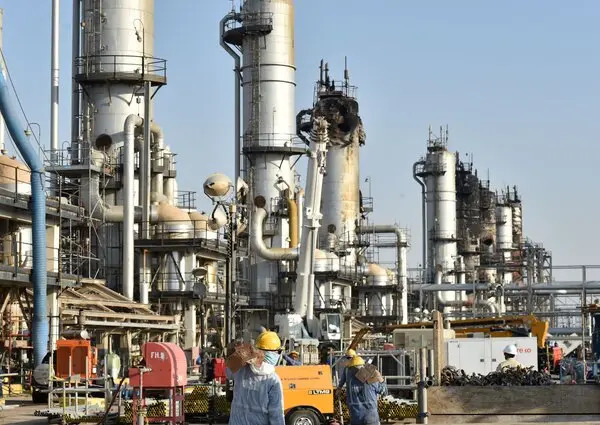
The OPEC+ is expected to approve another increase in oil production when member countries meet on 5 July, signalling a continued shift towards higher crude supply as global energy markets stabilise following recent geopolitical disruptions in the Middle East.
According to a Reuters report citing sources familiar with the discussions, the alliance is likely to increase collective production by approximately 188,000 barrels per day (bpd) for August, matching the monthly production increases adopted for June and July. If endorsed, the decision would represent the fourth consecutive monthly output increase since April, reflecting OPEC+’s gradual strategy of restoring production after years of coordinated supply restraint.
While OPEC+ has not officially confirmed the proposal, market analysts expect the group to maintain its measured approach to supply management as it seeks to balance market stability, producer revenues and global demand recovery. The anticipated increase follows production adjustments implemented by seven of the alliance’s largest producers Saudi Arabia, Russia, Iraq, Kuwait, Algeria, Kazakhstan and Oman which collectively increased production quotas by around 800,000 barrels per day between April and July.
These adjustments form part of the alliance’s phased reversal of the 1.65 million barrels per day voluntary production cuts agreed in 2023 to support oil prices during periods of weaker global demand. The strategy reflects OPEC+’s longstanding practice of adjusting production quotas in response to evolving market fundamentals rather than allowing unrestricted supply. The latest deliberations come against a backdrop of improving stability in global oil markets following months of geopolitical uncertainty. Earlier this year, conflict involving the United States, Israel and Iran disrupted international shipping through the Strait of Hormuz, one of the world’s most strategically important maritime energy corridors through which approximately one-fifth of global oil supplies transit.
The temporary disruption pushed international crude prices above US$100 per barrel, heightening concerns about global inflation, energy security and supply chain stability. However, subsequent diplomatic engagement between Washington and Tehran has contributed to a gradual easing of tensions, allowing oil flows through the region to normalise and international prices to retreat. By 1 July, Brent crude, the global oil benchmark, was trading at around US$72 per barrel, close to levels observed before the regional conflict, indicating that markets have largely priced in the return of more stable supply conditions.
For African oil-producing economies, the anticipated production increase carries significant economic implications. Countries including Nigeria, Angola, Libya, Algeria and Republic of the Congo remain heavily dependent on hydrocarbon exports for government revenue, foreign exchange earnings and fiscal stability. Changes in OPEC+ production policy therefore influence not only global oil prices but also national budgets, exchange rates and investment decisions across much of the continent. For exporters, moderately higher production quotas could generate increased export volumes, although this benefit may be partly offset if additional global supply exerts downward pressure on prices. The balance between production growth and price stability remains a central consideration for resource-dependent African economies seeking to finance development while managing fiscal risks.
According to the International Energy Agency (IEA), oil demand growth is expected to moderate over the coming years as energy efficiency improves and renewable energy deployment accelerates globally. Nevertheless, hydrocarbons are projected to remain an important component of the global energy mix for decades, particularly in developing economies where industrialisation and transport demand continue to expand. This evolving outlook has prompted OPEC+ to pursue a more flexible production strategy that responds to changing market conditions while protecting long-term producer interests. Internal discussions within the alliance have also highlighted the challenges of balancing production quotas with national investment ambitions.
In recent weeks, reports suggested that Iraq had considered leaving OPEC+ unless its production allocation was revised to reflect its expanding production capacity. Although the Iraqi Oil Ministry publicly rejected those reports, it reaffirmed its position that production baselines should accurately reflect members’ technical capabilities and investment levels. The debate illustrates broader tensions facing producer countries that have invested heavily in expanding upstream capacity but remain constrained by collective production agreements designed to stabilise international markets. To address these issues, OPEC+ is conducting an independent assessment of member states’ production capacities, which will establish revised production baselines beginning in 2027. The review, being undertaken by an independent United States consulting firm, is expected to conclude in September.
The outcome could reshape production allocations across the alliance for years to come, with potential implications for African producers seeking higher quotas based on recent investments in exploration and production infrastructure. For Africa, these developments extend beyond oil markets alone. Hydrocarbon revenues continue to finance public infrastructure, healthcare, education and social programmes across several producing nations. Fluctuations in international oil prices therefore directly influence fiscal planning, debt sustainability and broader economic performance. At the same time, African governments are navigating a complex energy transition. While global investment increasingly shifts towards renewable energy, many African economies continue to rely on oil and gas revenues to support economic diversification and finance low-carbon development.
This dual challenge requires balancing immediate fiscal priorities with longer-term sustainability objectives. Countries such as Nigeria and Angola are simultaneously expanding investments in renewable energy, gas infrastructure and industrial diversification while maintaining petroleum production as a major source of public revenue. Algeria and Libya continue to strengthen hydrocarbon exports even as they explore opportunities to integrate renewable energy into domestic energy systems. For policymakers, the anticipated OPEC+ production increase underscores the importance of building resilient economies capable of managing commodity price volatility. Diversifying revenue sources, strengthening sovereign wealth management and expanding value-added industries remain essential strategies for reducing exposure to cyclical fluctuations in global energy markets.
As OPEC+ prepares to meet, investors will closely monitor not only the decision on August production levels but also signals regarding the alliance’s longer-term production strategy.
For Africa’s oil exporters, the meeting represents another reminder that global energy governance continues to shape domestic economic outcomes. While higher production may support export volumes in the near term, sustainable economic resilience will ultimately depend on how resource revenues are invested to build more diversified, competitive and climate-resilient economies.


