


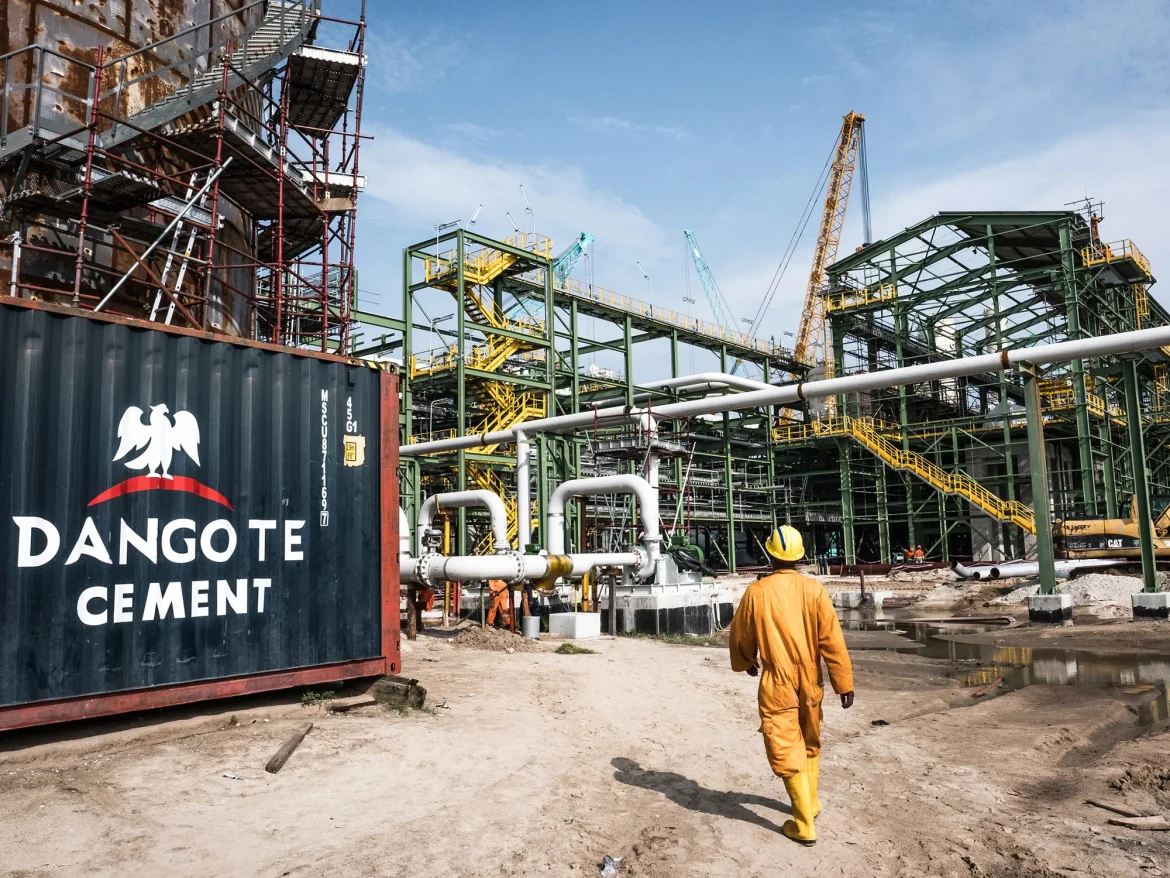
Dangote Cement Plc has unveiled an ambitious sustainability roadmap that combines large-scale industrial expansion with accelerated decarbonisation, announcing plans to reduce its carbon emissions intensity by 20 percent while increasing installed cement production capacity to 80 million tonnes per annum (MTPA) by 2030. The strategy, presented during the company’s 17th Annual General Meeting in Lagos, positions Africa’s largest cement producer at the centre of the continent’s evolving transition towards lower-carbon industrial growth while responding to rising infrastructure demand across African markets.
Chairman Emmanuel Ikazoboh told shareholders that the company’s Vision 2030 strategy places environmental, social and governance (ESG) principles alongside commercial expansion, reflecting a broader shift within Africa’s manufacturing sector where sustainability is increasingly viewed as a driver of competitiveness rather than a regulatory obligation. According to the company, sustainability has become integral to long-term value creation, operational resilience and investment attractiveness as global capital markets increasingly incorporate climate-related risks into financing decisions.
 The announcement comes at a time when Africa faces a dual challenge of expanding industrial production to meet infrastructure needs while reducing the environmental footprint of carbon-intensive sectors such as cement manufacturing. Cement production accounts for approximately seven to eight percent of global carbon dioxide emissions, making decarbonisation within the industry an important component of national and continental climate strategies.
As part of its climate commitments, Dangote Cement approved a programme in 2024 to reduce its net carbon dioxide emissions intensity by 20 percent. The company also outlined plans to modernise its transport operations, announcing that by 2027 all fleet trucks operating in Nigeria, with the exception of those serving its Gboko plant, will transition to compressed natural gas (CNG). Electric trucks are expected to begin entering the company’s logistics fleet from 2026, supporting efforts to reduce emissions associated with freight transport while improving fuel efficiency.
Alongside its decarbonisation agenda, Dangote Cement intends to strengthen its position as Africa’s leading cement exporter through expanded port infrastructure at Apapa, Onne and Lekki. The company also plans to increase production capacity through investments that include new operations in Botswana and Zimbabwe, raising installed capacity to 80 million tonnes annually by the end of the decade.
According to the company, the expansion reflects growing demand for cement driven by urbanisation, industrialisation and infrastructure investment across Africa. The African Development Bank estimates that the continent requires annual infrastructure investment of between US$130 billion and US$170 billion to support economic transformation, placing sustained demand on construction materials including cement.
Read also: https://www.arise.tv/dangote-cement-plans-20-emissions-cut-80-million-tonne-capacity-by-2030/
Dangote Cement reported measurable progress against several environmental performance indicators during the 2025 financial year. Carbon emissions intensity declined by 6.5 percent compared with its 2021 baseline, while overall energy consumption fell by four percent and energy intensity improved by 1.7 percent. Water consumption also declined by eight percent as the company expanded energy efficiency measures, increased its use of alternative fuels and reduced clinker content in cement production, one of the industry’s principal strategies for lowering emissions.
The company also continued expanding circular economy initiatives through its DangCircular programme. According to Dangote Cement, more than 437,000 tonnes of waste were co-processed as alternative fuel during the reporting period, reducing dependence on conventional fossil fuels while improving resource efficiency within manufacturing operations. Such initiatives are increasingly being adopted by cement producers globally as they seek to reduce both operating costs and carbon emissions.
Beyond environmental performance, the sustainability roadmap places significant emphasis on workforce development and community investment. Dangote Cement created 625 direct green jobs during the reporting period while increasing graduate trainee recruitment by 74 percent to strengthen Africa’s industrial skills base. The company invested approximately N2.1 billion in employee training and development while increasing its social investment expenditure by 56 percent.
Industrial decarbonisation across Africa increasingly depends not only on technological upgrades but also on building the technical capabilities required to operate more sophisticated manufacturing systems. Investments in workforce development therefore form an important component of the continent’s broader industrial transition.
The company also strengthened its governance framework by introducing new policies covering artificial intelligence risk management, biodiversity protection and disability inclusion, while integrating 297 local suppliers into ESG-focused procurement programmes. According to Ikazoboh, governance structures have evolved significantly over the past decade through stronger executive accountability for sustainability performance and greater oversight of climate-related risks.
Nature restoration also forms part of the company’s longer-term strategy. Dangote Cement announced the launch of its Tree-to-Forest Programme, which aims to restore 200 hectares of land in each country where it operates over the next five years through the planting of approximately 700 trees per hectare. The initiative is intended to strengthen ecosystem restoration while contributing to carbon sequestration and improved biodiversity around operational sites.
The company’s sustainability journey began in 2017 with the introduction of its Seven Sustainability Pillars and reporting aligned with Global Reporting Initiative (GRI) standards. Since then, climate governance has expanded to include executive ESG accountability systems, biodiversity management programmes and climate disclosure frameworks. Dangote Cement also disclosed that it had received a ‘B’ rating from the Carbon Disclosure Project (CDP) for both climate and water security reporting and intends to adopt the International Financial Reporting Standards (IFRS) Sustainability Disclosure Standards ahead of mandatory implementation.
 For Africa, Dangote Cement’s strategy illustrates the increasingly close relationship between industrial expansion and sustainability performance. As governments pursue economic diversification, infrastructure development and climate commitments simultaneously, manufacturers face growing expectations to demonstrate that industrial growth can be achieved alongside lower emissions, improved governance and stronger social outcomes.
The company’s Vision 2030 reflects this changing landscape. By combining capacity expansion with investments in cleaner transport, energy efficiency, circular economy practices, workforce development and ecosystem restoration, Dangote Cement is positioning sustainability as a core element of industrial competitiveness rather than an external compliance requirement. Whether similar approaches are adopted more broadly across Africa’s manufacturing sector will influence the continent’s ability to meet both its development ambitions and its long-term climate objectives while remaining globally competitive in increasingly sustainability-conscious markets.


