


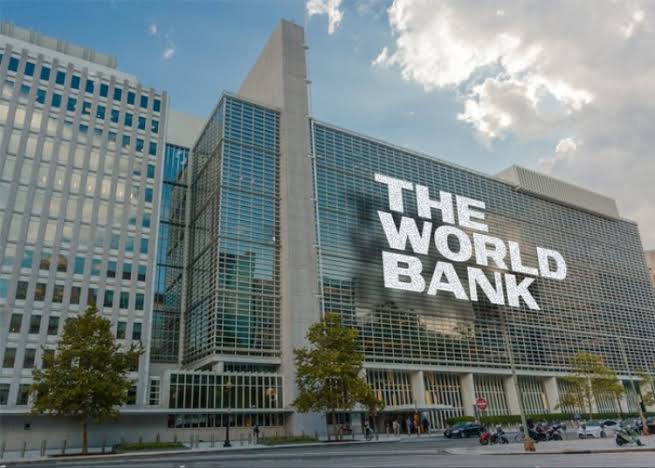
Morocco and the World Bank Group have launched a 10-year Country Partnership Framework for 2026-2035 aimed at accelerating job creation, strengthening private-sector investment and building a more inclusive and climate-resilient economy, marking a shift towards longer-term structural transformation rather than a series of short project cycles. The framework places employment at the centre of the partnership and seeks to align financing, technical expertise, policy reforms and private capital with Morocco’s New Development Model.
The agreement comes as Morocco seeks to strengthen the role of private enterprises in economic growth while addressing persistent disparities in access to jobs, services and economic opportunities. The World Bank Group’s approach is designed to support a transition from a growth model heavily dependent on public investment towards one in which businesses contribute more significantly to investment, productivity and employment.
The partnership is organised around three interconnected priorities. The first is improving the productivity and competitiveness of Moroccan businesses by reducing regulatory constraints, strengthening competition and expanding access to finance, particularly for small and medium-sized enterprises. The second focuses on better-connected and more inclusive cities and territories, with greater access to markets and essential services across urban and rural communities. The third targets human capital through education reforms, Universal Health Coverage and stronger social protection.
For Morocco, the employment focus is significant because economic growth alone does not necessarily translate into sufficient opportunities for young people and women. The framework seeks to connect reforms and investment more directly with employment outcomes, including opportunities in communities outside the country’s major economic centres.
Morocco’s Minister of Economy and Finance, Nadia Fettah, described the partnership as an important milestone in aligning public and private financing, knowledge and reforms around a common development agenda. Her emphasis on employment for young people and women reflects the government’s broader effort to make economic transformation more inclusive.
The 10-year timeframe is one of the most significant features of the agreement. Longer-term development financing can provide greater continuity for reforms that require years to produce measurable results, including improvements in education systems, healthcare, business regulation, infrastructure and social protection. World Bank Vice President for the Middle East, North Africa, Afghanistan and Pakistan, Ousmane Dione, said the extended partnership would enable investment in lasting structural transformation as Morocco pursues its development ambitions.
The World Bank Group also intends to bring together its lending, technical expertise and private-sector instruments. The International Bank for Reconstruction and Development will provide financing and policy support, while the International Finance Corporation is expected to work with businesses and investors. The Multilateral Investment Guarantee Agency can use guarantees and risk-mitigation instruments to help unlock private capital.
This integrated model is important because public financing alone is unlikely to meet the scale of investment required for Morocco’s economic transformation. Mobilising private capital can expand the pool of resources available for infrastructure, manufacturing, services and other job-intensive sectors while reducing some of the financing constraints faced by businesses.
Small and medium-sized enterprises are particularly important in this context. Improving their access to finance and reducing barriers to market participation can support productivity and employment, but the effectiveness of such measures will depend on whether reforms translate into practical improvements in the business environment.
The framework also places territorial inclusion alongside economic competitiveness. Differences between urban and rural areas in access to infrastructure, markets, healthcare, education and employment can limit the distribution of economic gains. Strengthening connections between territories can therefore have both economic and social implications, allowing businesses and workers in less-connected areas to participate more fully in economic activity.
Climate resilience forms another important element of the partnership. Rather than treating climate risks as a separate environmental agenda, the framework incorporates resilience into economic and social development objectives. This is particularly relevant for Morocco as the country manages water stress and climate variability that can affect agriculture, communities, infrastructure and economic activity.
The inclusion of resilience in the partnership also reflects a wider change in development finance. Climate shocks can undermine investments, increase pressure on public budgets and disproportionately affect vulnerable households. Building resilience into infrastructure, public services and local economies can therefore reduce future economic losses while protecting development gains.
The World Bank Group has indicated that implementation will be assessed through measurable indicators, including jobs created, private investment mobilised, access to healthcare and education, and improved protection for communities exposed to climate shocks. This performance orientation will be important because the value of a 10-year framework ultimately depends on whether financing and reforms translate into measurable improvements.
For Africa, Morocco’s partnership offers a relevant example of how development finance can increasingly combine employment, private investment, human capital and climate resilience rather than treating them as separate policy areas. Many African economies face similar challenges: limited fiscal space, insufficient private investment, high youth unemployment, uneven territorial development and growing exposure to climate risks.
The Moroccan approach is also significant because the continent requires substantial private investment to finance infrastructure and productive capacity. Development institutions can play a role not only by providing direct financing but also by reducing investment risks, strengthening institutions and creating conditions under which private capital can participate.
The emphasis on human capital is equally important. Education, healthcare and social protection determine whether workers can participate productively in a changing economy and whether vulnerable households can withstand economic and climate shocks. For countries pursuing industrialisation and economic diversification, investment in people is therefore closely connected to productivity.
Morocco’s strategy also aligns with the broader objectives of African Union Agenda 2063, particularly the goal of building inclusive, prosperous and environmentally sustainable economies. Its focus on productive enterprises, stronger human capital, connected territories and climate resilience reflects the need for economic growth to generate broader development outcomes.
The long implementation horizon creates an opportunity for Morocco and the World Bank Group to adjust policies as economic conditions, investment needs and climate risks evolve. It also creates a greater requirement for institutional continuity, transparent monitoring and effective coordination between national authorities, development institutions and private investors.
The central test will be whether the framework can convert financing and reforms into more productive businesses, higher-quality employment, stronger public services and greater resilience. If implementation remains closely linked to measurable outcomes, the 2026-2035 partnership could become an important component of Morocco’s effort to move towards a more diversified and inclusive economic model while strengthening its ability to withstand environmental and economic pressures.


