


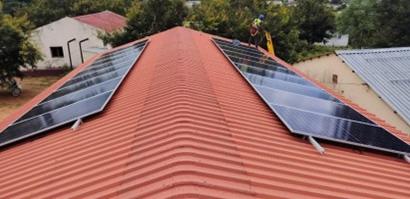
Mozambique is deploying smart solar-powered energy systems at 16 health facilities across nine provinces in an effort to strengthen the reliability of essential healthcare, reduce dependence on diesel generators and improve the resilience of public services to climate and infrastructure disruptions. The initiative, led by the Government of Mozambique with support from the United Nations Development Programme (UNDP) and funding from the Global Fund, combines renewable energy with digital monitoring and institutional capacity building, reflecting a growing effort across Africa to connect healthcare investment with climate resilience and energy security.
Reliable electricity is a basic requirement for modern healthcare, but interruptions can have consequences far beyond inconvenience. Health facilities depend on continuous power for vaccine and pharmaceutical storage, laboratory equipment, digital systems, maternity services, emergency treatment and other essential operations. In Mozambique, particularly in rural and underserved communities, unreliable electricity has made these services more difficult to maintain and has increased reliance on diesel generators as backup power.
According to UNDP Mozambique, the Smart Health Facilities initiative is responding to these constraints by introducing solar photovoltaic systems alongside digital monitoring tools designed to improve system performance and support long-term operation. Solar systems are being developed at 16 facilities during 2026, with commissioning activities and capacity-building sessions for health personnel and government counterparts taking place during June and July.
The intervention is particularly relevant to Mozambique because energy insecurity intersects with significant climate exposure. The country is regularly affected by cyclones, floods and other extreme weather events capable of damaging infrastructure and interrupting public services. A health facility that loses electricity during such events can face simultaneous pressure from increased medical needs and reduced operational capacity.
The shift from diesel-based backup generation to solar power therefore has both environmental and operational implications. Diesel generators require continuous fuel supplies and can become expensive to operate, particularly when transport networks are disrupted or fuel prices rise. Solar generation, when properly designed, maintained and monitored, can provide a more predictable source of electricity for facilities in locations where grid reliability remains a challenge.

UNDP’s broader Smart Health Facilities model goes beyond installing solar panels. The programme combines digitally enabled infrastructure, clean energy and capacity development to address operational weaknesses within health systems. Its approach includes solar systems for healthcare delivery, remote monitoring capabilities and digital tools designed to support more resilient health services.
For patients, the significance is most visible when electricity reliability affects frontline care. Stable power can help maintain cold-chain systems for vaccines and medicines, keep laboratory equipment functioning and support maternity and emergency services. In Mozambique, UNDP also highlights potential gender-related benefits, particularly for women and newborns requiring care during nighttime deliveries and periods of power disruption.
The programme also has implications for healthcare workers. Reliable electricity can improve working conditions in facilities where staff previously had to manage frequent interruptions or depend on generators. Training health workers and government counterparts to operate and maintain the new systems is consequently an important part of the investment.
This focus on institutional capacity is significant because renewable-energy projects can deteriorate when maintenance responsibilities are unclear or technical expertise is unavailable. UNDP’s Smart Health Facilities approach explicitly includes capacity development, technical support and operation-and-maintenance guidance as part of the broader model.
The initiative is also linked to a wider programme of health-system strengthening in Mozambique. Under the leadership of the Ministry of Health and with support from the Global Fund, UNDP is supporting investments in public health laboratories, research and surveillance capacity, community health infrastructure and medical supply systems. The solarisation programme therefore forms part of a broader effort to make healthcare infrastructure more resilient rather than operating as an isolated energy project.
A potentially important next stage is already being prepared. UNDP says a comprehensive business case has been developed to support the solarisation of an additional 84 health facilities nationwide, creating an investment-ready pipeline for future financing. If financed and implemented, the expansion would considerably increase the role of renewable energy in Mozambique’s public health infrastructure.
The proposed expansion also illustrates a broader challenge for African governments: moving from individual donor-supported projects towards systems that can be replicated and financed at national scale. Installing solar systems at a limited number of facilities can demonstrate technical feasibility, but nationwide transformation requires procurement systems, technical standards, maintenance arrangements, monitoring mechanisms and predictable financing.
Other African countries are pursuing similar approaches. In Zambia, for example, the Ministry of Health, UNDP and the Global Fund have been working to standardise solarisation of health facilities, with national guidelines intended to ensure that renewable-energy investments produce sustainable improvements in service delivery. In Burundi, UNDP and the Global Fund have also supported solar-powered and digitally monitored health facilities as part of efforts to address severe energy constraints affecting healthcare.
These examples point to an emerging development-finance model in which climate and health investments are increasingly combined. Rather than funding renewable energy solely as an emissions-reduction measure, development partners are using clean energy to protect essential public services from energy and climate disruptions.
For African economies, the fiscal dimension is also important. Health facilities that depend heavily on diesel generators remain exposed to fuel costs and supply disruptions. Reducing diesel consumption could potentially lower operating costs, although the financial outcome will depend on the capital cost, financing structure, system lifespan and maintenance requirements of the solar installations.
Energy reliability can also protect previous public investments. Medical equipment, cold-chain infrastructure and digital health systems are less useful when electricity interruptions repeatedly prevent them from operating. Reliable energy can therefore increase the effective value of investments already made in healthcare infrastructure.
The climate implications extend beyond emissions. Mozambique’s exposure to extreme weather means that resilience needs to be considered when designing public infrastructure. Health facilities must remain functional when communities are most vulnerable, making energy security an important component of disaster preparedness.
The Smart Health Facilities model is designed around this principle. UNDP describes the initiative as a way of combining clean, reliable energy and digital technologies to strengthen health systems, reduce operational vulnerabilities and improve the delivery of essential services.
The approach also supports broader development objectives, including Sustainable Development Goal 3 on health and well-being, SDG 7 on affordable and clean energy and SDG 13 on climate action. More broadly, it reflects the African Union Agenda 2063 emphasis on resilient and environmentally sustainable communities.
For Mozambique, however, the success of the programme will ultimately depend on what happens after installation. Solar panels and digital monitoring equipment provide the infrastructure, but long-term results require trained personnel, functioning maintenance systems, replacement components and clear institutional responsibility. The planned expansion to 84 additional facilities makes those considerations even more important.
There is also a financing question. Mozambique and other African countries face competing demands for limited public resources, while climate adaptation needs are increasing. Development partners such as the Global Fund and UNDP can help demonstrate viable models, but sustained national-scale deployment will require financing structures capable of supporting both capital investment and long-term operation.
The 16 facilities therefore represent more than a shift in how individual clinics and hospitals obtain electricity. They provide a test of whether renewable energy, digital monitoring and health-system investment can be combined into infrastructure that remains operational under increasingly difficult environmental and economic conditions.
For Africa, where unreliable electricity remains a constraint on public services in many underserved communities, the implications extend beyond Mozambique. Healthcare is one of the clearest examples of why energy resilience matters: when electricity fails, the consequences can quickly affect medicines, diagnostics, maternity care and emergency treatment.
Mozambique’s solarisation programme demonstrates a practical pathway for addressing that vulnerability. Its longer-term significance will depend on whether the systems remain operational, whether the model can be financed at scale and whether lessons from the initial 16 facilities can inform broader national infrastructure planning. If those conditions are met, clean energy could become an increasingly important component of resilient healthcare systems across the continent.


