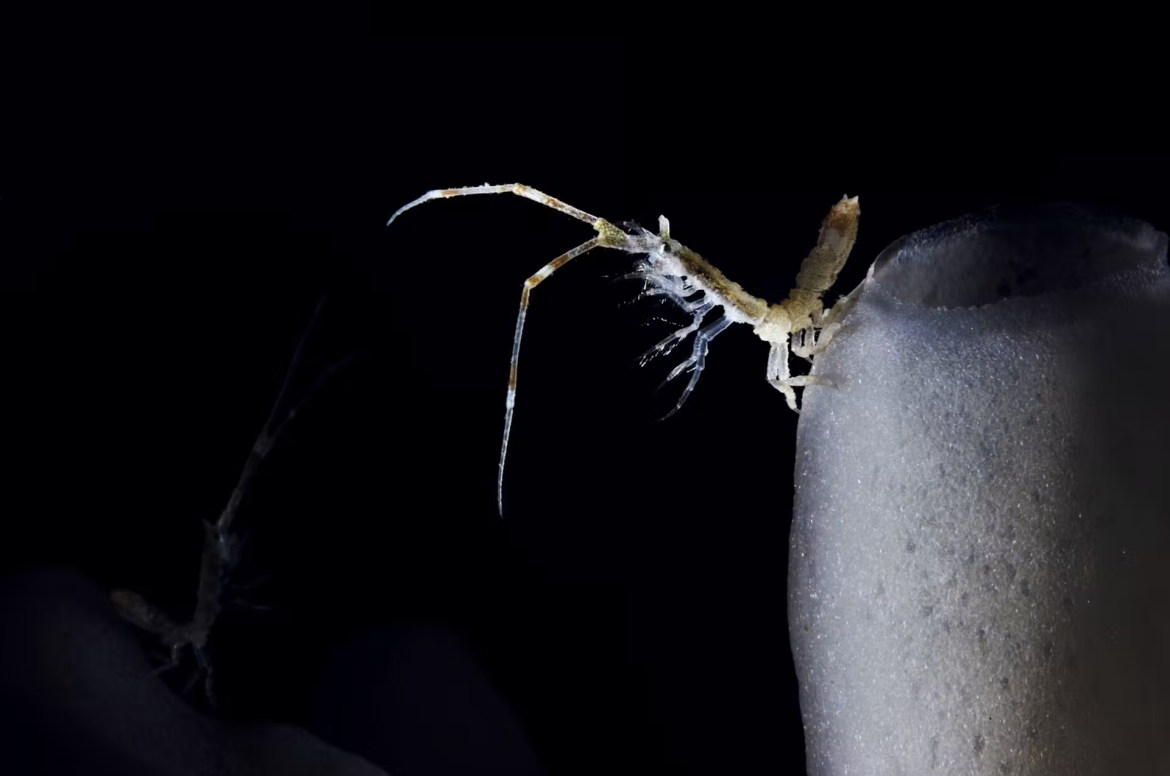
The Antarctic krill fishery has reached its 620,000-tonne catch limit and closed early for a second consecutive year, intensifying scrutiny of how the Southern Ocean’s strategically important marine resources are being managed as climate change alters the ecosystem. The closure on August 12, 2026, according to the information provided, comes after vessels reached the precautionary trigger level covering CCAMLR statistical subareas 48.1 to 48.4, the main commercial krill fishing grounds around the Antarctic Peninsula and Scotia Sea.
The development is significant because the issue is no longer simply the size of the overall krill population but where fishing takes place and how that activity overlaps with areas used by predators. Krill are a central component of the Southern Ocean food web, supporting penguins, seals and whales, while also underpinning a commercial fishery supplying aquaculture feed and omega-3 products.
The Commission for the Conservation of Antarctic Marine Living Resources (CCAMLR) currently maintains the 620,000-tonne trigger level for the combined Subareas 48.1, 48.2, 48.3 and 48.4. According to CCAMLR, the level is intended to prevent the fishery from expanding beyond the trigger until an agreed mechanism exists to distribute fishing effort more widely rather than allowing catches to become concentrated in smaller areas.
That distinction is at the centre of the current debate. A catch representing a relatively small share of estimated total krill biomass can still create ecological pressure if fishing is concentrated where predators depend on dense krill aggregations. The Antarctic Peninsula is particularly important in this regard because penguins, whales and seals forage in areas where krill are concentrated during critical periods of their life cycles.
The management challenge became more pronounced after CCAMLR Conservation Measure 51-07 expired at the end of the 2024 fishing season. From the 2025 season, the combined catch across the four principal Area 48 subareas reverted to the 620,000-tonne trigger without the previous spatial distribution of the limit. CCAMLR’s own fishery reporting records that the fishery reached the trigger level in 2025 and closed earlier than expected, while the Commission was unable to reach consensus on a revised conservation measure.
The recurrence of an early closure therefore raises questions about whether the existing management framework is keeping pace with changes in fishing patterns and the Southern Ocean ecosystem. The current system was designed around a precautionary approach, but the concentration of vessels in relatively limited areas has increased concern over localised ecological impacts. This matters because krill biomass is not distributed uniformly across the Southern Ocean. Commercial vessels seek areas where krill occur in commercially viable concentrations, while predators also depend on those same concentrations. The resulting spatial overlap creates a management problem that cannot be addressed solely by comparing total catches with estimates of total biomass.

Scientific uncertainty further complicates the issue. Krill abundance, distribution and availability are influenced by oceanographic conditions and sea-ice dynamics, both of which are changing as the Antarctic climate warms. CCAMLR’s scientific work has documented significant variability in krill distribution and highlighted the importance of understanding spatial overlap between krill and predators when designing management measures. The debate has also brought renewed attention to Marine Protected Areas. CCAMLR’s scientific working groups have recognised that MPAs can contribute to ecosystem resilience, protect important areas and provide safeguards against uncertainty. The proposed Domain 1 MPA covers the Antarctic Peninsula region and has been incorporated into discussions about future krill management.
The absence of an agreed new spatial management framework has broader implications for international environmental governance. CCAMLR was established specifically to conserve Antarctic marine living resources while allowing rational use, making the krill fishery a test of whether commercial activity and ecosystem-based management can operate effectively under rapidly changing environmental conditions. The economic dimension should not be overlooked. Antarctic krill supports commercial supply chains extending well beyond the Southern Ocean, particularly through aquaculture feed, animal nutrition and nutritional supplements. The industry therefore connects a remote Antarctic resource to global food, health and consumer markets.
That connection is particularly relevant to Africa because aquaculture is expanding across the continent and internationally as governments seek to increase food production, protein availability and rural employment. Feed ingredients form a significant component of aquaculture economics, meaning changes in global marine-resource management can eventually influence supply chains and production costs far from Antarctica.
Africa’s emerging blue economy also makes developments in Southern Ocean governance relevant from an institutional perspective. African coastal states are managing their own fisheries under pressures from climate change, changing fish distributions, illegal fishing and competing demands for marine resources. The Antarctic case illustrates the difficulty of managing fisheries when overall biomass indicators do not fully capture the ecological consequences of concentrated harvesting.
The situation also highlights the importance of spatial management. In African fisheries, marine protected areas and other area-based management tools are increasingly used to protect breeding grounds, nursery areas and habitats while maintaining sustainable fishing opportunities. The underlying principle is similar: the ecological importance of a location can be greater than its contribution to aggregate biomass calculations.
The commercial structure of the Antarctic krill fishery adds another dimension. According to the information provided, Norwegian company Aker QRILL vessels have accounted for approximately 63% of the fishery’s total harvest over the past decade. This concentration makes questions of market access, corporate responsibility and international oversight particularly relevant to the governance debate.
The Marine Stewardship Council’s certification of fisheries has also attracted scrutiny from conservation organisations. The information provided states that formal objections by the Antarctic and Southern Ocean Coalition and WWF to the fishery’s MSC recertification remain under consideration. Such disputes reflect a broader challenge facing sustainability certification: whether certification standards can adequately account for ecosystem-level risks when scientific understanding and management arrangements are changing. For policymakers, the immediate issue is therefore not simply whether the fishery can harvest 620,000 tonnes without exceeding a numerical biomass threshold. It is whether the catch can be distributed in a manner that protects the ecological functions of areas where predators depend heavily on krill.
CCAMLR’s existing framework acknowledges this problem. Its own explanation of the trigger level states that the restriction exists because concentrated catches could potentially affect local ecosystems, and that further increases should depend on an agreed mechanism for distributing fishing effort across the wider area. The second consecutive early closure gives that unresolved question greater urgency. Reaching the annual trigger months before the end of a fishing season does not by itself demonstrate ecological collapse, but it does show that the existing catch arrangement is interacting with concentrated fishing activity in a way that requires closer management attention.
The challenge for CCAMLR members will be finding agreement between commercial fishing interests, conservation objectives and scientific advice. Any revised system will need to account for the distribution of krill, predator requirements, changing environmental conditions and uncertainty in biomass estimates rather than relying solely on an aggregate catch number.
The broader lesson extends beyond Antarctica. Climate change is increasingly challenging fisheries management models built around relatively stable ecological conditions. As species distributions shift and marine ecosystems become more variable, regulators may need more dynamic spatial management, stronger monitoring systems and greater integration of climate data into fisheries decisions.

For Africa, this has direct relevance. The continent’s fisheries provide food, employment, export revenue and livelihoods, while climate change is already altering marine ecosystems. Building management systems capable of responding to changing species distributions and protecting critical ecological areas will become increasingly important to the sustainability of Africa’s blue economy.
The Antarctic krill closure is therefore more than an isolated fisheries event. It is a test of whether international institutions can adapt resource-management rules before ecological pressures and commercial incentives move faster than governance systems. The 620,000-tonne limit remains an important precautionary safeguard, but its repeated early exhaustion suggests that the question of where fishing occurs may now be as important as how much is caught.
As CCAMLR members prepare for their next discussions on krill management, the outcome will carry implications for Antarctic wildlife, global seafood and nutrition supply chains, marine conservation and the credibility of international ecosystem-based fisheries governance. For Africa, watching that process offers another lesson in how climate change is turning marine-resource management into an increasingly complex question of economics, science and institutional capacity.