


Tanzania has moved closer to establishing a civilian nuclear power programme after inviting the International Atomic Energy Agency (IAEA) to assess the country’s preparedness for nuclear electricity generation, marking a significant step in its long-term strategy to diversify energy sources and strengthen energy security. The East African nation expects to begin generating nuclear power within approximately seven years if it successfully completes the required regulatory milestones and receives approval from the international nuclear watchdog.
The announcement by the Tanzania Atomic Energy Commission (TAEC) comes as African economies increasingly explore alternative energy sources to meet rising electricity demand, industrialisation goals and climate commitments. While renewable energy remains central to Africa’s energy transition, governments across the continent are also examining nuclear power as a potential source of reliable baseload electricity capable of supporting manufacturing, urban growth and expanded infrastructure systems.
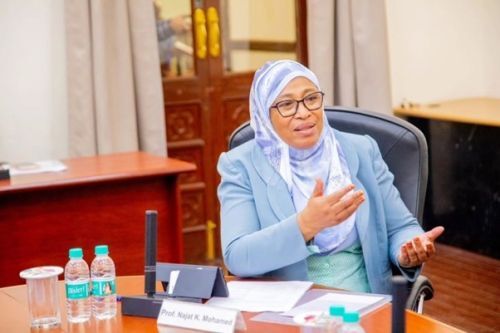
Professor Najat Kassim Mohamed, Director General of TAEC, announced the invitation to the IAEA during the 50th Dar es Salaam International Trade Fair on 5 July 2026. According to the agency’s framework for countries introducing nuclear power, Tanzania must complete 19 key milestones across three phases before formally launching a nuclear electricity programme. The first phase focuses on establishing the institutional and regulatory foundations required for nuclear development, including a comprehensive legal framework, an independent regulatory authority and systems capable of ensuring nuclear safety, security and oversight.

Tanzania has indicated that it has completed its preliminary preparations and is awaiting the IAEA’s assessment before moving into the implementation phase. Government officials have emphasised that the programme is being developed in accordance with international nuclear safety standards, with regulatory readiness positioned as a central requirement before any power generation infrastructure is constructed. The move reflects Tanzania’s broader efforts to address growing electricity demand. Like many African economies, Tanzania faces the challenge of expanding energy access while supporting economic transformation. Reliable electricity supply is increasingly viewed as a foundation for industrial development, digital infrastructure, mineral processing and improved public services.
Read also:Kenya advances first nuclear power plant plans with 2000MW Siaya County project
According to international energy outlooks, Africa’s electricity demand is expected to rise substantially in coming decades due to population growth, urbanisation and economic expansion. However, many countries continue to face challenges related to generation capacity, grid reliability and financing constraints. Nuclear energy is therefore being considered by some governments as part of a diversified energy mix, alongside solar, wind, hydropower and natural gas. Tanzania’s nuclear ambitions are closely linked to its significant uranium resources, particularly in the southern Ruvuma region. The country hosts the Nyota uranium deposit within the Mkuju River project, which contains an estimated 152 million tonnes of uranium ore resources, according to Mantra Tanzania, a subsidiary of Russia’s state-owned nuclear energy company Rosatom. The uranium sector has attracted significant foreign investment interest. In July 2025, President Samia Suluhu Hassan inaugurated a pilot uranium processing plant at the Namtumbo site, with developers planning construction of a larger processing facility. The project represents a planned investment of approximately US$1.2 billion over 20 years.
Rosatom estimates that the uranium development project could create around 4,000 jobs, while Tanzanian officials have stated that the development could position the country among Africa’s leading uranium producers. Currently, uranium production on the continent is dominated by countries such as Namibia and Niger. However, Tanzania’s uranium resources will not immediately translate into domestic nuclear electricity generation. The extracted uranium would initially be transported abroad for processing, including potential processing in Russia, before being converted into nuclear fuel suitable for use in reactors. The partnership with Rosatom forms a major component of Tanzania’s nuclear ambitions. The Russian company has been supporting uranium development activities and has held discussions with Tanzanian authorities regarding the potential construction of a nuclear power plant in the 2030s, subject to progress in the country’s nuclear programme.
Rosatom Director General Alexey Likhachev discussed the possibility during the St. Petersburg International Economic Forum in June, indicating that the company could support nuclear power plant development if Tanzania successfully advances through regulatory and technical requirements. For Tanzania, the development of nuclear energy presents both opportunities and complex considerations. Nuclear power projects require significant upfront investment, long construction timelines and highly specialised regulatory capacity. Countries pursuing nuclear programmes must also address issues including radioactive waste management, safety oversight, skilled workforce development and long-term financial sustainability.
Across Africa, only a small number of countries have operational nuclear power facilities. South Africa remains the continent’s only country operating a commercial nuclear power station, through the Koeberg Nuclear Power Station. Other countries, including Egypt, are developing nuclear power projects with international partners. Tanzania’s move therefore places it within a growing group of African economies examining nuclear energy as part of future energy planning. The success of the programme will depend not only on investment availability but also on institutional preparedness, regulatory independence and maintaining public confidence in safety systems.

https://www.aecweek-registration.com/2026/
The IAEA assessment will represent a critical milestone in determining whether Tanzania can progress from planning to implementation. For a country seeking to expand industrial capacity and improve energy security, nuclear power could provide an additional source of reliable electricity. However, the pathway will require careful management of financial, technical and governance challenges to ensure that nuclear development supports Tanzania’s wider economic and sustainability objectives.
As Africa navigates the transition towards low-carbon growth while meeting rising energy demand, Tanzania’s nuclear ambitions highlight the increasingly complex choices facing policymakers. The coming years will determine whether nuclear power becomes a practical component of the country’s energy strategy or remains a long-term aspiration requiring further investment and institutional development.


