


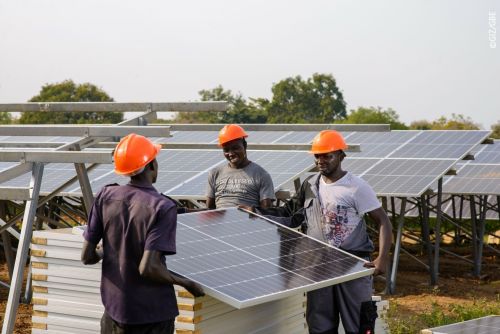
International public financing for clean energy in developing countries remained below historical levels in 2024, highlighting a widening gap between Africa’s growing energy transition ambitions and the capital available to deliver reliable, affordable and sustainable power systems. A new report by the International Energy Agency (IEA) and development partners shows that global public clean energy financing reached US$24.6 billion in 2024, only marginally higher than the US$24.4 billion recorded in 2023 and significantly below the US$31.4 billion peak achieved in 2016.
The findings raise renewed concerns about whether developing economies, particularly in sub-Saharan Africa, will secure the investment required to meet Sustainable Development Goal 7 (SDG7), which seeks to achieve universal access to affordable, reliable, sustainable and modern energy by 2030. The report, Tracking SDG7: The Energy Progress Report 2026, indicates that while renewable energy investment has expanded globally, international public financing flows have not kept pace with the scale of energy access challenges facing developing countries. For Africa, where millions of people still lack reliable electricity access and where governments are seeking to accelerate industrialisation through cleaner energy systems, the financing shortfall presents both an economic and development challenge.
According to the report, sub-Saharan Africa received approximately US$5 billion in international public clean energy financing in 2024, a significant decline from the US$7.2 billion recorded in 2023. The reduction comes despite the region continuing to account for a substantial share of the global electricity access deficit. The financing decline highlights a persistent challenge facing African energy markets: while the continent has some of the world’s largest renewable energy resources, including solar, wind, geothermal and hydropower potential, investment flows remain insufficient to translate those resources into large-scale energy infrastructure.
The structure of available financing also presents challenges. Debt remained the dominant source of international public clean energy finance in 2024, accounting for approximately 80% of total flows, while grants represented only 13%. For many African economies with limited fiscal space and high debt burdens, reliance on loans can increase financial pressure and complicate efforts to expand energy infrastructure. Concessional finance, including grants and highly favourable lending instruments, remains particularly important for countries where energy projects face higher perceived risks, lower commercial returns or affordability constraints. The limited availability of such funding continues to affect the pace at which developing economies can expand electricity access and deploy renewable technologies.
Globally, financing distribution remained uneven. Latin America and the Caribbean attracted 24% of international public clean energy financing in 2024, followed by Central and South Asia with 22%. Sub-Saharan Africa accounted for 20% of total financing flows despite having some of the greatest unmet energy needs. Solar energy remained the largest recipient of public clean energy finance, attracting US$7.4 billion, equivalent to approximately 30% of global financing flows. Within sub-Saharan Africa, solar projects accounted for nearly 45% of financing commitments, followed by hydropower at 22% and other renewable energy technologies at 32%. The concentration of funding in renewable generation reflects global efforts to expand low-carbon energy systems. However, experts have increasingly highlighted that Africa’s energy challenge extends beyond generation capacity. Transmission networks, distribution infrastructure, storage systems and grid reliability require substantial investment if renewable energy projects are to deliver consistent electricity access and support economic growth.
The report shows that several development partners continue to play a significant role in supporting Africa’s clean energy transition. The International Development Association (IDA), the concessional financing arm of the World Bank Group, provided 32% of regional financing flows in sub-Saharan Africa. China contributed 16%, while Germany accounted for 12%. Despite these contributions, the scale of financing remains far below what is required. The energy transition in Africa requires not only investment in renewable energy projects but also support for energy efficiency, clean cooking solutions, decentralised energy systems and infrastructure capable of supporting growing demand from businesses and households.
Energy access remains one of Africa’s most pressing development challenges. According to international assessments, hundreds of millions of people across the continent still lack access to electricity, limiting opportunities for education, healthcare delivery, digital connectivity and industrial development. The IEA and its partners warned that the world remains off track to achieve universal electricity access by 2030. Although significant progress has been made since 2015 through increased renewable energy deployment and improvements in energy efficiency, current investment trends are insufficient to meet global targets. For sub-Saharan Africa, the financing challenge has broader economic implications. Reliable electricity is essential for manufacturing, agricultural processing, mining, telecommunications and small business development. Without accelerated investment, energy constraints could continue limiting productivity growth and economic transformation.
The financing gap also comes at a time when African countries are seeking to balance two priorities: expanding energy access while contributing to global climate objectives. Unlike many developed economies, African nations face the challenge of increasing electricity consumption to support development while transitioning towards lower-carbon energy systems. Closing this gap will require a combination of public and private capital, stronger policy frameworks, improved investment environments and greater availability of risk-sharing mechanisms. Development finance institutions have increasingly emphasised the need to mobilise private investment through guarantees, blended finance structures and innovative financing models.
https://www.aecweek-registration.com/2026/
However, attracting private capital at scale remains difficult in many African energy markets due to regulatory uncertainty, currency risks, limited grid infrastructure and high upfront costs. Addressing these barriers will be critical to ensuring that renewable energy potential translates into real economic benefits. The latest financing figures underscore a central issue in Africa’s energy transition: ambition is growing faster than available capital. While governments across the continent continue to develop renewable energy strategies and expand energy access programmes, the pace of progress will depend heavily on whether international financing commitments can match the scale of investment required.
As Africa seeks to industrialise, create jobs and improve living standards, access to affordable and reliable energy will remain a foundation of economic development. The challenge ahead is not only increasing clean energy investment but ensuring that financing reaches the communities, businesses and infrastructure systems that need it most.


