


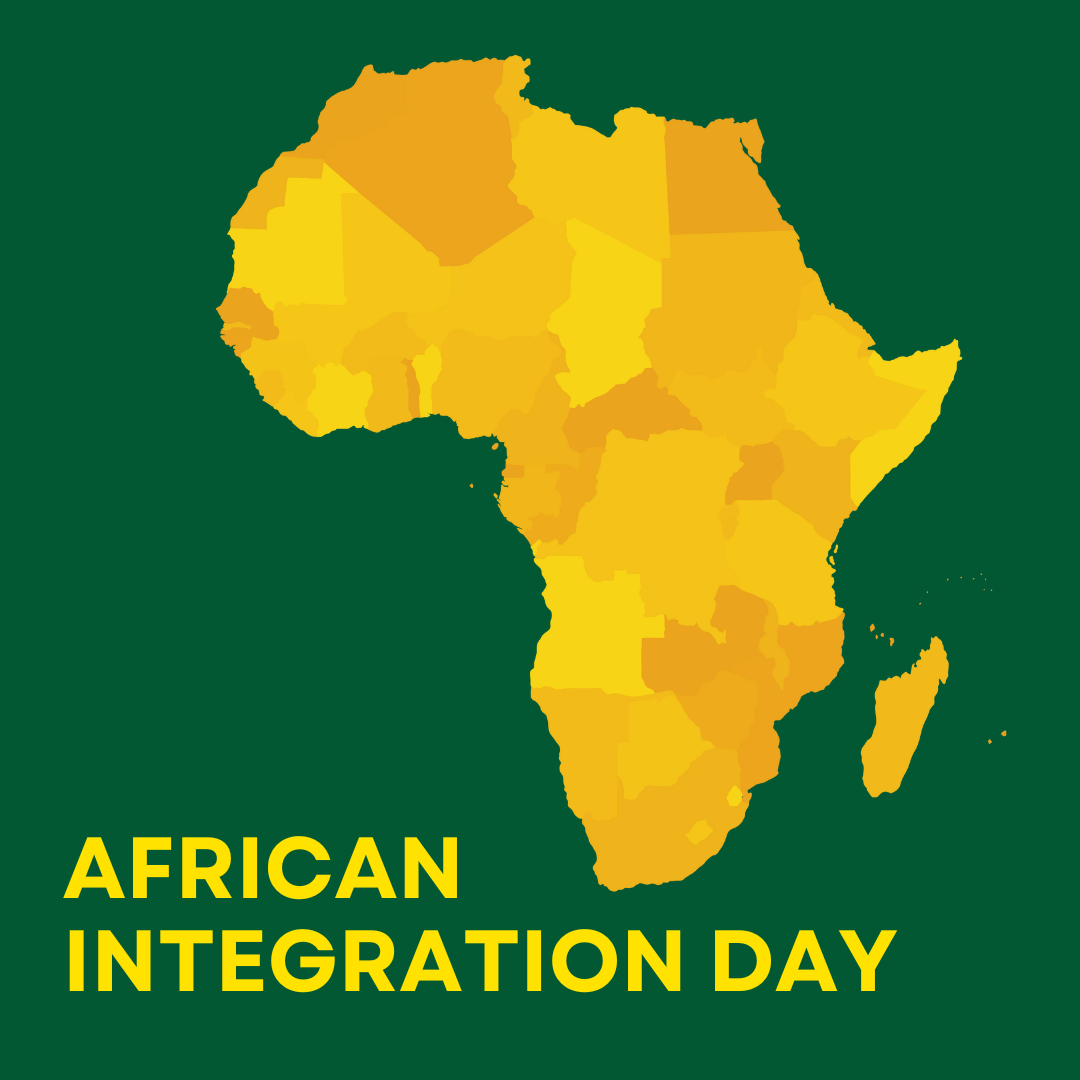
Africa marked Africa Integration Day 2026 on 7 July with renewed calls to accelerate regional integration as governments and regional institutions seek to translate the ambitions of the African Continental Free Trade Area (AfCFTA) into measurable economic gains. Commemorating the launch of the AfCFTA’s operational phase in 2019, this year’s observance, held under the theme “Connecting People, Connecting Markets: Advancing Trade Integration and Free Movement of People,” underscored the growing importance of cross-border infrastructure, policy harmonisation and market integration in strengthening Africa’s resilience against global economic uncertainty. The Intergovernmental Authority on Development (IGAD) joined the African Union, member states, regional economic communities and development partners in reaffirming their commitment to Agenda 2063, which envisions an integrated, prosperous and peaceful continent driven by sustainable development and inclusive growth.
Seven years after the operationalisation of the AfCFTA, regional integration has increasingly become an economic necessity rather than a political aspiration. According to the African Union, the agreement has the potential to create the world’s largest free trade area by the number of participating countries, connecting a market of more than 1.4 billion people with a combined economic output exceeding US$3 trillion. While implementation remains uneven across regions, the agreement continues to provide a framework for reducing tariffs, removing non-tariff barriers, strengthening regional value chains and promoting investment across African economies.
 Within the Horn of Africa, IGAD has positioned regional integration as a practical development strategy that links infrastructure investment with economic transformation. The organisation has expanded cooperation among its member states through transport corridors, cross-border electricity interconnections, digital infrastructure, climate resilience programmes and trade facilitation initiatives designed to reduce the cost of doing business and improve market access. According to IGAD, these investments are opening new commercial opportunities, strengthening food and energy security, supporting women- and youth-led enterprises, and improving connectivity for millions of people across the region.
The economic significance of these investments extends well beyond infrastructure development. Efficient transport corridors reduce freight costs, shorten delivery times and improve the competitiveness of African exports, while cross-border energy interconnections increase electricity reliability and lower production costs for industry. Digital infrastructure is also emerging as a critical component of regional integration by enabling cross-border commerce, expanding financial inclusion and supporting digital trade, an increasingly important segment of Africa’s rapidly evolving economy.
The emphasis on regional integration has become more urgent as African economies confront overlapping pressures from geopolitical tensions, climate-related disruptions and changing global supply chains. Recent years have exposed the vulnerability of fragmented markets to external shocks, highlighting the importance of stronger regional production networks and diversified trade relationships. According to development finance institutions, deeper regional integration can improve supply-chain resilience by allowing businesses to source inputs and access markets within Africa rather than relying heavily on distant international suppliers.
Trade integration is equally important for industrial development. Although intra-African trade remains significantly lower than trade within Europe or Asia, it is characterised by a higher proportion of manufactured goods compared with Africa’s exports to the rest of the world, which continue to be dominated by raw commodities. Expanding regional markets therefore creates opportunities for industrialisation, value addition and the development of regional manufacturing ecosystems capable of supporting long-term economic diversification.
The free movement of people remains another cornerstone of Africa’s integration agenda. Labour mobility facilitates skills transfer, supports entrepreneurship and enables businesses to operate more efficiently across borders. For sectors such as logistics, construction, financial services and technology, easier movement of professionals and workers strengthens productivity while encouraging greater investment across regional markets. However, progress remains uneven, with visa restrictions and regulatory inconsistencies continuing to limit labour mobility in many parts of the continent.
Climate resilience has also become increasingly intertwined with regional integration. Shared river basins, interconnected ecosystems and cross-border agricultural systems require coordinated policy responses that no single country can implement alone. Regional institutions such as IGAD have consequently expanded collaboration on climate adaptation, drought management and environmental governance to improve resilience against increasingly frequent climate-related shocks that threaten food production, water security and infrastructure.
Infrastructure financing remains one of the defining challenges for Africa’s integration agenda. Development banks estimate that the continent faces an annual infrastructure financing gap running into tens of billions of dollars, affecting transport networks, energy systems, digital connectivity and logistics infrastructure. Closing this gap will require stronger collaboration between governments, regional institutions, development finance institutions and private investors, alongside regulatory reforms that improve project bankability and attract long-term capital.
For businesses, regional integration increasingly represents a commercial opportunity rather than solely a policy objective. Larger integrated markets enable firms to achieve economies of scale, expand customer bases and diversify revenue streams while reducing dependence on individual national markets. Improved logistics and harmonised regulations can also lower operational costs and improve competitiveness for African enterprises seeking to participate in regional and global value chains.
 Africa Integration Day 2026 therefore reflects a broader transition in the continent’s development strategy. Rather than viewing borders primarily as administrative divisions, policymakers are increasingly treating connectivity, trade facilitation and regional cooperation as strategic economic assets capable of supporting industrialisation, investment and sustainable growth. For the Horn of Africa, IGAD’s ongoing investments in transport, energy, digital infrastructure and policy coordination illustrate how regional institutions are translating continental ambitions into operational programmes with tangible economic implications.
As implementation of the AfCFTA continues, the effectiveness of Africa’s integration agenda will ultimately be measured not by declarations or agreements, but by whether businesses can move goods more efficiently, investors can operate across larger markets, infrastructure networks become more interconnected and citizens gain broader access to employment, services and economic opportunity. In an increasingly uncertain global economy, regional integration is emerging not simply as a long-term aspiration, but as one of Africa’s most important instruments for strengthening resilience, accelerating sustainable development and building a more competitive continental economy.


