


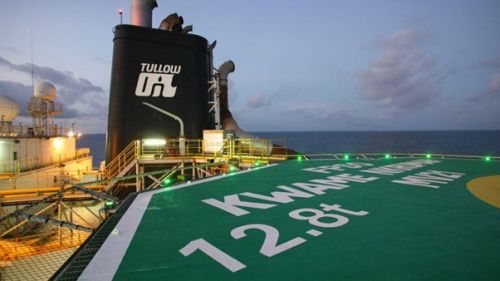
Ghana’s Jubilee offshore oil field has begun a significant recovery after six consecutive years of declining production, with new drilling activity pushing output to its strongest levels in several years and providing renewed momentum for the country’s petroleum sector. Operator Kosmos Energy reported that Jubilee averaged 72,000 barrels per day (bpd) in the second quarter of 2026, with production exceeding 85,000 bpd by the end of the period as new wells started contributing to output.
The recovery marks an important development for Ghana’s energy sector, where declining oil production in recent years had reduced government petroleum revenues and raised concerns about the long-term performance of mature offshore assets. The renewed production growth is expected to strengthen fiscal inflows, support energy sector investment and provide additional resources as Ghana continues to manage economic pressures and pursue industrial development. Jubilee, Ghana’s first commercial offshore oil discovery, has been one of the country’s most important sources of petroleum income since production began in 2010. However, the field experienced declining output over several years as existing wells matured and production capacity weakened. Industry data showed that Jubilee output had fallen to around 59,000 bpd in the fourth quarter of 2025, reflecting the broader challenges facing mature oil fields.
Kosmos Energy, which operates Jubilee alongside other partners, announced on 6 July 2026 that the field’s improved performance was driven by a major drilling campaign launched earlier in the year. The campaign aims to increase production capacity, extend the productive life of the field and unlock additional reserves through new wells. A key contributor to the recovery has been the J76 well, the third well completed under the 2026 drilling programme. According to Kosmos Energy, the well entered production in mid-June and is currently contributing approximately 20,000 bpd, representing a substantial addition to Jubilee’s overall output.

The company has also completed drilling of the J77 well, with production expected to begin shortly. Kosmos expects the additional well to increase Jubilee’s production capacity to approximately 90,000 bpd. A fifth well, J50, is scheduled to begin drilling by the end of July as part of efforts to sustain production levels over the coming years. According to Andrew Inglis, president and chief executive officer of Kosmos Energy, the early results from the Ghana drilling campaign demonstrate the continued potential of the company’s offshore assets. However, the broader significance of the development extends beyond company performance, as Ghana’s petroleum sector remains closely linked to public finance, infrastructure investment and economic planning.
The production rebound comes after a period of declining petroleum revenues for the country. According to the Public Interest and Accountability Committee (PIAC), which monitors Ghana’s petroleum sector, Jubilee production declined by 32.8% during the first half of 2025 compared with the same period in 2024. The decline contributed to lower government earnings from oil exports at a time when Ghana was facing significant fiscal pressures. Data from the Bank of Ghana and the Ministry of Finance showed that petroleum revenues declined sharply in 2025, falling by approximately 43%. Other reports indicated that Ghana’s oil revenues dropped from about US$1.35 billion in 2024 to approximately US$769 million in 2025, highlighting the vulnerability of public finances to fluctuations in petroleum production and global market conditions.
The renewed investment at Jubilee was made possible after Ghana extended the operating licences for the Jubilee and TEN offshore fields until 2040. The extension, ratified by Ghana’s Parliament in February, provides operators with a longer investment horizon and allows additional drilling activities aimed at maintaining production. The agreement also increases the participation of Ghana’s state-owned Ghana National Petroleum Corporation (GNPC) from 19.69% to 29.69% beginning in 2036. The arrangement is expected to increase state participation in future petroleum revenues while providing operators with greater certainty to undertake long-term investments. Under the extended licence framework, stakeholders are permitted to drill up to 20 additional wells at Jubilee, creating opportunities for further exploration and production campaigns in 2027 and 2028. For Ghana, the additional drilling capacity represents an opportunity to maximise value from existing offshore resources while balancing the transition pressures facing fossil fuel-dependent economies.
The development reflects a broader challenge facing African oil-producing countries. Many economies across the continent depend heavily on petroleum revenues to finance public services, infrastructure and development programmes, yet they are simultaneously navigating global pressure to reduce dependence on fossil fuels and accelerate energy transitions. For Ghana, petroleum remains an important contributor to government income despite growing investments in renewable energy and other economic sectors. Maintaining production from existing fields such as Jubilee and TEN provides fiscal support while the country works to diversify its economy and strengthen alternative sources of growth.
 https://www.aecweek-registration.com/2026/
However, analysts note that higher production alone will not resolve the structural challenges facing petroleum-dependent economies. Effective revenue management, transparency, investment in productive sectors and responsible resource governance will remain critical to ensuring that oil income contributes to long-term economic resilience. Ghana has established frameworks such as the Petroleum Revenue Management Act to guide the use of petroleum income, with institutions such as PIAC providing oversight on how funds are allocated. The effectiveness of these systems will continue to influence whether increased petroleum revenues translate into broader development outcomes.
The Jubilee recovery therefore represents both an operational achievement and a test of Ghana’s ability to convert natural resource wealth into sustainable economic value. As production increases, attention will likely focus on how additional revenues are managed, how local participation is strengthened and how the country balances continued oil production with its longer-term climate and energy transition objectives.
For Africa’s resource-producing economies, Ghana’s experience highlights the importance of strategic management of mature energy assets. Extending the productive life of existing fields can provide valuable revenues and investment opportunities, but the long-term challenge remains ensuring that resource income supports economic diversification, resilience and inclusive development.


