


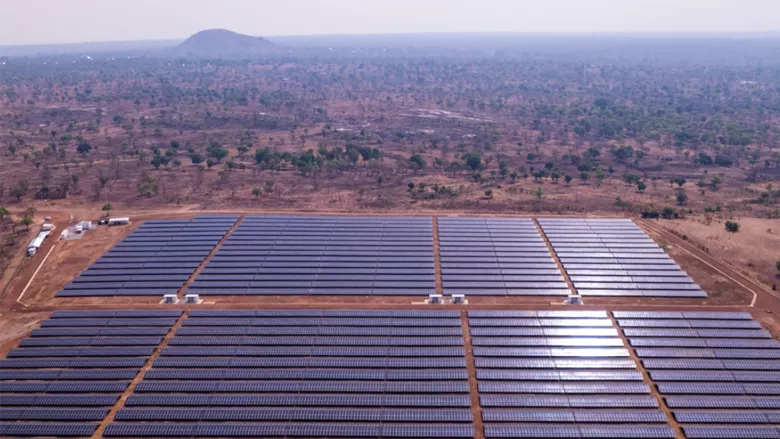
Burkina Faso has secured a major infrastructure financing package aimed at addressing one of the world’s widest electricity access gaps after the Africa Finance Corporation (AFC) reached financial close on funding for what will become the country’s largest power generation facility. The transaction, announced on 8 July, includes the first disbursement of a US$60 million tranche from a US$300 million corporate loan facility supporting the development of a 119-megawatt thermal power plant by Turkish independent power producer Aksa Enerji Üretim A.Ş. The project is expected to begin operations in 2027, strengthening domestic electricity generation, reducing reliance on imported power and supporting Burkina Faso’s long-term industrial development.
The investment comes at a critical time for Burkina Faso’s energy sector. Despite a population of approximately 24 million people, only about one in five citizens currently has access to electricity, making the country one of the least electrified economies globally. According to AFC, Burkina Faso currently imports around 60% of its electricity supply, exposing households, businesses and public services to supply disruptions, high energy costs and limited industrial competitiveness. Once operational, the new plant is expected to reduce electricity imports by more than half while substantially increasing domestic generation capacity.
 Reliable electricity remains one of the most significant constraints on economic transformation across many African economies. According to the International Energy Agency, more than 600 million people across Sub-Saharan Africa still lack access to electricity, limiting industrial output, agricultural productivity, healthcare delivery, education outcomes and digital connectivity. For Burkina Faso, expanding dependable baseload generation could improve operating conditions for manufacturers, mining companies, agro-processing businesses and small enterprises that continue to rely heavily on expensive diesel generators or experience frequent power interruptions.
The project also reflects a broader shift in African infrastructure financing towards partnerships between development finance institutions and experienced private-sector developers. AFC’s financing supports Aksa Enerji, Türkiye’s largest publicly listed power producer, whose portfolio spans more than 3,500 megawatts across eight countries using a mix of natural gas, coal, hydroelectric, solar, wind and battery storage technologies. The Burkina Faso investment follows AFC’s US$150 million corporate loan facility extended to Aksa in 2025 to support large-scale gas-to-power projects in Senegal and Ghana, including the development of a 255MW combined-cycle gas-fired power plant in Senegal designed to utilise domestic natural gas resources.
According to AFC President and Chief Executive Officer Samaila Zubairu, reliable electricity remains fundamental to Africa’s industrialisation agenda. He argued that infrastructure investment decisions made today will determine whether African economies can strengthen manufacturing capacity, improve productivity and compete more effectively in global markets over the coming decades. His assessment aligns with growing evidence that energy infrastructure has become a central pillar of Africa’s economic diversification strategies, particularly as governments seek to reduce dependence on commodity exports and expand domestic value addition.
For Burkina Faso, the project may also help improve fiscal resilience over time. Heavy reliance on imported electricity often exposes governments to exchange-rate volatility, regional supply constraints and higher procurement costs. Expanding domestic generation can reduce these vulnerabilities while improving planning certainty for utilities and public finances. Lower electricity costs could also strengthen investment conditions for domestic and foreign businesses considering long-term operations within the country.
Nevertheless, the project illustrates the complex choices confronting African energy transitions. While many countries have committed to expanding renewable energy generation, thermal power continues to play a significant role in addressing immediate electricity shortages and supporting stable baseload supply. Development finance institutions increasingly face the challenge of balancing urgent development priorities, including universal electricity access and industrialisation, with longer-term climate commitments and decarbonisation pathways.
 Across the continent, energy demand continues to outpace available generation capacity. According to the African Development Bank, electricity demand is projected to grow rapidly as urbanisation, industrialisation and population expansion accelerate over the coming decades. Meeting this demand will require substantial investment not only in power generation but also in transmission networks, regional interconnections and modern distribution infrastructure capable of delivering reliable electricity to households and productive sectors alike.
The Burkina Faso project therefore represents more than an individual infrastructure investment. It reflects a wider recognition among African governments and development finance institutions that expanding dependable electricity supply remains essential for achieving broader economic transformation. Improved energy security can strengthen industrial production, attract manufacturing investment, expand employment opportunities and improve the delivery of essential public services. Whether these gains materialise will depend not only on the successful completion of the power plant, but also on continued investment in transmission infrastructure, regulatory reforms and integrated energy planning capable of translating additional generation capacity into affordable and reliable electricity for businesses and communities across the country.


