


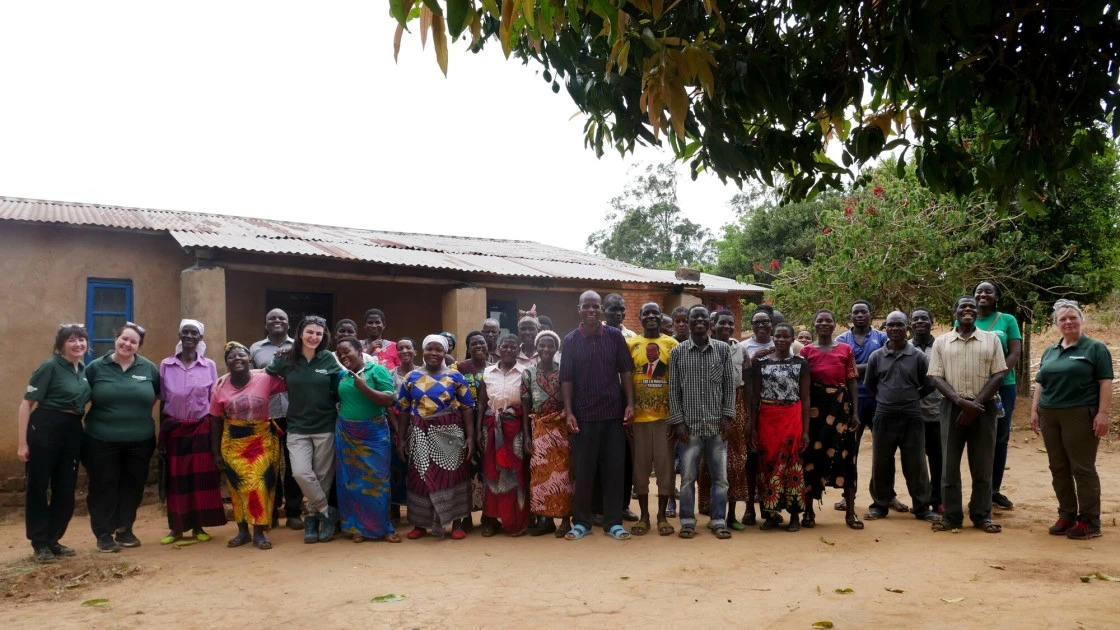
Across Malawi’s rural districts, a new wave of climate resilience investments is reshaping how communities access agricultural services, markets, education, public safety and essential infrastructure as climate variability increasingly threatens livelihoods and economic activity. From agricultural extension centres in Thyolo District to climate-resilient roads in Chiradzulu, solar-powered public lighting in Balaka and improved learning facilities in Mchinji, projects implemented under Malawi’s Regional Climate Resilience Programme are addressing a growing challenge facing many African economies: adapting development systems to a changing climate.
The investments reflect a broader shift in climate adaptation strategies across Africa, where governments and development partners are moving beyond emergency responses towards strengthening infrastructure and institutions capable of withstanding climate shocks. In Thyolo District, the construction of a permanent agricultural extension office and staff house has transformed Khonjeni Extension Planning Area (EPA), restoring access to technical support for more than 28,700 farming households spread across seven sections. For years, Khonjeni operated without a permanent office block or accommodation for extension workers, creating significant barriers between farmers and critical agricultural advice. Farmers relied on a small rented structure that could not accommodate growing demand, while extension officers travelled long distances to provide support.

During the rainy season, poor road conditions often disrupted access, leaving farmers without timely information on planting decisions, pest control and climate adaptation measures. Lead farmer Mwandida Mukhuli says the absence of reliable extension services affected farmers’ ability to respond effectively to changing weather patterns.
“We struggled because the office we were using was very small and not properly structured,” she said. “During the rainy season, it became hard for extension workers to reach us and we often missed important agricultural advice when we needed it most.”
The new EPA office block, valued at K190 million, and the extension worker’s house, valued at K234 million, have improved the delivery of agricultural services while strengthening local climate adaptation efforts. Agriculture extension officers are now supporting farmers with practices designed to reduce vulnerability to unpredictable rainfall, prolonged dry periods and increasing crop diseases. According to Agriculture Extension Development coordinator Clara Benart Mandula, climate change is already affecting production systems in the area through erratic rainfall patterns and increased outbreaks of pests affecting key crops such as maize and cassava. Farmers are being trained on drought-resistant crop varieties, early removal of infected plants, botanical pest management methods and soil and water conservation approaches such as box ridges and pit planting. The improved extension infrastructure is also supporting initiatives such as the Madalitso Irrigation Scheme, where farmers are receiving technical guidance on crop management and irrigation practices.
For Malawi, where agriculture remains central to rural employment and household incomes, strengthening climate resilience in farming communities has significant economic implications. The country’s dependence on rain-fed agriculture makes smallholder farmers particularly vulnerable to rainfall variability, droughts and extreme weather events. The World Bank and other development institutions have identified climate adaptation in agriculture, water management and infrastructure as key priorities for African economies facing rising climate risks. Beyond agriculture, climate resilience investments are also transforming connectivity and market access.
In Chiradzulu District, a rehabilitated rural road connecting communities to Mbulumbuzi Market, Nansawa Technical College and surrounding areas has improved transport reliability after years of deterioration caused by heavy rains. The 8.1-kilometre road corridor had become increasingly difficult to use, with deep erosion channels, damaged surfaces and sections that became impassable during the rainy season. For farmers, poor transport infrastructure created direct economic losses by limiting access to markets. Area Development Committee chairperson Alfred Piyo says growers struggled to transport agricultural products including maize, tomatoes, pigeon peas, potatoes, cabbage and beans.
“There were times when drivers had to turn back and use other routes just to reach us,” he said.
The K268 million rehabilitation project included road reshaping, gravel improvements, drainage rehabilitation, construction of a box culvert, masonry drains, check dams and flood protection measures at Namadzi Bridge. Chiradzulu District Council Engineer Bridget Kachokam’manja says the infrastructure improvements are designed not only to restore access but also to strengthen the road against future climate-related damage. In Balaka District, climate resilience has taken the form of improved urban infrastructure through the installation of solar-powered streetlights along the township loop road. The K62 million project installed 18 solar streetlights across a one-kilometre section of the road, improving safety and extending economic activity after sunset.Before the intervention, residents and traders reported insecurity challenges linked to poor visibility, with motorcycle taxi operators and pedestrians facing increased risks at night. Kabaza operator Leston Msamala recalls that darkness created opportunities for criminal activity.
“Before these streetlights were installed, thieves hid along the roadside and attacked people,” he said.
The lighting infrastructure has allowed businesses to operate longer hours while improving movement within the township. Balaka District Commissioner Bibu Yusufu Mdala says the project has delivered benefits beyond security by supporting local commerce and improving confidence among residents. The role of climate-resilient infrastructure extends beyond transport and agriculture. In Mchinji District, investments in education infrastructure are addressing the impact of climate conditions on learning environments. At Kadagwantipenya Primary School in Traditional Authority Zulu, pupils previously attended lessons under trees and temporary structures that provided limited protection from rain and strong winds.
School Management Committee chairperson Undani Osward says inadequate classrooms affected both learning conditions and school operations.
“There were no proper classrooms and learners were using temporary structures because we had no alternative,” he said.
The construction of a new classroom block has improved learning conditions and contributed to increased enrolment. Mchinji District Council Director of Planning and Development Smith Mnenula says the district received K1.016 billion under the first cycle of the Regional Climate Resilience Programme to implement five education infrastructure projects. Approximately 360 learners have already benefited from completed classroom blocks, while additional projects remain underway. The investments come as Malawi prepares for increasing climate uncertainty. The Department of Climate Change and Meteorological Services has warned that developing El Niño conditions in the tropical eastern Pacific Ocean could increase the possibility of below-normal rainfall during the next rainy season.
https://www.aecweek-registration.com/2026/
For a country heavily dependent on agriculture, such forecasts highlight the importance of strengthening resilience before climate shocks occur. Across Africa, climate adaptation is increasingly becoming an economic necessity rather than an environmental policy issue alone. Infrastructure failures caused by extreme weather can disrupt trade, reduce agricultural productivity, increase public spending and deepen poverty. Malawi’s experience demonstrates how targeted investments in public infrastructure can strengthen resilience at community level while supporting broader development objectives. However, sustaining these gains will require continued investment, effective maintenance systems and stronger coordination between national institutions, local governments and development partners. As African countries navigate rising climate pressures, the ability to build infrastructure that protects livelihoods, supports markets and strengthens public services will be central to achieving long-term economic resilience.


