


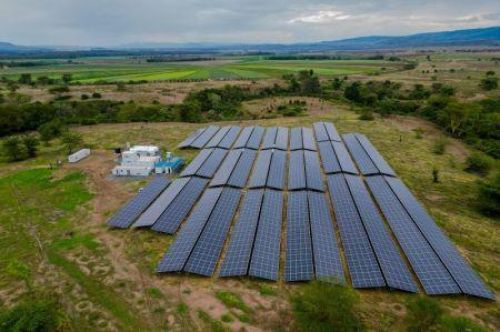
Tanzania’s industrial sector is seeing growing interest in private renewable energy solutions as businesses seek more reliable and affordable power sources to support operations, reduce costs and improve resilience against energy supply challenges. This shift gained momentum after Spark, a climate finance platform managed by Camco, entered the Tanzanian market through a partnership with renewable energy developer Ariya Finergy to finance a solar-plus-storage project for Irvine’s, a regional poultry producer operating across several African markets.
The project, announced on July 9, will support the development of a 1.5 megawatt peak (MWp) solar power plant combined with a 2 megawatt-hour battery storage system and grid stabilisation technology. The facility will supply electricity to Irvine’s new poultry feed mill in Tanzania under a 10-year lease agreement. According to Camco, the project is expected to generate approximately 2 gigawatt-hours of electricity annually, providing a cleaner and more predictable energy supply for industrial operations. Construction of the facility is expected to take between six and nine months. The investment represents Spark’s entry into Tanzania and its eighth African market, reflecting the increasing role of climate finance platforms in supporting distributed renewable energy solutions for commercial and industrial customers.

For African businesses, energy reliability has become a major factor influencing competitiveness, investment decisions and operational efficiency. While many countries have expanded electricity generation capacity in recent years, challenges remain around grid reliability, affordability and access, particularly for industries located outside major urban centres. According to the International Energy Agency’s Tracking SDG7 2026 report, more than 560 million people across Sub-Saharan Africa still lack access to electricity, leaving the region with some of the world’s largest electricity access gaps. These challenges affect households, but they also create significant constraints for businesses that depend on consistent power supply.
Manufacturing, agriculture processing and other productive sectors often rely on diesel generators as backup solutions during outages. However, rising fuel prices, maintenance costs and environmental pressures are encouraging companies to explore alternative energy models. Solar-plus-storage systems are increasingly becoming part of this transition. Unlike traditional renewable energy projects that depend entirely on grid integration, hybrid systems combining solar generation and battery storage can provide businesses with greater control over electricity supply. For industrial users such as food processors, manufacturers and agricultural enterprises, reliable power can directly influence productivity, reduce operational interruptions and improve long-term cost management.
The Irvine’s project demonstrates how renewable energy is moving beyond household electrification towards supporting commercial and industrial development across Africa. Agriculture-related industries are particularly positioned to benefit from clean energy investments. Poultry production, food processing and cold-chain systems require dependable electricity for operations including feed production, refrigeration, processing and logistics. By reducing reliance on diesel-powered generation, renewable energy systems can also help companies lower emissions while improving financial predictability.
The partnership between Spark and Ariya Finergy highlights the importance of private-sector participation in Africa’s energy transition. Governments remain central to expanding national electricity infrastructure, but private investment is increasingly filling gaps by delivering targeted solutions for businesses and communities. Climate finance platforms such as Spark are designed to bridge the gap between renewable energy developers and commercial customers by providing financing structures that make clean energy projects more accessible.
Camco has positioned Spark as a vehicle to support renewable energy deployment across African markets, particularly in sectors where traditional financing barriers have limited investment. However, experts note that distributed renewable energy solutions should complement rather than replace broader investments in national electricity systems. Expanding transmission networks, improving grid management and increasing generation capacity remain essential for achieving universal electricity access. The challenge for African economies is therefore twofold: expanding large-scale energy infrastructure while enabling businesses and communities to adopt decentralised solutions that improve resilience.
Tanzania’s growing renewable energy market reflects broader trends across Africa, where companies are increasingly recognising energy as a strategic business issue rather than simply a utility expense. As industries face pressure to reduce carbon footprints while maintaining competitiveness, access to affordable and reliable clean energy is becoming an important factor in investment decisions. The success of projects such as Irvine’s solar facility will depend on effective implementation, long-term operational performance and the ability to demonstrate commercial viability. If successful, such models could encourage wider adoption of renewable energy solutions among African businesses.
https://www.aecweek-registration.com/2026/
For Tanzania and other African economies pursuing industrialisation, the integration of clean energy into productive sectors will be critical. Reliable power is not only an energy challenge; it is a foundation for manufacturing growth, food security, job creation and economic transformation. The expansion of solar-plus-storage investments signals a broader shift in Africa’s energy landscape, where businesses are increasingly becoming active participants in the continent’s transition towards more resilient and sustainable energy systems.


