


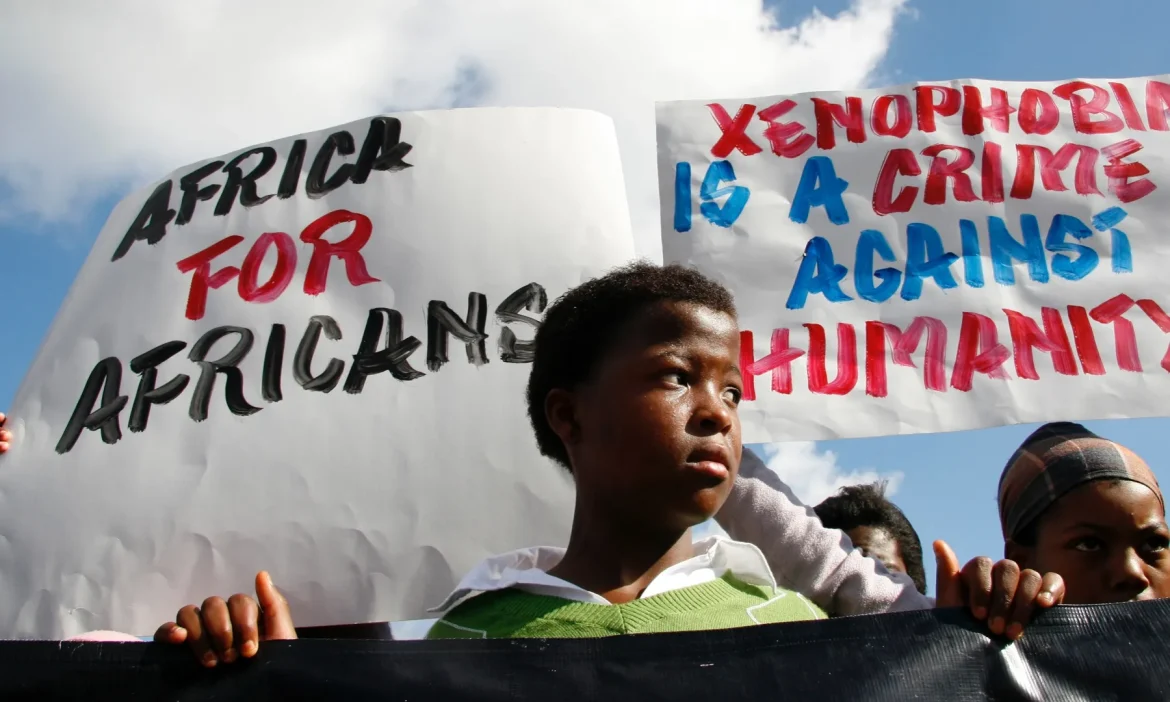
The resurgence of xenophobic violence in South Africa is drawing renewed attention from African governments and regional institutions, with Ghana formally requesting intervention from the African Union (AU) as concerns grow that attacks on foreign nationals are evolving from a domestic security issue into a broader challenge for regional integration, economic cooperation and Africa’s long-standing vision of continental solidarity.
The latest violence has prompted several African governments, including Nigeria, Zimbabwe, Malawi and Kenya, to issue travel advisories or caution their citizens living in South Africa. While the attacks have largely targeted migrants from other African countries, analysts argue that the underlying drivers extend far beyond migration, reflecting persistent economic hardship, institutional weaknesses and growing political polarisation in Africa’s most industrialised economy.
 According to the African Commission on Human and Peoples’ Rights, xenophobic violence contradicts the principles enshrined in the African Charter on Human and Peoples’ Rights and undermines the values of African solidarity that have shaped regional cooperation for decades. The Commission has emphasised that immigration enforcement remains the responsibility of the state rather than vigilante groups, signalling increasing concern that repeated attacks risk eroding confidence in the rule of law.
South Africa continues to grapple with structural economic challenges that have accumulated over many years. High unemployment, particularly among young people, widening inequality, persistent electricity shortages, rising living costs and declining confidence in public institutions have created fertile ground for public frustration. According to economists, these pressures stem primarily from weak economic growth, governance shortcomings, infrastructure constraints, corruption and labour market inefficiencies rather than migration itself.
Nevertheless, migration has increasingly become a focal point of political mobilisation. Anti-immigration movements and some political actors have argued that undocumented migrants are responsible for unemployment, crime and pressure on public services. While these narratives have gained public visibility, researchers have consistently noted that available evidence does not support migrants as the principal cause of South Africa’s economic difficulties. Instead, migration has become a highly visible proxy through which broader frustrations are expressed.
Read also: https://impakter.com/the-end-of-pan-africanism-how-politics-is-challenging-african-unity/
President Cyril Ramaphosa has repeatedly condemned xenophobic violence while reaffirming the government’s responsibility to enforce immigration laws through legal institutions. However, repeated outbreaks of violence have generated criticism from civil society organisations and researchers, who argue that inconsistent enforcement against vigilante groups risks normalising unlawful actions and weakening public confidence in state institutions.
Institutional shortcomings within South Africa’s immigration system have further complicated the situation. Administrative backlogs, prolonged permit processing times and allegations of corruption have created uncertainty for many migrants attempting to regularise their legal status. According to migration specialists, these administrative failures often blur distinctions between documented and undocumented migrants during periods of unrest, increasing the vulnerability of both groups regardless of their legal standing.
Beyond its humanitarian consequences, the crisis carries wider economic implications for Africa. South Africa remains one of the continent’s largest destinations for skilled workers, entrepreneurs and investors from neighbouring countries. Persistent insecurity affecting migrant communities may reduce labour mobility, discourage investment and weaken regional business confidence at a time when African economies are seeking deeper integration through initiatives such as the African Continental Free Trade Area (AfCFTA).
Labour mobility forms an important component of regional economic development, particularly in sectors experiencing skills shortages. Restrictions created by insecurity or declining confidence can reduce productivity, constrain knowledge transfer and increase business costs across borders. Companies considering regional expansion may also factor political and social stability into investment decisions, making social cohesion an increasingly important component of economic competitiveness.
The deterioration in continental relations also carries symbolic significance. During the apartheid era, numerous African countries provided financial assistance, diplomatic backing, military training and political support to South Africa’s liberation movements. Countries including Nigeria, Zambia, Tanzania, Angola, Mozambique, Botswana and Zimbabwe absorbed significant economic and political costs in support of South Africa’s democratic transition. That historical legacy has made contemporary attacks on African migrants particularly sensitive across the continent.
According to regional governance experts, the current tensions illustrate how domestic economic pressures can generate broader geopolitical consequences. If member states become concerned about the safety of their citizens within neighbouring countries, confidence in regional integration frameworks may weaken. Such developments could complicate implementation of continental initiatives designed to promote freer movement of people, capital and services.
The challenges confronting South Africa also reflect broader international trends. Economic uncertainty has increasingly intensified migration debates across several regions of the world, with migrants frequently becoming convenient targets for frustrations generated by structural economic and governance challenges. While national contexts differ, analysts note that scapegoating migration rarely addresses the underlying causes of unemployment, weak service delivery or institutional decline.
 For Africa, the stakes extend beyond one country’s domestic politics. The continent’s long-term economic strategy increasingly depends on stronger regional markets, cross-border investment and greater labour mobility. Sustaining those ambitions requires public confidence that African citizens can live, work and conduct business across borders without fear of violence or discrimination.
The resurgence of xenophobic violence therefore represents more than a security concern. It raises broader questions about governance, economic inclusion and the resilience of Africa’s integration agenda at a time when governments are seeking to strengthen continental cooperation. Addressing migration concerns through effective border management, institutional reform and inclusive economic growth may ultimately prove more durable than narratives that assign responsibility for structural economic challenges to migrant communities. As African leaders continue advancing Agenda 2063 and the AfCFTA, preserving social cohesion and rebuilding confidence in continental solidarity may become as important to Africa’s future as expanding trade or attracting investment.


