


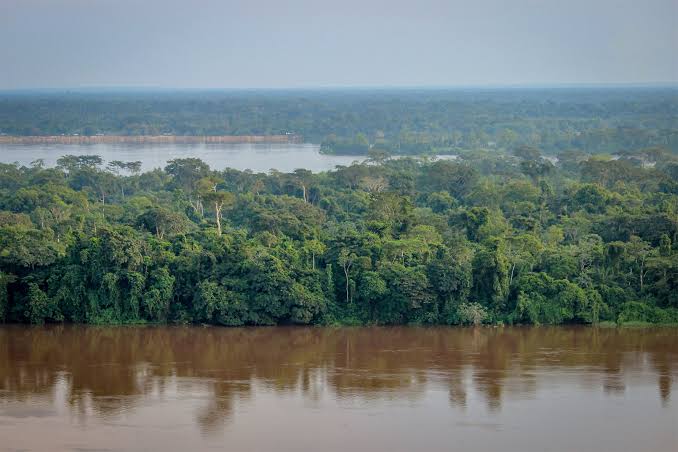
The Democratic Republic of Congo has adopted a new National Forest Policy covering 2026–2035, establishing a long-term framework aimed at strengthening forest governance, improving sustainable resource management and reinforcing the country’s role in global climate action. The policy was approved during the 94th meeting of the Council of Ministers in Kinshasa on July 12, 2026, creating a strategic foundation for managing one of the world’s most important tropical forest ecosystems.
Presented by the Ministry of Environment, Sustainable Development and the New Climate Economy, the policy seeks to align economic development objectives with forest conservation, climate resilience and community participation. It provides a national roadmap for improving transparency, accountability and coordination in the management of the Democratic Republic of Congo’s extensive forest resources. The adoption comes as global attention continues to grow around the Congo Basin rainforest, which represents one of the planet’s largest carbon sinks and biodiversity reserves. The Democratic Republic of Congo contains more than half of the Congo Basin forest, making its conservation efforts central to international efforts to address climate change, protect ecosystems and preserve biodiversity.
According to the government, the 2035 vision is to establish a country where forests are sustainably managed and contribute to poverty reduction, economic development, biodiversity protection and resilience against climate impacts. Achieving this objective will require significant improvements in institutional coordination. Forest management responsibilities in the Democratic Republic of Congo involve national authorities, provincial governments and local administrations, making collaboration across different levels of governance essential for effective implementation.
The policy also highlights the importance of recognising customary land rights and strengthening cooperation with communities that depend directly on forest ecosystems. Indigenous Pygmy peoples, local communities, women, youth and persons with disabilities are identified as important stakeholders whose participation will be integrated into forest decision-making processes. This emphasis reflects a broader shift in global forest governance, where conservation approaches increasingly recognise that long-term protection of natural ecosystems depends on the involvement and economic wellbeing of communities living within forest landscapes. For the Democratic Republic of Congo, forests are not only environmental assets but also economic resources that support millions of livelihoods through agriculture, forestry products and ecosystem services. Sustainable management therefore requires balancing conservation objectives with development needs.
The new policy places strong emphasis on improving governance systems, reducing pressures on forests and creating mechanisms that allow communities to benefit from sustainable resource use. The government has identified institutional strengthening and improved accountability as key requirements for successful implementation. Financing will also be critical. Sustainable forest management requires long-term investment in conservation programmes, monitoring systems, enforcement capacity and community-based initiatives. The government has highlighted the need to mobilise resources from public budgets, private investors and international climate finance mechanisms.
The country’s position within global climate discussions has increasingly focused on its potential contribution to climate mitigation through forest protection. Congo Basin forests store significant amounts of carbon and play an important role in regulating regional rainfall patterns and maintaining ecological balance. As countries seek to reduce greenhouse gas emissions, forest conservation has become a central component of climate strategies through mechanisms such as carbon markets, results-based financing and nature-based solutions. However, unlocking climate finance opportunities requires strong governance frameworks, credible monitoring systems and transparent management structures. The National Forest Policy is expected to provide part of this institutional foundation by creating clearer priorities for conservation and sustainable forest use.
The adoption of the policy also aligns with the Democratic Republic of Congo’s efforts to strengthen its environmental leadership internationally. The country has increasingly positioned itself as a “Solution Country,” highlighting the role of its forests in supporting global climate objectives. Regional cooperation will remain important as forest ecosystems extend beyond national borders. The Congo Basin involves several Central African countries, requiring coordinated approaches to conservation, biodiversity protection and sustainable economic development. The policy arrives at a time when African countries are seeking greater recognition of the economic value of natural ecosystems. Beyond conservation, forests are increasingly viewed as strategic assets that can support climate adaptation, sustainable tourism, green industries and community development.

https://www.aecweek-registration.com/2026/
Implementation will determine whether the policy translates into measurable improvements on the ground. Key challenges include addressing illegal logging, managing agricultural expansion pressures, improving enforcement capacity and ensuring that local communities receive meaningful benefits from forest protection. For the Democratic Republic of Congo, the next decade will be critical in demonstrating whether forest conservation can become a driver of sustainable development rather than a constraint on economic growth. By combining stronger governance, inclusive participation and climate-focused investment, the National Forest Policy 2026–2035 provides a framework for protecting one of the world’s most valuable natural assets while supporting national development priorities.


