


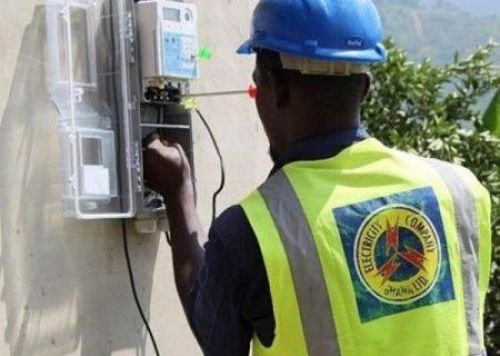
Ghana’s efforts to restore financial stability in its electricity sector have suffered a setback after the World Bank downgraded the country’s Energy Sector Recovery Program from “Moderately Satisfactory” to “Unsatisfactory,” citing slow implementation, funding constraints and limited progress against key reform targets.
The downgrade reflects growing concerns over the ability of Ghana’s power sector to address persistent financial losses, operational inefficiencies and structural challenges affecting electricity distribution. The Energy Sector Recovery Program, approved by the World Bank in June 2024 and launched in March 2025, was designed to improve the financial position of the Electricity Company of Ghana (ECG), strengthen operational performance and reduce revenue losses across the electricity value chain. According to assessments reported by local media, the World Bank identified delayed government funding approvals, disruptions associated with Ghana’s December 2024 elections and implementation challenges among government agencies as key factors behind the programme’s weak performance.

The programme contains eight performance indicators intended to measure progress in areas including utility efficiency, digital systems, customer engagement, clean cooking access and transmission sector reforms. However, only one indicator has been fully achieved. ECG completed audited financial statements for the 2025 financial year, representing the programme’s only completed milestone. Other targets have recorded limited progress, raising concerns about whether the reforms can deliver the intended improvements before the programme’s scheduled completion.
One major challenge has been the slow rollout of energy accounting systems within ECG’s operations. The system, designed to improve monitoring of electricity flows and identify losses, has only been implemented in approximately 20% of ECG operating districts, significantly below the national coverage initially planned. Customer accountability measures have also progressed slowly. While a customer satisfaction survey has been completed, the results remain in draft form and have not yet been publicly released.
The programme’s clean cooking component has experienced similar delays. Of the 457,000 households targeted to receive clean cooking kits, only about 38,000 households have benefited so far. The slow rollout highlights broader challenges facing clean cooking initiatives across Africa, where financing, logistics and affordability continue to limit access to cleaner household energy solutions. The transmission sector has also struggled to meet reform objectives. Ghana’s transmission company, GRIDCo, has not yet submitted the methodology required by the Energy Commission to prioritise lower-cost electricity generation options and reduce system costs.
Meanwhile, ECG’s bill collection performance has weakened. The utility’s collection rate declined to 85%, below the programme baseline of 86% and significantly below the 93% target expected by 2027. The implementation challenges are closely linked to Ghana’s wider electricity sector financial pressures. The World Bank noted that delays in government approvals for funding affected several components of the programme, including clean cooking distribution, smart meter installation and the deployment of electronic billing systems for power producers. These operational difficulties have occurred alongside worsening financial losses within the electricity sector. Combined losses at ECG and the Northern Electricity Distribution Company (NEDCo) have increased to approximately $1.5 billion, moving further away from the programme’s target of reducing losses to $525 million by the end of 2027.
The government has introduced measures aimed at stabilising the sector, including an additional levy on petroleum products introduced in 2025. However, despite these interventions, Ghana’s national budget still provided GHS12.9 billion, equivalent to about $830 million, to meet electricity sector payment obligations. The financial challenges facing Ghana’s power sector reflect broader issues affecting many African electricity utilities, where operational losses, tariff structures, foreign exchange pressures and government payment obligations continue to undermine financial sustainability.
International financial institutions have increasingly called for deeper reforms. The International Monetary Fund has previously indicated that ECG may require significant changes to its business model to restore financial stability, including renewed discussions around private sector participation in electricity distribution. For Ghana’s economy, electricity sector reform remains closely connected to industrial growth, investment confidence and public finance management. Reliable and financially sustainable power systems are essential for manufacturing, mining, digital services and small businesses that depend on stable electricity supply. The challenges also have implications for Ghana’s energy transition objectives. As countries seek to expand renewable energy and improve efficiency, financially stable utilities are required to manage new investments, integrate renewable generation and maintain reliable electricity networks.
https://www.aecweek-registration.com/2026/
The government has recently launched a nationwide audit of electricity infrastructure to assess the condition of the power system and identify areas requiring investment. The exercise forms part of wider efforts to improve sector planning and address infrastructure constraints.Despite the downgrade, the World Bank indicated that progress could improve if coordination between government institutions and implementing agencies strengthens, particularly around approval processes and financial commitments.The experience of Ghana highlights a broader lesson for African power sector reforms: improving electricity access and reliability requires not only new generation capacity but also financially sustainable utilities, effective governance systems and consistent investment in distribution infrastructure.As Ghana continues to address its electricity sector challenges, the success of the recovery programme will depend on translating policy commitments into operational reforms that restore confidence among consumers, investors and development partners.


